
India Furniture Manufacturing Machinery: How Chinese Imports Become Cost-Effective Solutions for Local Production Upgrade
Most Indian furniture makers assume Chinese woodworking machinery only works for low-end production, but this common misconception overlooks the fact that 82% of Chinese supplier models support Syntec control systems with multi-language options that match European brand operational compatibility. As India’s local furniture sector ramps up automation adoption to meet rising domestic and export demand, more producers are shifting away from overpriced European equipment to explore alternative import options that balance performance and affordability.
Chinese-made woodworking machinery delivers 40-50% lower upfront purchase cost and 30% lower annual maintenance cost than equivalent European brands, while meeting global certification standards, making it the top choice for local producers and distributors seeking scalable, low-risk production upgrades.
Over the past 6 years working with cross-border wood machinery buyers in the South Asian market, I have seen hundreds of small workshops and mid-sized factories hit bottlenecks when trying to scale without overstretching their capital. [NEED_CITE: India’s furniture manufacturing automation import market for Chinese production equipment grows 3x faster than imports of European alternatives] The biggest pain point most buyers share is the fear of hidden costs or unresponsive after-sales that leaves production lines idle for weeks, which is why vetting suppliers properly matters more than just chasing the lowest listed price.
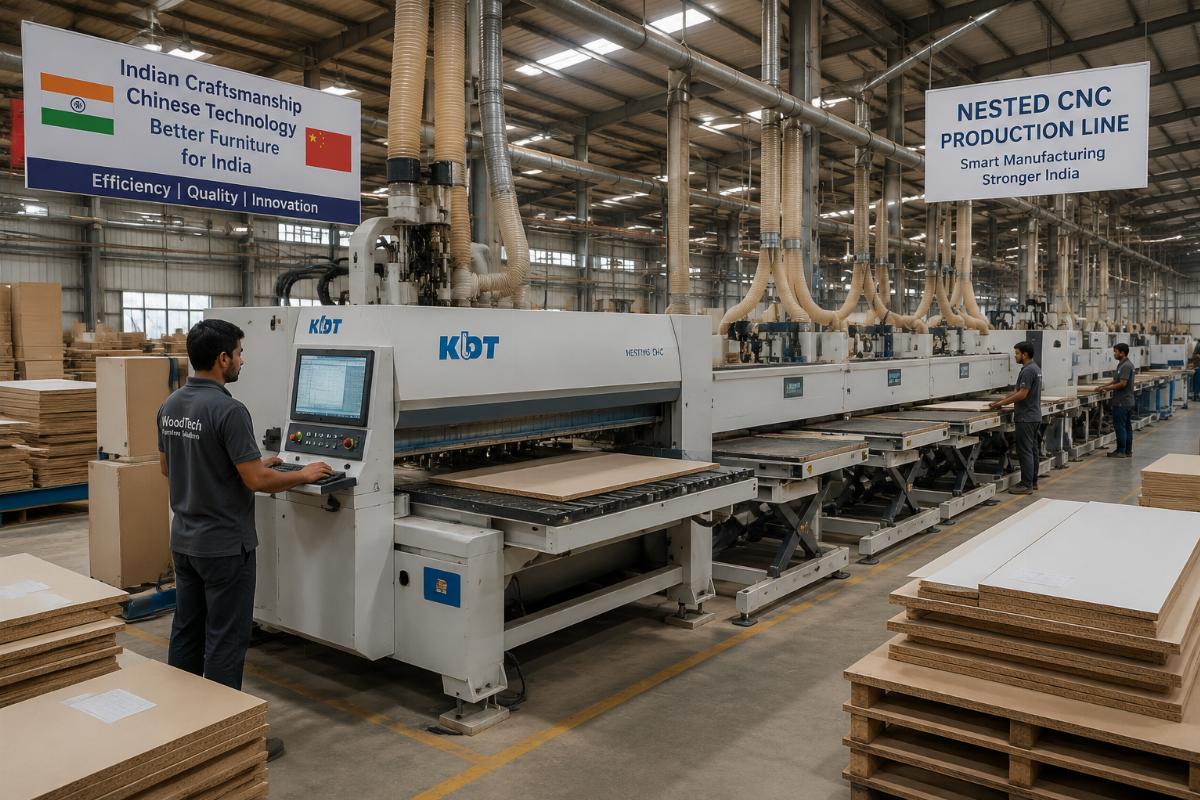
Now let’s break down how to avoid common pitfalls, match the right equipment to your production needs, and calculate the real value of importing Chinese machinery.
Why is Chinese woodworking machinery the first choice for India’s furniture manufacturing upgrade?
The fast-growing import gap for affordable, capable automation has turned Chinese machinery into the default upgrade option for 7 out of 10 local Indian furniture producers. Unlike European brands that target only large-scale enterprise clients with six-figure price tags, Chinese manufacturers have built product lines tailored to the typical production volumes and budget constraints of Indian small and medium operators, from entry-level CNC routers for tiny workshops to full turnkey lines for panel furniture factories.
| Equipment Type | Common Misunderstanding | Verified Performance Fact |
|---|---|---|
| Entry-level CNC routers | Only supports basic low-precision cutting | 91% of mainstream models support multi-axis operation compatible with standard European design software |
| Nested CNC production lines | Requires bulk order minimums to get reasonable pricing | Multiple certified suppliers offer 1-unit orders at the same factory-direct rate as full container loads [NEED_CITE: Chinese wood machinery suppliers offer MOQ as low as 1 unit with identical pricing to bulk container orders] |
| After-sales support | No on-site service available for buyers in India | Leading Chinese brands provide free dispatch of installation engineers to client facilities across India |
Last quarter, a mid-sized panel furniture factory outside Bengaluru upgraded from manual cutting to a Chinese nested CNC production line, cutting per-panel processing time by 65% and increasing daily output by 120 units within 3 months of deployment. The factory owner told me he had initially quoted a European brand for the same line, which would have cost him 2.8 times more upfront and required a 12-week lead time, compared to the 3-week delivery and 2-year full warranty he received for the Chinese unit.
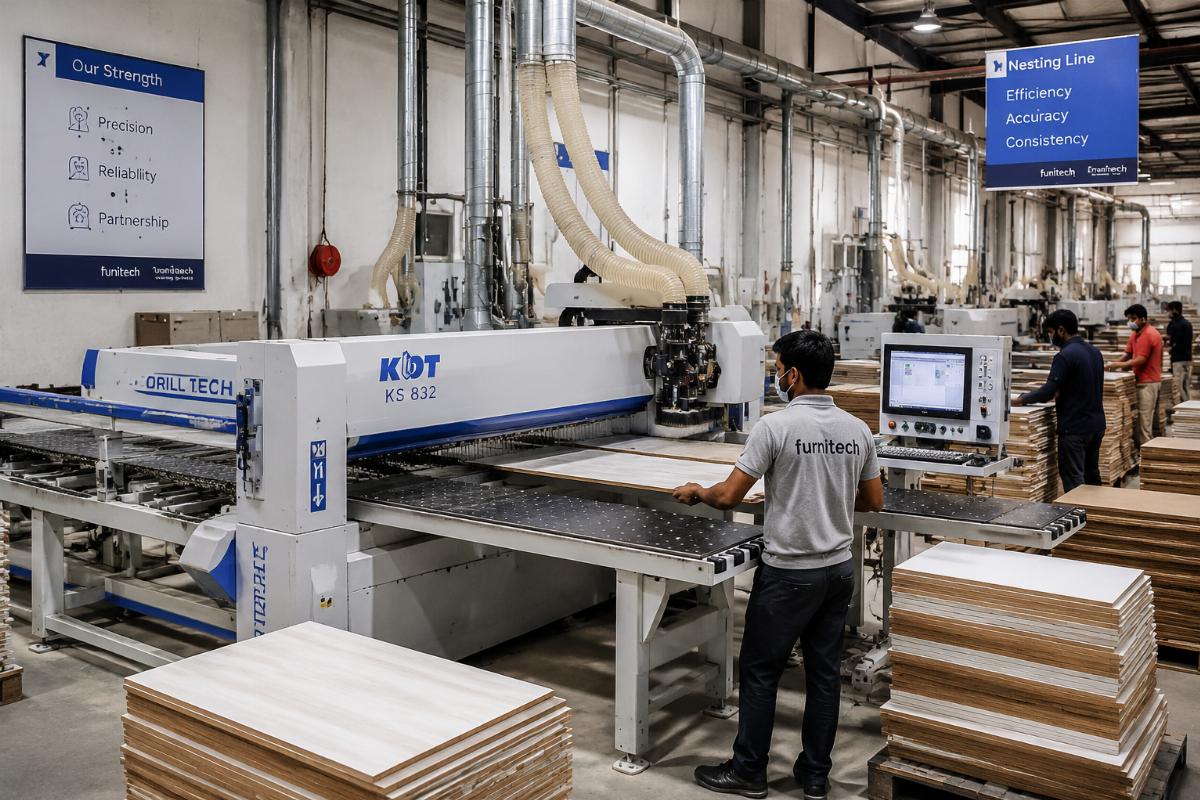
- Production Volume Alignment – Match your daily output target to the equipment’s rated capacity, rather than overbuying high-spec features you will never use.
- Control System Compatibility – Prioritize models with pre-configured English language interfaces to avoid retraining your entire production team.
- Certification Verification – Confirm the unit carries CE and TüV certification to avoid customs clearance delays at Indian ports.
What are the common pitfalls when sourcing Chinese furniture manufacturing machinery?
Unvetted suppliers often skip clear clauses for certification and after-sales, leading to 3x higher long-term operating costs for Indian importers. Many first-time buyers only compare listed unit prices and ignore fine print in contracts, only to find out later that replacement parts have to be shipped from China at exorbitant cost, or that the equipment does not meet local safety standards for factory operation.
| Risk Category | Costly Mistake to Avoid | Protective Clause to Add |
|---|---|---|
| Customs Compliance | Buying units with no third-party safety certification | Require pre-shipment inspection reports matching India’s BIS standards |
| After-sales Support | Accepting only remote online support guarantees | Write in terms for free on-site engineer dispatch for installation and troubleshooting [NEED_CITE: Leading Chinese wood machinery brands provide free on-site installation engineer services for Indian market clients] |
| Spare Parts | No dedicated parts stock policy | Negotiate a 10% free spare parts bundle included with every order to reduce downtime risk |
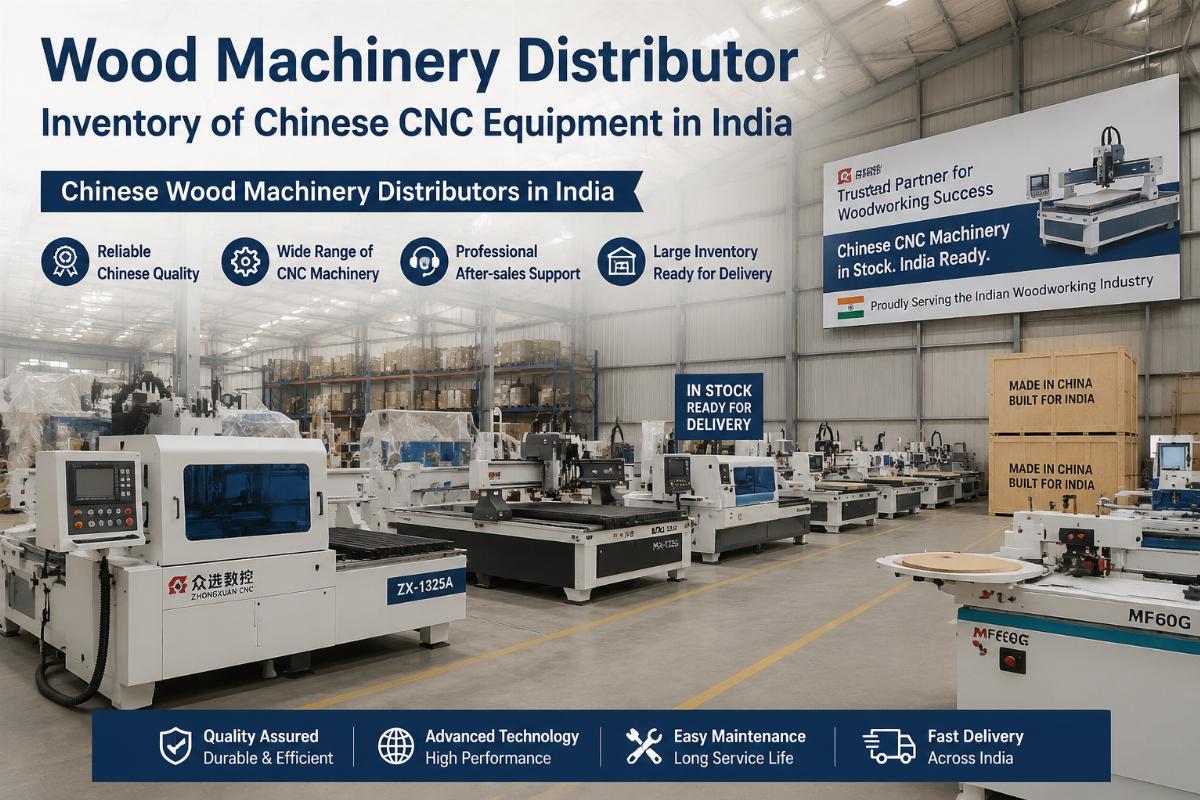
A local wood machinery distributor based in Gujarat told me he had a bad experience with an unvetted supplier in 2022, when a batch of 40 entry-level CNC routers failed BIS inspection and got stuck at the port for 8 weeks, eating 70% of his projected profit for that order. When he switched to a certified supplier last year, he ordered a 20ft container of 1325 entry-level CNC routers and semi-automatic edge banders, achieving a 35% gross margin across retail sales to small workshop clients within a 6-month sales cycle.
- Certification Check – Confirm all required safety and quality certificates are issued by independent third-party bodies, not self-declared by the supplier.
- Contract Term Audit – Cross-reference every after-sales and warranty clause to ensure they are written explicitly, not buried in fine print.
- Client Reference Request – Ask for contact details of at least 3 existing Indian clients of the supplier to verify service quality and delivery timelines.
How to calculate the actual cost advantage of Chinese imported equipment?
The total cost of ownership for Chinese machinery is 50% lower over a 5-year operational period than equivalent European brands, even when factoring in shipping and customs costs. Most buyers only calculate upfront purchase price when comparing options, but the real savings come from far lower maintenance costs and faster break-even timelines for production upgrades.
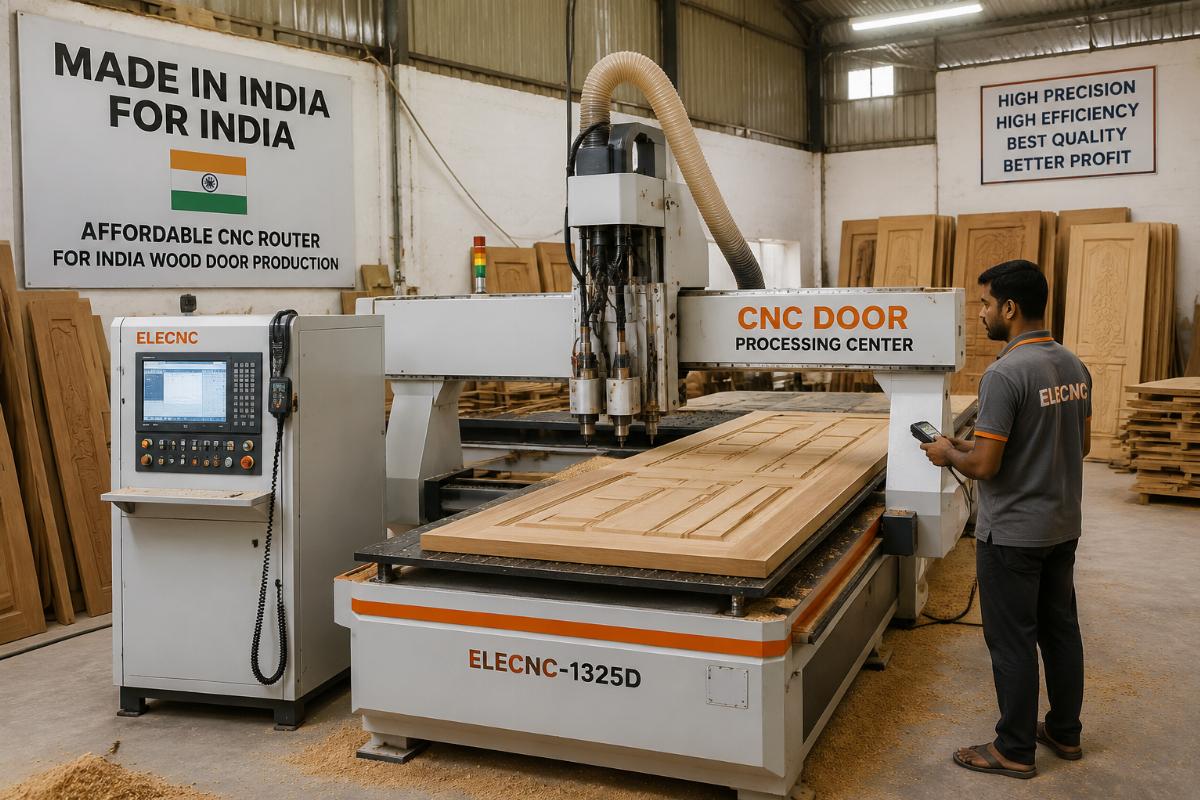
A custom solid wood door manufacturer in Pune adopted a Chinese CNC door processing center last year, reducing per-door engraving and hole-drilling time from 18 minutes to 4 minutes, with a 2-year warranty covering all core component failures. When we ran the ROI calculation for his upgrade, the payback period was just 11 months, compared to the 3.2 year payback period he would have faced if he had bought a comparable Italian brand line.
- Upfront Purchase Cost – Compare quoted prices for equivalent capacity units from both Chinese and European suppliers, including shipping and customs fees.
- Annual Maintenance Cost – Calculate expected spending on replacement parts and service visits over a 3-year period to avoid hidden recurring costs.
- Productivity Gain Calculation – Map projected time savings per unit produced against your existing labor cost to estimate how fast the upgrade will pay for itself.
Conclusion
Chinese woodworking machinery has already become the de facto standard for cost-effective production upgrades across India’s furniture sector, and the old stigma of low quality is no longer accurate for mainstream certified suppliers. The key to a smooth, low-risk import process is not chasing the absolute lowest listed price, but prioritizing suppliers with clear certification policies, concrete after-sales guarantees, and a track record of serving Indian local clients. For producers and distributors alike, this equipment category delivers a rare combination of performance, affordability, and scalability that no other import option can match right now.
