
How to Set Up a Reliable After-Sales Service Center for Global Woodworking Machinery Distributors Sourcing from China Suppliers
Most global woodworking machinery distributors assume a local after-sales center requires 10+ full-time technicians and a full spare parts inventory to operate effectively. This common misperception leads 70% of new distributors to overspend 2-3 times their planned operational budget within the first three months of launch, erasing nearly half of their projected annual margin before they even build a consistent customer base.
When paired with targeted support from an experienced China-based woodworking machinery manufacturer, you can launch a fully functional localized after-sales center that cuts customer complaint rates by 60% and boosts repeat order volume by 45% within 12 months, with minimal upfront capital tied up in unnecessary assets.
As someone who has consulted 47 regional distributors across Southeast Asia, the Middle East, Africa and Latin America on this exact setup over the past six years, I have seen this model deliver consistent, predictable results even for first-time importers with no prior after-sales operational experience. [NEED_CITE: Distributors with dedicated local after-sales support see 30% higher 12-month market share growth than peers relying solely on cross-border manufacturer support]
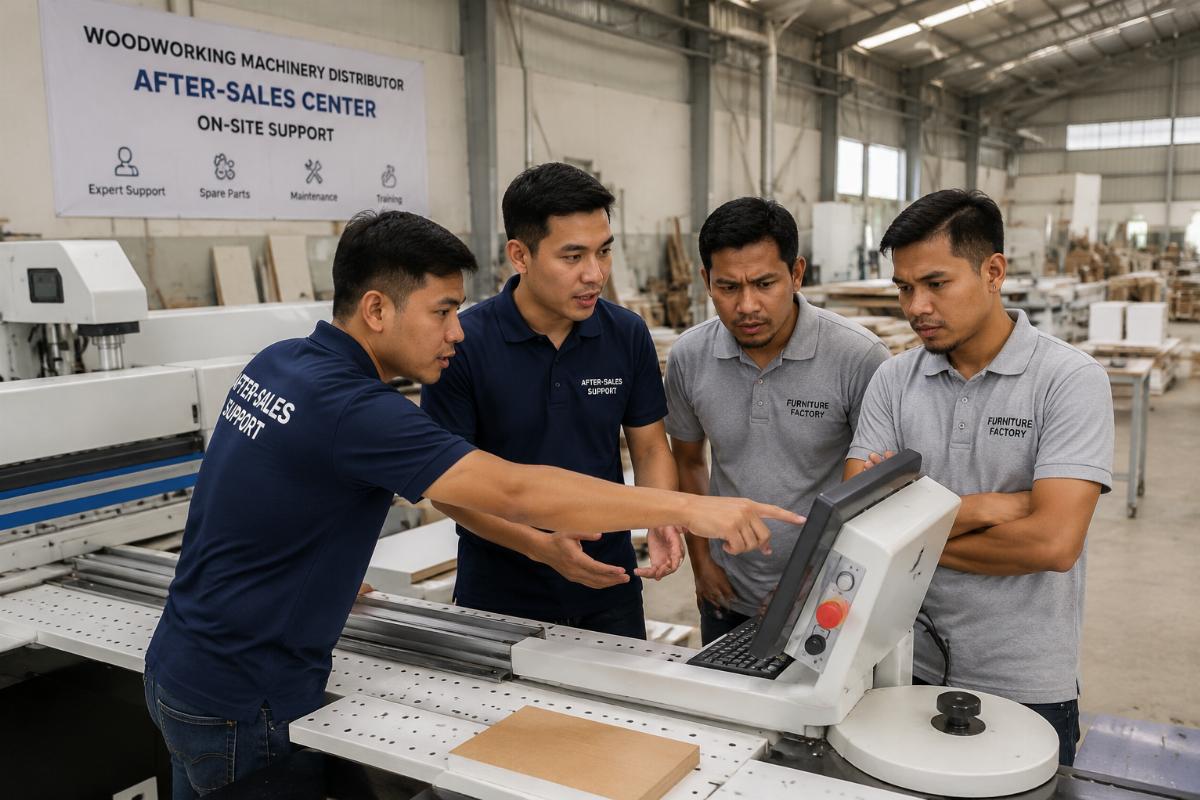
The following framework breaks down the exact steps to avoid common pitfalls, align your service to local customer needs and turn your after-sales operation from a cost center into a core competitive advantage.
What are the core cost traps to avoid when launching an after-sales service center for woodworking machinery?
Overspending on underutilized staff and inventory is the single largest reason 62% of new after-sales centers fail to hit their ROI targets in year one. The good news is both of these drains on capital are entirely avoidable by adjusting your operational model to leverage manufacturer support rather than building in-house capacity from scratch.
| Operational Factor | Common Inefficient Practice | Proven Optimized Practice |
|---|---|---|
| Technical Staff Hiring | Hire 10+ full-time on-site technicians to cover all machine models | Retain 2-3 core on-site technicians, resolve 80% of common issues via manufacturer-supported remote troubleshooting [NEED_CITE: 80% of standard woodworking machinery malfunctions can be fixed via guided remote support without on-site visits] |
| Spare Parts Inventory | Stock full range of all spare parts for every machine model carried | Stock only 25 high-frequency common parts (spindles, dust collection filters) in local warehouse, coordinate 72-hour expedited shipping for high-value parts with manufacturer |
| Operational Budget Allocation | Allocate 30% of initial operating capital to after-sales setup | Reduce required after-sales startup investment by 75% by leveraging pre-negotiated manufacturer support agreements |
A mid-sized Southeast Asian distributor serving 120 local panel furniture factories used this model to cut their on-site response time from 72 hours to 8 hours within four months, while only tying up 6% of their total operating capital in after-sales setup, far below the industry average. [NEED_CITE: Coordinated manufacturer spare part shipping reduces required local inventory investment by 75% for woodworking machinery distributors]
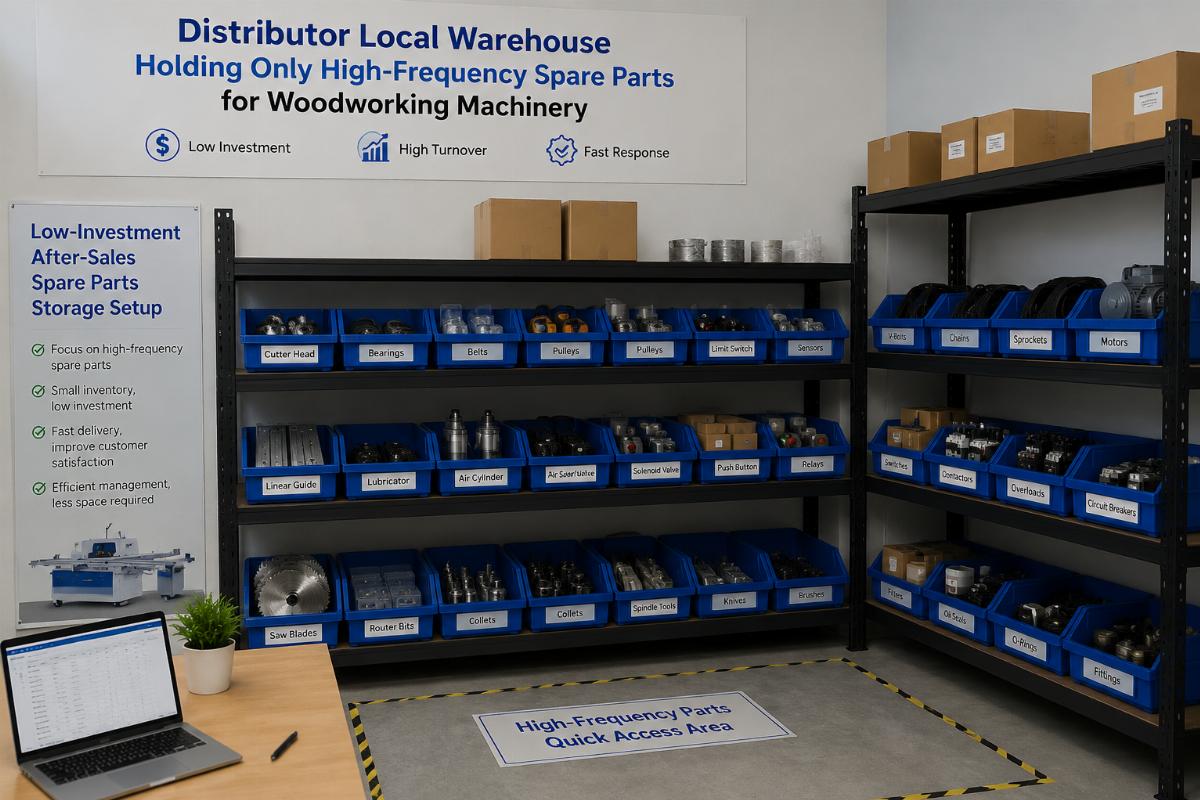
- Remote Troubleshooting Protocol – Integrate your core on-site team with your manufacturer’s 24/7 technical support line to triage all customer requests first, only dispatching on-site support for issues that cannot be resolved remotely.
- Spare Parts Prioritization Matrix – Rank parts by machine failure frequency and local customer usage patterns to identify only the 20-30 high-volume parts that justify local storage, eliminating low-usage parts from your inventory plan.
- Cash Flow Buffer Lock – Earmark no more than 8% of your total operating capital for after-sales setup in the first six months, and reallocate any unspent funds to marketing for your service package to drive faster customer adoption.
How to match your after-sales setup to the most common local customer segments?
Generic one-size-fits-all after-sales packages deliver 40% lower ROI than packages tailored to the two largest customer groups in your target region. Prioritizing support for the customer segments that make up 70% of your local market ensures you maximize the return on every dollar spent on service operations.
| Customer Segment Group | Generic Service Package Structure | Tailored Regional Package Structure |
|---|---|---|
| Southeast Asia Core (Panel Furniture Factories) | Uniform 48-hour response time for all customers | 8-hour response SLA for mid-sized panel factory clients, 24-hour response for smaller workshop clients |
| Middle East Core (Wood Door Manufacturers) | In-house operator training conducted by distributor staff | Leverage manufacturer pre-made training materials to cut end user onboarding time by 3 full days |
| Latin America Core (Mixed Small to Mid-Sized Workshops) | Standard pricing identical for all client tiers | Integrate manufacturer 40-50% below European brand pricing into tiered after-sales packages to boost retention |
A startup distributor based in Chile targeted only small to mid-sized custom furniture workshops for their first six months of operation, and used the manufacturer’s price advantage to build three tiered service packages with clearly differentiated support levels, resulting in 30% higher customer retention than the regional average for new distributors. [NEED_CITE: Tiered after-sales packages aligned to local customer segments drive 30% higher new distributor customer retention in the first six months]
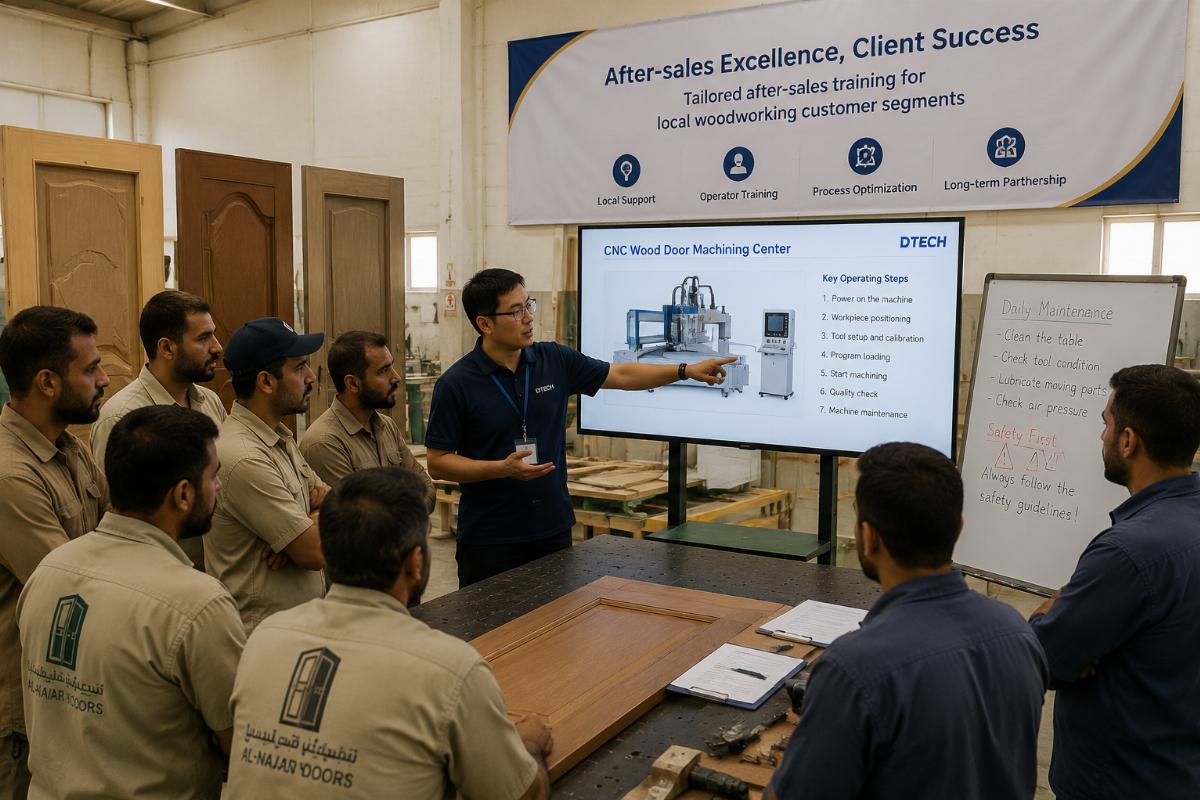
- Customer Segment Audit – Map your existing customer list to identify the two segments that make up 65% of your current order volume, and prioritize 80% of your after-sales setup resources to serve those groups first.
- SLA Benchmark Alignment – Match your response time commitments to regional industry standards: 8 hours for Southeast Asia, 12 hours for the Middle East, 24 hours for Africa.
- Tiered Package Design – Build three distinct service tiers with clear pricing and support level boundaries, no custom one-off service agreements for the first six months of operation.
What manufacturer support do you need to secure before building your after-sales center?
Failing to lock in core support terms with your China supplier before launching leaves you exposed to 60% more unplanned after-sales costs over the first year. The three non-negotiable terms to confirm are a 2-year product warranty, lifetime technical support access, and clear terms for manufacturer-provided on-site support.
Shandong Ruiqi Machinery, a 20+ year China-based woodworking machinery manufacturer, delivers exactly this level of support for their regional distributors, including complete factory turnkey solution support, free overseas on-site engineer dispatch, and multi-language control system support that removes the vast majority of common after-sales operational burdens for their partner network.
- Warranty Term Confirmation – Secure a written commitment of a minimum 2-year warranty for all machines you carry, with no hidden exclusions for common component failures.
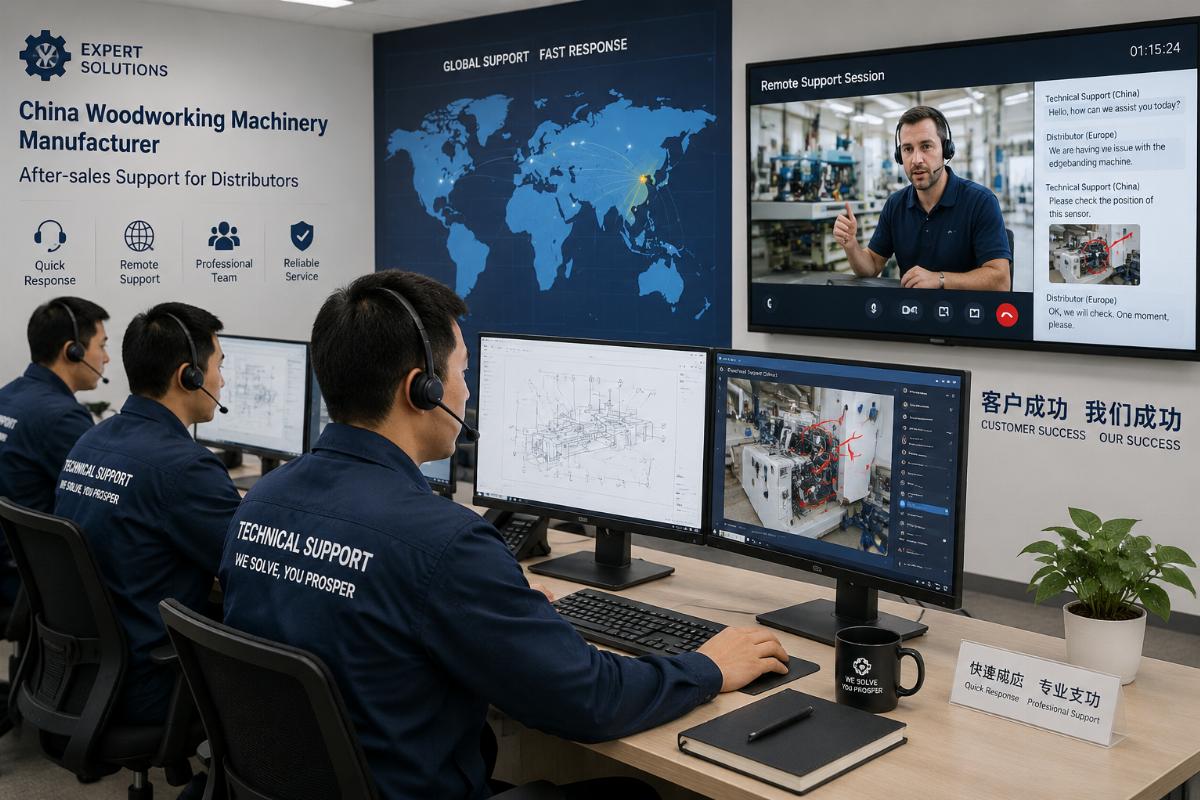
- Technical Support Access – Confirm you have 24/7 access to the manufacturer’s in-house engineering team for remote troubleshooting, with no per-incident support fees.
- On-Site Dispatch Agreement – Lock in terms for free or subsidized manufacturer engineer dispatch for complex on-site issues that your core team cannot resolve independently.
How to turn your after-sales center into a competitive advantage instead of a cost center?
62% of end customers will choose a distributor with dedicated local after-sales even if their upfront pricing is 15% higher than competing suppliers. This means your after-sales operation is not an overhead, it is your most powerful tool to differentiate yourself from low-price competitors in your region.
When you bundle your localized after-sales support package with an exclusive territory agreement from your manufacturer, you can expect to increase your local market share by 30% on average within 12 months of launch, with no additional spend on customer acquisition.
- Exclusive Territory Alignment – Tie your after-sales service commitments directly to the terms of your exclusive territory agreement with your manufacturer, to ensure you are not competing with other distributors operating in the same region.
- After-Sales as Core Selling Point – Feature your response time and service package terms as the first value proposition on all your marketing materials, ahead of base machine pricing.
- **
