
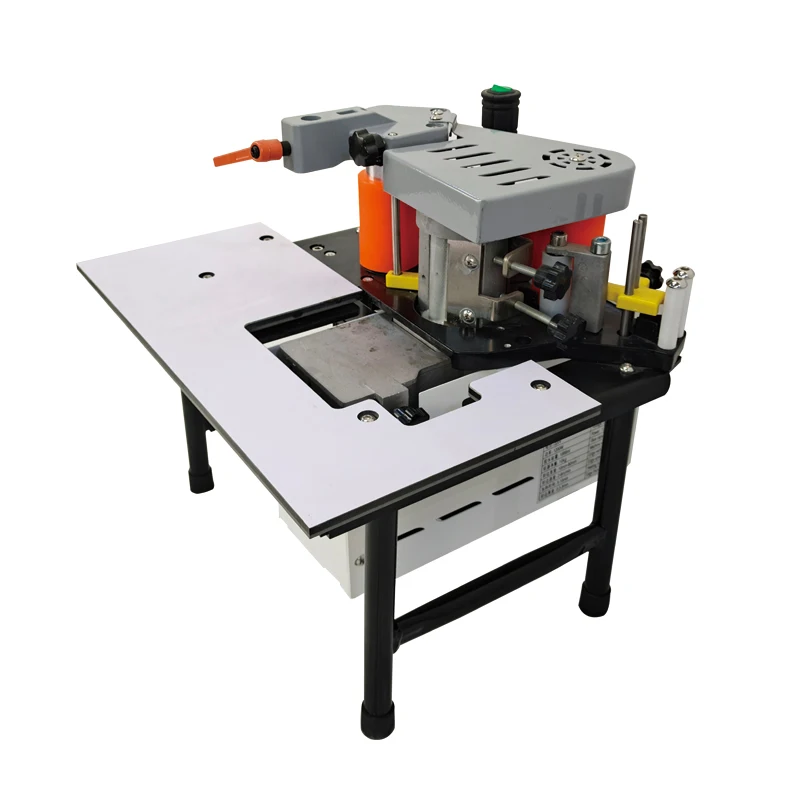
Portable Manual Edge Banding Machine ST-30 | Distributor Supply
<p><strong>ST-30 Portable Manual Edge Banding Machine, 1000W, 0.3-3MM Tape Thickness, Straight & Curve Edge</strong> — a lightweight 12KG unit handling ABS, PVC, melamine, and veneer on panels as narrow as 3CM. Designed for distributors supplying regional joinery workshops and on-site installers, it offers 220V/380V flexibility and multilingual controls to match diverse local markets. The 1000ml glue pot supports extended operation without frequent refills.</p> <ul> <li>Backed by four-stage QC with pre-shipment verification and CE documentation</li> <li>Territory-aware model mix recommendations for your regional catalog</li> <li>OEM logo and private label options available for branded resale</li> </ul>
Quality
Certified
Shipping
Worldwide
Support
24/7 Service
Delivery
Fast Lead Time
Engineer-led configuration — every ST-30 shipment leaves with a voltage and frequency confirmation matched to the destination grid, preventing the dead-on-arrival failures that plague cross-border machinery trades.
Technical Specifications
| Parameter | Value |
|---|---|
| Model | ST-30 |
| Product Type | Portable Manual Edge Banding Machine |
| Rated Power | 1000W |
| Voltage & Frequency | 220V/380V/customization |
| Edge Type | Straight and curve edge |
| Suitable Edge Banding Tape | ABS, PVC, Melamine, veneer |
| Edge Banding Thickness | 0.3-3MM |
| Edge Banding Height | 0-50MM |
| Minimum Length of Sheet | 25CM |
| Minimum Width of Sheet | 3CM |
| Glue Pot Capacity | 1000ml |
| Air Source Pressure | 0.5-0.8Mpa |
| Edge Power | 20W |
| Overall Dimensions | 38×35×35CM |
| Net Weight | 12KG |
| Language Options | Chinese, English, Spanish, or other customizable languages |
| Plug Options | EU, USA, AU, UK |
| Certification | CE |
Application Suitability
| Application | Material or Output |
|---|---|
| Small workshop furniture production | MDF, plywood, and particleboard panels with PVC or ABS edging |
| Custom cabinet and joinery finishing | Solid wood panels with veneer edge banding |
| On-site interior decoration installation | Melamine and PVC tapes on curved and straight profiles |
| Entry-level edge banding for startups transitioning from manual work | Board stock from 3CM minimum width upward |
| Service technician backup unit for field repair | Portable edge banding across varied substrate types |
What Distributors Lose When Local Support Stops at the Port
A portable edge banding machine distributor succeeds or fails on what happens after the crate is opened.
I spent three days in a Southeast Asian workshop last year watching a batch of veneer-edged panels go to waste. The machine had been sold as a generic portable unit, but nobody had confirmed the operator was running real wood veneer instead of standard PVC. The glue temperature and feed pressure were set for a completely different material. The distributor had no local technician who understood the parameter relationship between tape type and thermal settings [NEED_CITE: thermal parameters for veneer versus PVC edge banding]. When your regional customers face this situation, they do not call the factory overseas — they call you, or they abandon the machine entirely.
Territory Coverage and Model Mix for Regional Resellers
Importing woodworking machinery is not the same as importing consumer goods. A portable edge banding machine distributor needs to know which models move quickly in a given market and which require education. The ST-30 occupies a specific niche: workshops that need edge banding capability but lack the floor space or three-phase power for a full automatic line. Positioning it correctly in your catalog means understanding the typical joinery shop layout in your territory and the voltage standards your electricians work with daily.
Spare Part Logistics and Service Team Readiness
The glue pot, heating element, and pressure roller are the wear items that generate service calls. When a distributor stocks these components locally, a machine that would otherwise sit idle for weeks gets back into production within hours. Our approach involves mapping the failure patterns we observe across different climate zones — humidity affects glue viscosity, ambient temperature shifts the thermal calibration window — and building a spare parts recommendation around your specific region rather than a generic list [NEED_CITE: environmental factors affecting edge banding glue performance].
Reading the Specifications Beyond the Brochure
The 0.3-3MM edge banding thickness range covers the majority of PVC, ABS, melamine, and veneer tapes used in furniture production, but each material behaves differently under heat and pressure. Veneer requires lower glue temperatures to prevent scorching, while ABS needs sufficient thermal energy to activate the adhesive bond across the full 50MM height capacity. The 1000ml glue pot capacity determines how long an operator can work before stopping to refill — in a small workshop running intermittent batches, this is adequate; in a production environment pushing continuous output, it becomes a bottleneck. The 0.5-0.8Mpa air pressure requirement means the workshop must have a compressor capable of sustaining that range, a detail that gets overlooked until the machine arrives and the pressure drops mid-cycle. The 12KG net weight and 38×35×35CM footprint make it genuinely portable between workstations or job sites, which is the primary reason a distributor's customers choose this class of equipment over a stationary unit.
When the Wrong Configuration Costs More Than the Machine
Distributors who sell portable edge banders without confirming the end user's material and voltage end up absorbing return shipping, warranty disputes, and reputational damage in their local market. A 220V unit shipped to a region running 110V single-phase simply will not start, and the cost of adding a transformer often exceeds the machine's value. I have seen workshops force veneer through a machine configured for PVC, resulting in burnt edges and delaminated panels that the operator blamed on the equipment rather than the settings [NEED_CITE: common operator errors in manual edge banding material mismatch]. These are preventable failures, but prevention requires a conversation before the order is placed.
Why Distributors Source This Equipment Through Ruiqi
In-house manufacturing means specification adjustments are handled at the production level, not negotiated through a trading intermediary. Voltage configuration from 220V to 380V is confirmed against your territory's grid standards before production begins, not discovered as a problem at the destination port. The four-stage quality control process includes pre-shipment verification where each ST-30 is tested under the voltage and frequency specified on your order. Multilingual control panels in Chinese, English, Spanish, or other requested languages eliminate the operator confusion that generates unnecessary service calls. OEM logo and private label capability allows you to build your own brand identity in the market rather than reselling a generic name. Factory test records specific to your requested panel thickness range ship with every unit, giving your local sales team documented proof to show prospective buyers.
Documentation & Verification
- CE declaration of conformity covering portable woodworking machinery safety requirements
- Machine specification sheet with confirmed voltage and frequency for your destination market
- Electrical schematic matching the plug type and wiring standard of your region
- Factory test record demonstrating edge banding performance on your specified panel thickness range
- Operation and maintenance manual translated into the language your service team and operators read
- Spare parts list identifying wear components with reorder part numbers for local inventory planning
Installation, Commissioning & Support
- Requires a dedicated 220V or 380V circuit matching the confirmed frequency before the 1000W rated power can draw safely
- Compact 38×35×35CM dimensions allow benchtop placement without floor anchoring or special foundation work
- Arrives fully assembled; first power-on requires confirming air source pressure between 0.5-0.8Mpa at the compressor
- Initial parameter calibration must match the edge banding tape material — veneer, PVC, ABS, or melamine — loaded into the 1000ml glue pot
- Operator training covers the relationship between the 0.3-3MM thickness range and appropriate feed speed for straight versus curve edges
- Wear parts including glue pot heating elements and pressure rollers identified for local stocking by your service team
What We Need From You to Configure the Right Shipment
To prepare an accurate quotation and configuration for your market, share the voltage and frequency standard in your territory, the primary edge banding materials your customers work with, and the language your operators and service technicians require on the control panel. If you are evaluating this as a first portable unit in a broader catalog, let us know what other machinery you currently distribute so we can align the ST-30 specifications with your existing product range and avoid compatibility gaps.
Frequently Asked Questions
Q: How do you handle territory exclusivity and protect distributor margins in our region? A: We discuss territory scope during the initial configuration meeting and document agreed terms before production begins. Margin protection depends on the model mix we recommend for your market — we avoid oversaturating a region with identical units and instead position the ST-30 alongside complementary equipment in your catalog.
Q: What is the typical lead time for replacement glue pots and heating elements once we establish a spare parts account? A: Common wear components for the ST-30 are produced in standard batches and held in inventory for distributor accounts. Lead time depends on your region's shipping route and whether you maintain a local buffer stock. We recommend an initial spare parts order alongside your first machine shipment to cover the first year of field service.
Q: Do you provide technical training for our local service engineers on parameter calibration? A: Training covers glue temperature adjustment across different tape materials, pressure roller calibration for the 0.3-3MM thickness range, and troubleshooting common faults related to air pressure fluctuation. We deliver this either at our facility during a pre-shipment visit or through documented procedures your engineers can reference in the field.
Q: Can we apply our own branding and customize the interface language for resale in our market? A: OEM logo placement and private label packaging are standard options for distributor orders. The control panel language is configurable to Chinese, English, Spanish, or other languages you specify. We confirm the exact branding layout and language strings with you before production to ensure compliance with your local labeling requirements.
Q: How do you verify that 220V or 380V configurations meet the safety certification standards in our country? A: Each unit undergoes pre-shipment testing at the voltage and frequency specified on your order, and ships with a CE declaration of conformity. For markets requiring additional local certification, we provide the electrical schematics and test documentation your compliance authority needs to complete the approval process on your end.
Request a Quote
Fill in the form below and our team will get back to you within 24 hours.
Related Products
View All
Edge banding machine