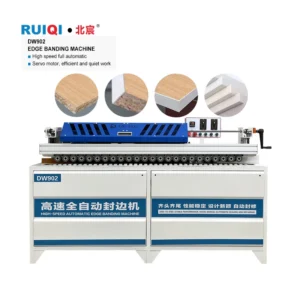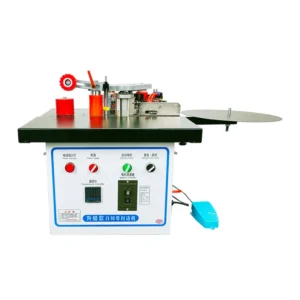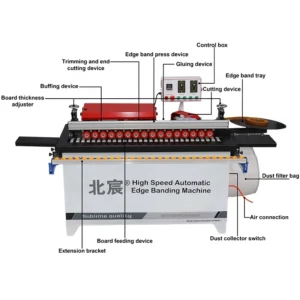
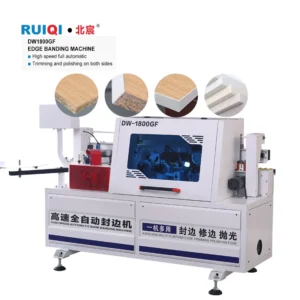
Edge banding machine
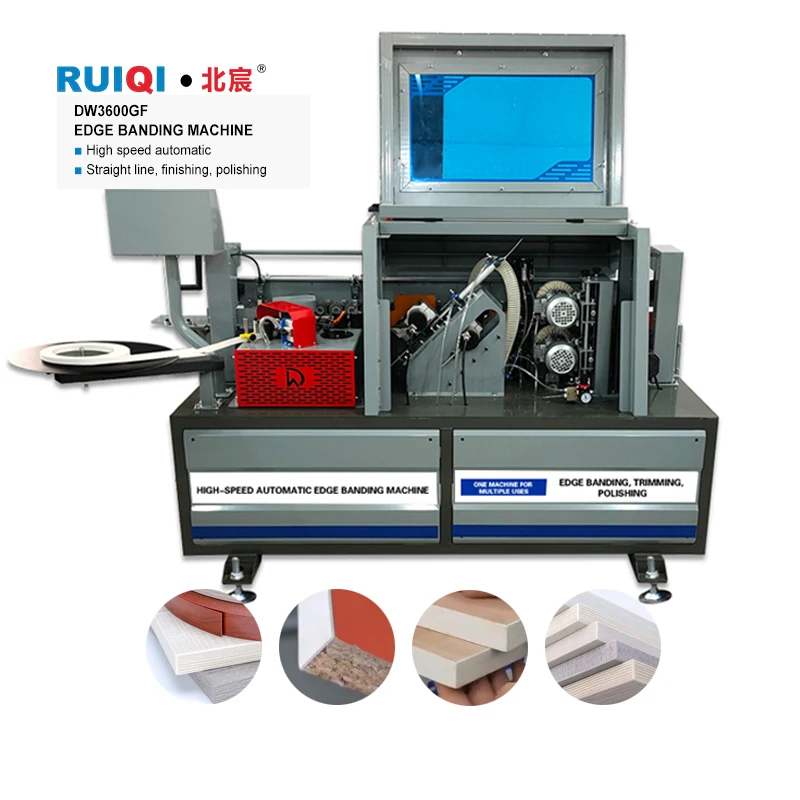
Edge Banding Machine for MDF Panel – Distributor Supply
<p><strong>DW-3600GF Fully Automatic Edge Banding Machine, 380V Three-Phase, 0–14 m/min Feed Speed</strong> — engineered for regional distributors building a mid-range edge banding product line.</p> <ul> <li>Gluing, double trimming, scraping, and polishing in one compact unit</li> <li>Handles 0.3–3 mm edge band thickness on MDF substrates</li> <li>Multilingual control panel with EU/USA/AU/UK plug options</li> </ul> <p>Backed by four-stage QC verification, engineer-led configuration support, and full OEM branding capability for your territory.</p>
Features
380V
DW-3600GF
Edge Banding Machine
Fully Automatic Edge Banding Machine
MDF Panel
OEM Available
Quality
Certified
Shipping
Worldwide
Support
24/7 Service
Delivery
Fast Lead Time
Verified Export Configuration — DW-3600GF ships with pre-confirmed 380V three-phase wiring and market-specific plug options, eliminating transformer delays for regional distributors.
Technical Specifications
| Parameter | Value |
|---|---|
| Model | DW-3600GF |
| Product Type | Fully Automatic Edge Banding Machine |
| Voltage & Frequency | 380V Three-Phase Four-Wire (frequency to be confirmed per market) |
| Total Power | 4.9 kW |
| Equipment Size | 2200×650×1250 mm |
| Total Weight | 320 kg |
| Feed Speed | 0–14 m/min |
| Edge Band Height Range | 0–50 mm |
| Edge Band Thickness Range | 0.3–3 mm |
| Minimum Panel Length | 200 mm |
| Trimming Motor Power | 800W×2, 24000 r/min |
| Polishing Motor Power | 400W×2 |
| Air Supply Requirement | 0.4–0.6 MPa |
| Standard Functions | Gluing, Double Trimming, Front and Rear Trimming, Scraping, Polishing, Vacuuming |
| Control Panel Language | Chinese, English (custom language available on request) |
| Plug Options | EU, USA, AU, UK |
Application Suitability
| Application | Material or Output |
|---|---|
| Cabinet door edge finishing | PVC edge banding on MDF panels |
| Custom furniture straight-edge processing | Melamine-faced particleboard with 0.4–2 mm PVC |
| Joinery workshop production runs | Plywood substrates with veneer or PVC banding |
| Small-batch panel fabrication | MDF shelving and carcass components |
Why Voltage Confirmation Must Precede the Quotation
An edge banding machine distributor who skips electrical verification absorbs the cost of idle workshops and delayed container shipments.
I learned this the hard way when a Middle East client received a pre-milling edge bander wired for 440V while their facility ran 380V. The transformer procurement alone consumed over three weeks, and the client's production line sat idle while panels stacked up unfinished. Since that incident, I review electrical schematics line by line with every buyer before an order enters production, regardless of how many follow-up messages it takes [NEED_CITE: voltage and frequency standards by export market].
The DW-3600GF arrives configured for confirmed local supply, with plug standards matched to destination territory so commissioning begins the day the crate opens.
Territory Coverage and Model Positioning
A regional edge banding machine importer needs a model that sits squarely in the mid-range — capable enough for furniture factories yet approachable for workshops transitioning from manual trimming. This unit fills that position with a complete six-function processing sequence in a compact footprint that fits smaller facilities.
Stocking this single model reduces SKU complexity while covering the volume segment where most cabinet makers and joinery shops operate. The multilingual control panel option means your end-user documentation and training can match the local market without aftermarket modifications.
Spare Part Strategy for Continuous Service Revenue
Distributors who treat spare parts as an afterthought lose service contracts within the first year. Beyond the initial sale, your revenue depends on predictable consumable replacement — trimming blades, polishing wheels, and glue pot components that wear at known intervals [NEED_CITE: typical consumable replacement cycles in edge banding operations].
With the DW-3600GF, the 800W×2 trimming motors and 400W×2 polishing motors use standard industrial components available through multiple supply channels. Structuring your initial container order to include a twelve-month spare part package positions your service team to respond within hours rather than weeks when a customer's production line stops.
How Feed Speed and Motor RPM Shape Edge Quality
The 0–14 m/min variable feed speed directly governs how the trimming station engages the workpiece. At lower speeds, the dual 800W trimming motors running at 24000 r/min produce a clean shear cut on PVC banding up to 3 mm thick, leaving no visible tear-out on the substrate edge.
Pushing feed speed toward the upper limit suits longer production runs on uniform MDF panels where cycle time matters more than premium finish. The scraping and polishing stages that follow remove any residual adhesive and bring the edge to a uniform sheen, which is particularly important when processing light-colored PVC on dark MDF substrates.
The 0.4–0.6 MPa air supply requirement powers the pneumatic actuators across all six stations simultaneously; inconsistent air pressure manifests as uneven trimming depth or incomplete scraping, so a dedicated compressor circuit is non-negotiable.
What Happens When Configuration Gaps Reach the Field
When a distributor ships an edge bander with control panels only in Chinese or English into a Spanish-speaking market, the end-user's operators cannot adjust feed speed or glue temperature without guessing. Misconfigured settings then cause adhesive failure or trimming chatter, and the distributor's service team fields warranty calls that trace back to interface misunderstanding rather than mechanical defect [NEED_CITE: operator error rates linked to control panel language barriers].
Similarly, specifying a machine without confirming panel thickness range against the customer's actual stock leads to feed roller slippage or insufficient pressure at the gluing station. These are not manufacturing defects — they are configuration oversights that erode trust in the edge banding machine importer brand.
Why Procurement Through This Channel Reduces Distributor Risk
In-house manufacturing with proprietary cutting mechanisms means specification changes happen at the production planning stage, not through third-party negotiation. Voltage customization from 110V to 440V is built into the standard order process rather than treated as a special engineering request.
The four-stage quality control sequence — incoming material, in-process, finished product, and pre-shipment verification — generates documented evidence at each gate that distributors can present to their own customers. Engineer-led configuration review within 24 hours of inquiry ensures the formal quotation addresses territory-specific requirements before commitment [NEED_CITE: CE machinery directive compliance documentation requirements].
Full OEM capability covers logo placement, color matching, and packaging design, allowing distributors to build recognizable private-label product lines without minimum order quantities that strain warehouse capacity.
Documentation & Verification
- CE declaration of conformity matched to destination country import requirements
- Factory test record using your specified panel thickness and edge band stock
- Electrical schematic confirming voltage, frequency, and plug type for your market
- Operation manual translated into the language of your end-user base
- Spare parts list with OEM part numbers for trimming and polishing consumables
Installation, Commissioning & Support
- 2200×650×1250 mm footprint requires a level concrete pad with minimum 150 mm clearance on feed and discharge sides
- Dedicated 380V three-phase circuit with independent breaker rated above 4.9 kW total draw
- Machine ships fully assembled; only dust extraction ducting and air hose connection required on-site
- First-run calibration covers glue pot temperature, trimming depth, and feed speed mapping to panel thickness
- Operator training addresses control panel navigation, emergency stop procedures, and daily cleaning of the vacuuming station
- Initial spare part kit should include trimming blades, polishing wheels, and glue pot seals matched to stocking edge band materials
What to Include With Your Inquiry
Provide the primary panel materials and thicknesses your customers process, along with the edge band stock types and thicknesses they use most frequently. Confirm the local voltage and frequency standard, the required plug type, and the control panel language for your market.
If you intend to stock multiple units, share your target container configuration so we can calculate how many machines and spare part kits fit within a standard shipment.
Frequently Asked Questions
Q: What territory support and exclusivity terms do you offer for regional distributors? A: Territory arrangements depend on annual volume commitments and service capability rather than fixed fee structures. We discuss exclusivity boundaries after confirming your team can cover installation, operator training, and first-line troubleshooting within the agreed region. Stocking agreements include priority production slots during peak demand periods.
Q: Can you provide OEM branding with custom logo, color, and packaging for private-label resale? A: Logo placement, machine color, and carton design are configurable from single-unit orders through full container loads. We supply artwork templates specifying print-safe zones on the machine body and packaging, and we hold brand guidelines on file so repeat orders maintain visual consistency across production batches.
Q: What spare part backup and technical training do you provide for our local service team? A: We supply a consumable parts list with cross-reference numbers for trimming blades, polishing wheels, and pneumatic seals. Your service engineers can attend factory training covering fault diagnosis, motor replacement, and control panel calibration. Video-based troubleshooting guides supplement in-person sessions for ongoing reference.
Q: How do you confirm voltage, frequency, and plug standards for different export markets before production? A: Every quotation includes an electrical specification sheet listing voltage, phase configuration, frequency, and plug type. We require your written confirmation against local standards before the machine enters assembly. The pre-shipment test runs the machine at the confirmed voltage to validate motor performance and control panel function under actual operating conditions.
Q: What is the model mix recommendation for a distributor covering both small workshops and mid-scale furniture factories? A: For a two-model strategy, this unit serves workshops running single-shift production on standard MDF panels, while a higher-feed-speed model with pre-milling capability addresses factories processing laminated particleboard at volume. We recommend discussing your customer base composition to finalize the container loading plan and spare part allocation across both models.
Request a Quote
Fill in the form below and our team will get back to you within 24 hours.