
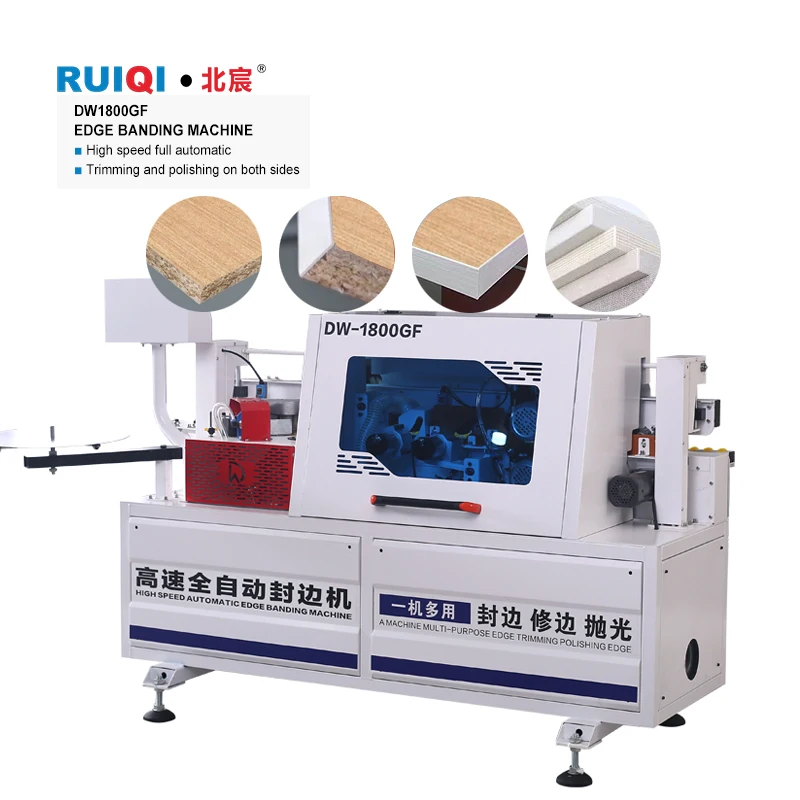
Wholesale Automatic Edge Banding Machine – 4.9KW Small Veneer Wood
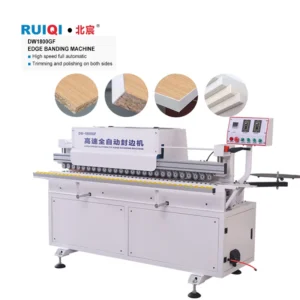
<p><strong>DW1800 Automatic Edge Banding Machine, 4.9KW, 0.3–3MM Edge Thickness, 0–14M/min Feed</strong> — compact full-function edge bander integrating double-sided gluing, front/rear alignment, top/bottom trimming, flexible scraping and polishing within a 220×65×125CM frame. Designed for regional distributors building a model mix that serves small joinery shops and mid-size furniture factories across varied electrical grids. Multi-voltage 220V/380V/415V with EU/USA/AU/UK plug options, control panel language customizable per market.</p> <ul> <li>Voltage, frequency and plug type confirmed in electrical schematic before shipment, matching destination grid standards</li> <li>Pre-shipment factory test record verifies all station functions under load, supporting your local commissioning workflow</li> <li>Operation manual and spare parts list provided in the agreed language for distributor after-sales inventory</li> </ul>
Features
Quality
Certified
Shipping
Worldwide
Support
24/7 Service
Delivery
Fast Lead Time
Full-Function Edge Bander in Compact Footprint — the DW1800 integrates double-sided gluing, trimming, scraping, and polishing within a 220 cm frame, configured for regional market electrical standards before it leaves the factory.
Technical Specifications
| Parameter | Value |
|---|---|
| Model | DW1800 |
| Product Type | Automatic Edge Banding Machine |
| Total Power | 4.9 kW |
| Voltage Options | 380V / 220V / 415V (frequency to be confirmed per destination market) |
| Feed Speed | 0–14 m/min |
| Edge Banding Thickness Range | 0.3–3 mm |
| Edge Banding Height Range | 0–50 mm |
| Minimum Sheet Length | 200 mm |
| Minimum Sheet Width | 100 mm |
| Trimming Spindle Speed | 24,000 r/min |
| Trimming Motor | 800 W × 2 |
| Polishing Motor | 380 W × 2 |
| Vacuum Motor | 550 W |
| Air Source Pressure | 0.4–0.6 MPa |
| Glue Pot Capacity | 4,000 ml |
| Overall Dimensions (L×W×H) | 220 × 65 × 125 cm |
| Net Weight | 320 kg |
| Control Panel Language | Chinese and English standard; Spanish and other languages available on request |
| Plug Options | EU, USA, AU, UK |
| Workstation Construction | Extruded aluminum alloy with roll-ball differential mobile table |
Application Suitability
| Application | Material or Output |
|---|---|
| Custom cabinet door and carcass edge finishing | MDF, particleboard, plywood with PVC or ABS edge banding |
| Small-batch furniture panel production | Veneer edge banding on solid wood panels and blockboard |
| Retail fixture and shelving edge treatment | Particleboard and MDF with melamine or laminate edging |
| Joinery workshop starter-line edge banding | ABB boards, organic glass plates, and similar hardness panels |
| Regional distributor demo and showroom units | Mixed substrate trials for local customer demonstrations |
Why Voltage Confirmation Must Precede Every Edge Banding Machine Distributor Order
A machine wired for the wrong grid standard is scrap metal the moment it is plugged in.
Early in my career, I watched a high-speed edge bander ship to a Spanish distributor with a 400V motor nameplate while the workshop ran 480V at 60Hz. The motor burned within ten minutes of first power-up, and we waited two weeks for an air-freighted replacement transformer while the customer considered cancelling the entire account. That single oversight cost more in freight, reputation, and delay than the machine itself was worth. [NEED_CITE: voltage and frequency standards by export market]
Today, every edge banding machine distributor order we handle starts with a written confirmation of the destination grid — voltage, phase, and frequency — documented on the electrical schematic before production begins. The DW1800 ships configurable across 220V, 380V, and 415V, and we match the plug standard to the end-user country so the machine can be commissioned on arrival without an adapter or a transformer.
Building a Distributor Model Mix That Actually Sells
A regional importer does not need every machine in the catalog — they need a coherent range that covers the small joinery shop, the mid-size custom furniture factory, and the growing cabinet maker scaling from manual to automated production. The DW1800 sits at the entry-to-mid tier of the edge banding machine distributor lineup, offering full-function stations (gluing, trimming, scraping, polishing) in a footprint small enough for workshops with limited floor space. Its 4.9 kW total power draw means it does not require a dedicated industrial supply upgrade, which removes a common barrier for first-time buyers in your territory.
Territory Support and Private-Label Readiness
Importers building their own brand need more than a logo swap. The DW1800 supports customized control panel languages — we have shipped units with Spanish, Russian, and Arabic interfaces so the end-user operator can read the screen without an interpreter. Control panel color, machine badging, and documentation packaging are configurable for private-label programs. For an edge banding machine distributor entering a new territory, this means the machine arrives looking like your product line, backed by your service team, with manuals your technicians can actually use. [NEED_CITE: CE machinery directive requirements for industrial equipment]
How the DW1800 Specifications Translate to Daily Workshop Output
The 0–14 m/min feed speed range lets operators slow down for delicate veneer work on solid wood and speed up for high-volume PVC banding runs on particleboard carcass panels. The 0.3–3 mm edge banding thickness range covers thin real-wood veneer at the low end and standard PVC or ABS edging at the top, eliminating the need for a separate machine when a customer switches materials between jobs.
The dual 800W trimming motors running at 24,000 r/min produce a clean cut on both top and bottom edges in a single pass, which matters when the next station downstream is a boring machine that references the panel edge for hole positioning. If the trim leaves a ragged edge, the bore offset compounds and panels fail at assembly.
The 550W vacuum motor paired with dust extraction ports at each station keeps adhesive dust and trim chips out of the glue pot and off the polishing wheels, extending consumable life and reducing the interval between clean-outs — a detail your service team will notice during routine maintenance visits.
The Hidden Cost of Skipping Configuration Verification
When a distributor orders machines on specification sheets alone without confirming the end-user workshop conditions, the failures are predictable. A 380V machine shipped to a region running 415V will overheat motors and trip thermal protection repeatedly, generating service calls that the local team cannot diagnose because the symptom looks like a component defect rather than a supply mismatch. Control panels printed in a language the operator cannot read stall commissioning for days while the distributor scrambles to translate on the fly. [NEED_CITE: common causes of commissioning failure in imported woodworking machinery]
These are not manufacturing defects — they are configuration failures, and they erode the distributor's reputation with every incident.
What Separates This Supply Partnership
In-house manufacturing with verified tolerance control means the DW1800 edge bander leaving our floor matches the specification sheet your technical team reviewed. Voltage, plug type, and control panel language are confirmed on the electrical schematic before the machine enters assembly — not after it arrives at your warehouse.
A four-stage quality process covers incoming material inspection, in-process checks, finished product testing, and pre-shipment verification under load, so you receive a factory test record with every unit rather than a promise that it was tested. Engineer-led configuration recommendations arrive within 24 hours of your inquiry, including a formal quotation that accounts for your territory's electrical standards and operator language requirements. Factory visits are available for your technical team to witness assembly and testing before shipment.
Documentation & Verification
- CE declaration of conformity for customs clearance in EU and aligned markets
- ISO 9001 certificate supporting your end-user compliance documentation
- Electrical schematic with confirmed voltage, frequency, and plug type per destination
- Factory test record verifying all station functions under load before dispatch
- Operation and maintenance manual in the agreed language for your service inventory
- Spare parts list matched to the DW1800 configuration shipped to your territory
Installation, Commissioning & Support
- The 4.9 kW total draw requires a dedicated circuit matching the confirmed voltage and frequency
- Overall footprint of 220 × 65 × 125 cm fits standard workshop doors for placement without structural modification
- Arrives fully assembled on a mobile table with roll-ball differential for immediate positioning
- First power-up includes glue pot temperature calibration and feed speed verification against your sample panels
- Extruded aluminum alloy workstations require periodic alignment checks documented in the maintenance manual
- Spare parts list includes trimming cutters, polishing wheels, and feed belt segments for local stocking
Starting the Conversation
To move from catalog review to a firm quotation, we need your target market's voltage and frequency standard, the primary panel materials and edge banding types your customers process, and the control panel language your operators require. If you are building a multi-machine starter line, share the upstream and downstream equipment so we can match feed heights and throughput between stations. Sample panel testing before shipment is available — send us your typical substrate and edge material, and we will return processed samples with the test record.
Frequently Asked Questions
Q: What voltage and plug configurations are available, and how is the correct one confirmed? A: The DW1800 is configurable for 220V, 380V, or 415V with EU, USA, AU, or UK plug standards. Before production, we require written confirmation of the destination workshop voltage, phase, and frequency. The electrical schematic reflects this configuration and ships with the machine so your electrician can verify on arrival.
Q: Can the control panel language and machine branding be customized for our market? A: Yes. Chinese and English are standard; Spanish and additional languages are available on request. Control panel color, machine badging, and documentation packaging can be configured for private-label programs. Minimum order quantities for custom branding depend on the scope of changes — confirm with our engineering team during quotation.
Q: What spare parts should a distributor stock locally for after-sales support? A: We recommend stocking trimming cutters, polishing wheels, feed belt segments, and glue pot heating elements based on the DW1800 configuration you order. A detailed spare parts list is included with every shipment, and we can provide a recommended first-year inventory list tailored to your territory's service volume.
Q: What technical training is available for our service and installation team? A: Distributor technical teams are welcome at our factory for hands-on training covering assembly, commissioning, station adjustment, and common fault diagnosis. Remote video support is also available during first installations in your territory. Training schedules are arranged during the order confirmation stage.
Request a Quote
Fill in the form below and our team will get back to you within 24 hours.
Related Products
View All
Edge banding machine