Edge Banding Machine DW102 | Distributor Supply
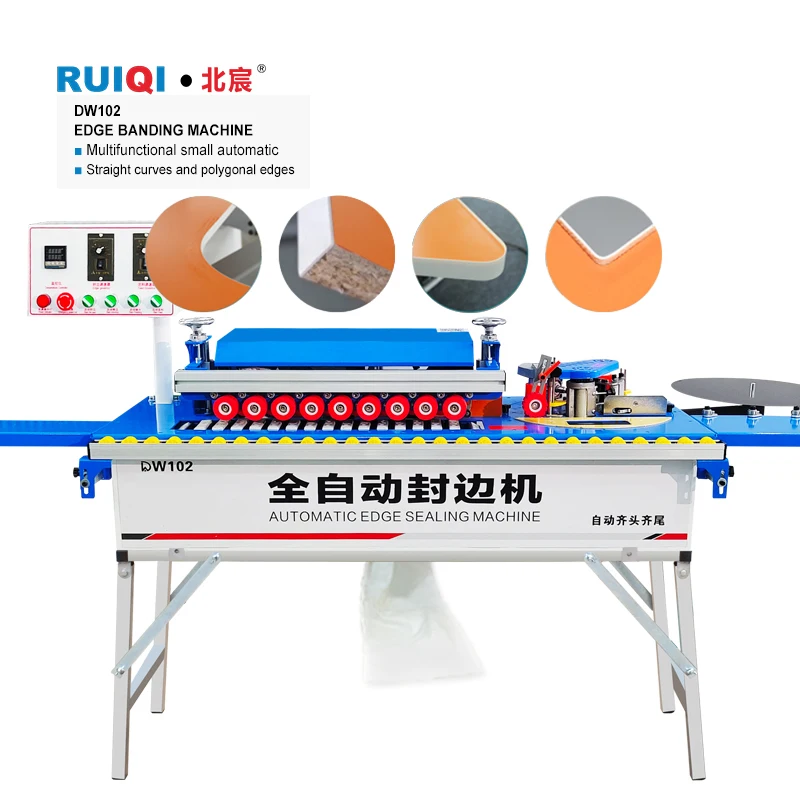
<p><strong>DW102 Automatic Edge Banding Machine, 220V/380V, 0.3-3mm Banding Thickness</strong> — curved and straight edge capability with automatic head and tail cutting, PLC control, and 0.5-0.8MPa air source requirement for reliable adhesive application.</p> <ul> <li>Supports MDF, plywood, particleboard and polymer doors with edge trimming, polishing and chamfering functions</li> <li>Voltage, plug type (EU/USA/AU/UK) and control panel language confirmed before shipment to match local market needs</li> </ul> <p>Distributors can map this model within a complete product family spanning entry-level to full-function pre-milling tiers, aligning SKU selection with regional buyer segments and avoiding incompatible equipment deliveries. Backed by four-stage QC, engineer-led configuration support, and factory test verification prior to dispatch.</p>
Features
Quality
Certified
Shipping
Worldwide
Support
24/7 Service
Delivery
Fast Lead Time
Configurable Voltage Architecture — Every DW102 unit leaves the factory with confirmed electrical schematics matching your local grid, preventing the unusable-machine scenario that plagues cross-border equipment trade.
Technical Specifications
| Parameter | Value |
|---|---|
| Model | DW102 |
| Product Type | Automatic Edge Banding Machine |
| Total Power | 3800W |
| Voltage | 220V/380V/customization |
| Edge Banding Height | 0-50MM |
| Edge Banding Thickness | 0.3-3MM |
| Minimum Sheet Length | 25CM |
| Minimum Sheet Width | 5CM |
| Edge Power | 20W |
| Transmission Power | 60W |
| Trimming Power | 650W×2 |
| Polishing Power | 180W×2 |
| Vacuum Power | 1200W |
| Air Source Pressure | 0.5-0.8Mpa |
| Glue Pot Capacity | 1000ml |
| Product Size | 128×47×69CM |
| Product Weight | 75KG |
| Control System | PLC (source value — verify against manufacturer catalog) |
| Language Options | Chinese and English; customizable to Spanish or other languages |
| Plug Options | EU, USA, AU, UK |
Application Suitability
| Application | Material or Output |
|---|---|
| Cabinet door edge finishing | MDF and plywood panels with PVC edge banding |
| Custom furniture panel processing | Particleboard with 0.3-3MM veneer or polymer strips |
| Wardrobe and shelving production | Medium density fiber board with curved and straight profiles |
| Polymer door edge sealing | Blockboard and wood panels requiring chamfering and polishing |
| Small-batch workshop output | Entry-level furniture manufacturing with mixed substrate runs |
Why the Voltage Question Must Precede the Quotation
Electrical mismatch remains the leading cause of cross-border machinery disputes, and the DW102 addresses this by confirming voltage and frequency before production begins.
I spent my first years distributing woodworking equipment across the Middle East learning this the hard way. A shipment arrived in Iraq with a motor configured for 50Hz operation on a 60Hz grid. The spindle speed was wrong, the glue pot could not reach bonding temperature, and every panel came off the line with cold adhesive failure. The importer absorbed the freight cost both directions and lost an entire production season. When you evaluate an edge banding machine manufacturer, the first document you should request is the voltage confirmation sheet, not the price list [NEED_CITE: voltage and frequency standards by export market].
Territory Planning Across Production Tiers
Distributors entering a new regional market face a segmentation challenge: local furniture factories range from two-person joinery shops to mid-volume cabinet plants. The DW102 occupies the entry-to-mid position within a broader edge banding machine for sale catalogue, letting you stock a single supplier relationship across multiple buyer tiers. This reduces your spare parts complexity and simplifies technician training, since control logic and mechanical architecture share a common platform across the product family.
Language and Plug Localization for End-User Handover
The control panel language might seem minor until your customer's operator cannot read the fault codes during commissioning. The DW102 ships with English and Chinese as standard, but the interface can be configured for Spanish or other target languages before dispatch. Combined with region-specific plug options — EU, USA, AU, or UK — this eliminates the adapter-and-miscommunication problems that stall installation. For a distributor, receiving a machine that is genuinely ready for the end user protects your reputation and reduces support calls during the critical first month of operation [NEED_CITE: operator interface language requirements for industrial machinery].
Interpreting the Core Specifications
The 0.3-3MM edge banding thickness range covers the two dominant material categories in furniture production: thin PVC strips for carcass work and thicker veneer or solid wood banding for visible surfaces. A machine that cannot handle the full span forces a workshop to either buy two units or reject certain orders. The 0-50MM banding height accommodates standard 18MM board as well as thicker stock used in worktops and shelving. Trimming power at 650W×2 provides adequate torque for flush-cutting both straight and curved profiles without stalling on denser substrates. The 1000ml glue pot capacity suits batch production runs typical of small to mid-volume furniture operations, though facilities running continuous shifts should evaluate higher-capacity models within the range. Air source pressure at 0.5-0.8Mpa aligns with standard industrial compressor output, so most workshops can integrate the DW102 without upgrading their pneumatic infrastructure.
The Hidden Cost of Specifying the Wrong Machine Class
Selling an entry-level edge bander into a high-volume production environment leads to premature wear on feed chains, trimming motors, and polishing wheels. The DW102 is engineered for small to mid-volume furniture and cabinet manufacturing. Distributors who push this model into factories running double shifts with heavy particleboard will field warranty claims that are actually abuse cases. Conversely, overspecifying for a small joinery shop means the customer pays for capabilities they will never use, and your competitor undercuts you on the simpler machine. Matching the DW102 to its intended production volume protects both your margin and your customer relationship [NEED_CITE: equipment class matching for furniture production volumes].
Why Source This Machine Through Our Distributor Channel
In-house manufacturing with patented cutting mechanisms means the factory controls tolerance at the component level, not just final assembly. Four-stage quality control — incoming material, in-process, finished product, and pre-shipment verification — catches electrical and mechanical faults before the crate is sealed. Voltage, plug type, and control panel language are confirmed as standard customization, not afterthoughts. Engineer-led configuration means your inquiry receives a formal quotation with specification matching within 24 hours, so you can respond to your own customers without delay. Factory visits are available for distributors who want to audit production depth before committing to a territory agreement.
Documentation & Verification
- CE declaration of conformity covering the DW102 automatic edge banding machine range
- Electrical schematic with confirmed voltage and plug type for your destination market
- Factory test record running your specified panel thickness and edge banding material
- Operation and maintenance manual printed in the agreed operator language
- Spare parts list with part numbers matching the as-built configuration
Installation, Commissioning & Support
- Dedicated 3800W circuit required; confirm local amperage before the DW102 arrives on site
- Machine footprint of 128×47×69CM fits standard workshop aisles with clearance for sheet feeding
- Air supply at 0.5-0.8Mpa must be dry and filtered to protect pneumatic edge pressing cylinders
- PLC control panel walkthrough in the configured language during first commissioning session
- Trimming and polishing wheel replacement intervals documented in the maintenance manual
Starting the Specification Conversation
To match the right edge banding machine configuration to your market, share the substrate types your customers process most frequently, the dominant panel thickness range, and the local voltage and frequency standard. If your end users operate in regions with specific plug or language requirements, note those in the initial inquiry. For distributors evaluating a full product family, indicate the production tiers you need to cover so the recommendation spans entry-level through full-function models.
Frequently Asked Questions
Q: How does the DW102 fit within the full edge banding machine range for distributor planning? A: The DW102 covers the entry-to-mid tier, suited for small furniture workshops and cabinet makers processing mixed substrates. Higher-volume factories requiring pre-milling, multi-stage scraping, or continuous-feed operation are served by other models in the same product family. This tiered structure lets distributors build a regional catalogue from a single manufacturer without managing multiple supply relationships.
Q: What voltage and plug configurations are confirmed before the machine ships? A: The DW102 supports 220V and 380V configurations with additional customization available. Plug types include EU, USA, AU, and UK standards. Voltage, frequency, and plug specification are documented in the electrical schematic and confirmed before production begins, ensuring the machine matches local grid conditions on arrival.
Q: What documentation package accompanies each DW102 for customs and end-user handover? A: Each unit ships with a CE declaration of conformity, ISO 9001 certificate reference, machine specification sheet, electrical schematic with voltage confirmation, factory test record, operation manual in the agreed language, spare parts list, packing photographs, and customs documentation support. Distributors receive the full package for onward transmission to end users.
Q: Can the control panel language and branding be customized for private-label distribution? A: Yes. The PLC control panel supports Chinese, English, and customizable languages including Spanish and others. OEM logo placement and private-label branding are available as part of the manufacturer's standard customization options. Distributors should specify branding and language requirements during the quotation stage to ensure integration before assembly.
Request a Quote
Fill in the form below and our team will get back to you within 24 hours.
Related Products
View All
Edge banding machine
Wholesale Automatic Edge Banding Machine – 4.9KW Small Veneer Wood
View Details
Edge banding machine