DW3600 Series Edge Banding Machine for PVC Wood Panel – Distributor Supply
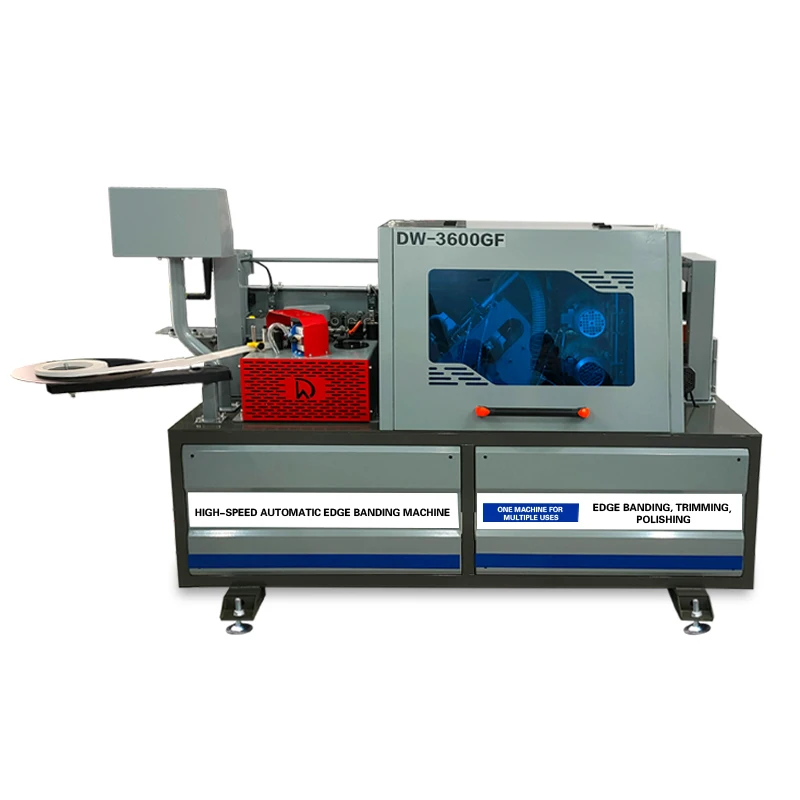
<p><strong>DW-3600GF Automatic Edge Banding Machine, 4.9KW, 0-14m/min Feed Speed, 0.3-3mm Band Thickness</strong> — delivers a seven-function straight-edge workflow from gluing through polishing with dual 800W trimming motors at 24000 r/min.</p> <ul> <li>Configured for regional market distribution with full territory support, spare part backup, and technical training available for reseller service teams handling MDF, plywood, and particleboard applications.</li> <li>Air pressure requirement of 0.4-0.6 MPa and 380V three-phase supply enable straightforward utility compatibility checks during workshop planning.</li> </ul> <p>Pre-shipment factory test records on buyer-supplied substrate samples verify edge quality before dispatch.</p>
Features
Quality
Certified
Shipping
Worldwide
Support
24/7 Service
Delivery
Fast Lead Time
Patented Cutting Tolerances — verified at ±0.02mm on the DW-3600GF through multi-stage grinding and four-step inspection before any unit leaves the facility.
Technical Specifications
| Parameter | Value |
|---|---|
| Model | DW-3600GF |
| Product Type | Automatic Edge Banding Machine |
| Voltage & Frequency | 380V Three-Phase Four-Wire (frequency 50Hz/60Hz to confirm) |
| Total Power | 4.9KW |
| Overall Dimensions (L×W×H) | 2200×650×1250mm |
| Net Weight | 320KG |
| Edge Banding Type | Straight Edge Banding |
| Edge Band Height Range | 0-50mm |
| Edge Band Thickness Range | 0.3-3mm |
| Minimum Plate Length | 200mm |
| Feed Speed | 0-14m/min |
| Gluing Power | 160W |
| Transmission Power | 180W |
| Trimming Power & Speed | 800W×2 / 24000r/min |
| Polishing Power | 400W×2 |
| Air Pressure Requirement | 0.4-0.6MPa |
| Standard Functions | Gluing, Trimming, Front and Rear Trimming, Scraping, Polishing, Vacuuming |
| Language Options | Chinese, English (other languages customizable) |
| Plug Options | EU, USA, AU, UK |
| Standards | CE, ISO 9001 |
Application Suitability
| Application | Material or Output |
|---|---|
| Cabinet door production | MDF and particleboard with PVC edge banding |
| Custom furniture panel processing | Plywood and melamine-faced boards up to 50mm height |
| Joinery workshop automation | Solid wood panels and veneer edge banding materials |
| Small-batch panel sizing | Boards with minimum length of 200mm at variable feed speeds |
Why Voltage Confirmation Must Precede the Purchase Order
A machine wired for 50Hz running on a 60Hz supply burns out its trimming motors within weeks.
I have seen importers in Latin America receive woodworking equipment that sat crated for months because the local grid did not match the factory-default wiring. The DW-3600GF edge banding machine specifications list 380V three-phase as the baseline, but frequency — whether 50Hz or 60Hz — changes motor RPM, glue pot heating curves, and pneumatic response timing. When a distributor orders without locking these details, the result is a unit that powers on but cannot hold tolerance under load [NEED_CITE: voltage and frequency standards by export market].
Matching the Machine to Regional Distribution Needs
Distributors evaluating an edge banding machine for resale need to map each configuration option to the territory they cover. The DW-3600GF ships with plug options spanning EU, USA, AU, and UK standards, but the internal wiring must match the destination country before the unit leaves the production floor. A regional reseller stocking machines for cabinet makers across Mexico and Colombia, for example, faces two different voltage environments within one sales territory, requiring advance specification rather than post-shipment rewiring.
Territory Coverage and Model Mix Planning
A distributor carrying the DW-3600GF needs to decide which edge band thickness range to prioritize based on local furniture manufacturing habits. Markets producing high-volume particleboard cabinetry typically run 0.4-1mm PVC banding, while workshops handling solid wood furniture lean toward veneer strips at the upper end of the 0.3-3mm range [NEED_CITE: edge banding material preferences by regional furniture market]. Stocking the wrong thickness range means losing sales to competitors who specified correctly during the initial order.
Reading the Spec Sheet Against Production Reality
The trimming station configuration on this edge banding machine uses dual 800W motors running at 24000 r/min, which provides sufficient spindle speed for clean flush trimming on both PVC and melamine surfaces. Feed speed ranges from 0-14 m/min with independent transmission and gluing drive power ratings, meaning the operator can reduce feed rate on difficult substrates without losing glue roller pressure. For a distributor explaining this to a technical buyer, the separate 160W gluing power and 180W transmission power indicate that slowing the feed does not starve the glue station — a failure mode common in machines that link both drives to one motor.
The Cost of Skipping the Substrate Test
When a distributor sells an edge bander without running the buyer's actual panel material through the machine first, the fault appears only after installation. Chipped edges on particleboard, visible glue lines on MDF, and delamination on plywood each point to different parameter mismatches — pre-milling speed, glue temperature, or pressure roller timing [NEED_CITE: common edge banding defects by substrate type]. The DW-3600GF's seven-function workflow from gluing through polishing means there are multiple adjustment points, but without a recorded sample test on the buyer's own board stock, troubleshooting becomes guesswork conducted at the customer's expense.
What the Distributor Gains from Manufacturing Depth
This machine comes from a facility that holds proprietary cutting mechanism patents achieving the stated ±0.02mm tolerance, which matters when a distributor's reputation depends on consistent performance across multiple installations. The four-stage QC process — incoming material, in-process, finished product, and pre-shipment verification — means a reseller can request test records specific to each unit's serial number. Voltage and language customization is treated as standard configuration rather than a special order, reducing lead time complications for territory partners planning inventory in advance.
Documentation & Verification
- CE declaration of conformity matched to DW-3600GF configuration and destination market
- Electrical schematic confirming voltage, frequency, and plug type before production begins
- Factory test record showing edge quality on distributor's specified panel substrate
- Operation manual translated into the operator's working language for commissioning
- Spare parts list itemizing trimming cutters, glue rollers, and polishing wheels by part number
Installation, Commissioning & Support
- 2200×650mm footprint requires level concrete floor with clearance for 200mm minimum board infeed
- 380V three-phase supply needs dedicated circuit rated above 4.9KW total draw with correct frequency
- 320KG net weight allows positioning by standard pallet jack without heavy rigging equipment
- Air supply at 0.4-0.6MPa must connect via filtered regulator to protect pneumatic valves
- Initial commissioning includes feed speed and trimming parameter calibration on buyer's panel stock
Inquiry Direction for Distributors
Send the target market's standard voltage and frequency, the edge banding materials your customers run most often, and the panel thickness range you expect to cover. Include the control panel language your service team needs for training purposes, and specify whether you require sample processing on a particular substrate before shipment.
Frequently Asked Questions
Q: How do I confirm the correct voltage and frequency before placing an order? A: Provide your destination country's industrial supply standard at inquiry stage. The factory issues an electrical schematic and voltage confirmation document showing exact wiring, breaker rating, and motor RPM adjusted for your frequency. This document must be approved before the DW-3600GF enters production to avoid post-shipment incompatibility.
Q: What substrate testing is available before I commit to a stock order? A: Send representative samples of the panel materials and edge banding strips your customers use most. The factory runs these through the machine and returns a test record with photographs showing edge quality, glue line condition, and trimming finish. This proof lets you verify suitability before the unit ships.
Q: How is the control panel language handled for my local market? A: State the required operator language during the quotation stage. The DW-3600GF control interface is configured before assembly so that labels, menus, and error messages display correctly from first power-on. Additional languages beyond Chinese and English are available as a configuration option.
Q: What feed speed should I quote to customers working with particleboard? A: Particleboard at standard density typically runs well within the lower to middle portion of the 0-14 m/min range, depending on edge band thickness and trimming requirements. The factory test record documents the exact feed speed and motor parameters used on your sample material, giving you a reference point for customer demonstrations.
Request a Quote
Fill in the form below and our team will get back to you within 24 hours.
Related Products
View All
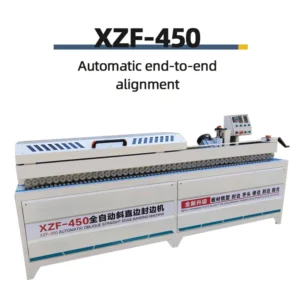
Edge banding machine