DW102 Automatic Edge Banding Machine for Wood Panel – Distributor Supply
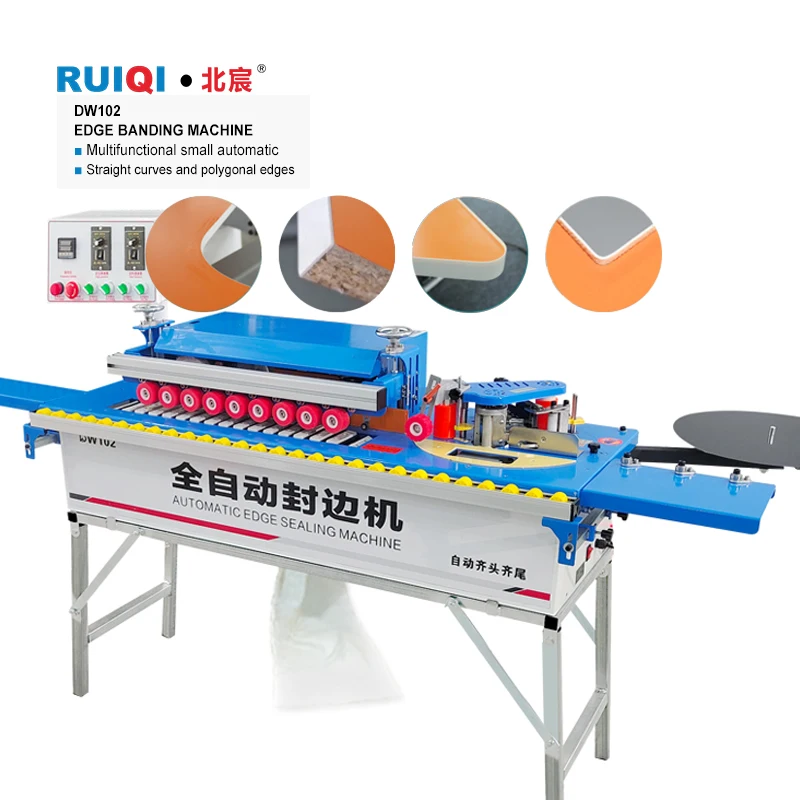
<p><strong>DW102 Automatic Edge Banding Machine, 220V/380V, curved & straight edge capability</strong> — a compact, multi-voltage unit with automatic head-and-tail cutting and operator panel available in English, Spanish, or other market-specific languages. Supports MDF, particleboard, plywood, and polymer doors across workshops transitioning from manual to automated edge processing. Configured for regional distributors building a market-ready product mix.</p> <ul> <li>Pre-shipment voltage confirmation with electrical schematic and factory test record provided for every unit before dispatch</li> </ul>
Features
Quality
Certified
Shipping
Worldwide
Support
24/7 Service
Delivery
Fast Lead Time
Multi-voltage edge bander built for regional resale — configurable from 220V to 380V with operator language matching the destination market, so local dealers can stock one platform across territories.
Technical Specifications
| Parameter | Value |
|---|---|
| Model | DW102 |
| Product Type | Automatic Edge Banding Machine |
| Total Power | 3800W |
| Voltage Options | 220V / 380V / custom |
| Plug Options | EU, USA, AU, UK |
| Edge Banding Thickness | 0.3–3 mm |
| Edge Banding Height | 0–50 mm |
| Minimum Sheet Length | 25 cm |
| Minimum Sheet Width | 5 cm |
| Glue Pot Capacity | 1000 ml |
| Trimming Power | 650W × 2 |
| Polishing Power | 180W × 2 |
| Vacuum Power | 1200W |
| Transmission Power | 60W |
| Edge Power | 20W |
| Air Source Pressure | 0.5–0.8 MPa |
| Product Size | 128 × 47 × 69 cm |
| Product Weight | 75 kg |
| Control Panel Language | English, Spanish, or other on request |
| Key Features | Curved and straight edge banding, automatic head and tail cutting, edge trimming, polishing, vacuum hold |
Application Suitability
| Application | Material or Output |
|---|---|
| Cabinet and furniture panel edge banding | MDF, particleboard, plywood, blockboard |
| Curved panel finishing | Polymer doors, shaped furniture components |
| Small workshop entry-level automation | Solid wood panels, veneer edge banding |
| PVC and melamine edge processing | 0.3–3 mm edge banding tape on panel substrates |
Why Voltage Verification Must Precede the Purchase Order
Every Edge Banding Machine distributor we work with confirms voltage and frequency before we start building, not after the crate arrives.
Across Latin America and other regions with mixed grid standards, I have watched workshops take delivery of equipment that physically could not start. The motor was rated for 50 Hz while the local supply ran at 60 Hz, or the single-phase outlet could not deliver the amperage the glue pot demanded at cold start. These failures are not manufacturing defects; they are specification gaps that surface only when the machine stands on the shop floor [NEED_CITE: voltage and frequency standards by export market]. For an Edge Banding Machine distributor, a single unusable unit erodes customer trust faster than any service call.
Territory-Ready Configuration at Order
When an Edge Banding Machine distributor serves multiple countries, each territory may run a different voltage and plug standard. The DW102 ships configured to the exact grid specification of the destination market, with plug type confirmed on the electrical schematic before production. This eliminates the need for local electricians to fabricate adapters or, worse, bypass safety components.
Language as a Commissioning Factor
Control panel language is often treated as a cosmetic choice until an operator faces an alarm code in a script they cannot read. Commissioning stalls, the installer improvises, and the first production run carries errors born from misunderstanding. Panel language customization ensures the operator reads prompts in their working language from the first power-on [NEED_CITE: multilingual operator interface requirements in industrial machinery].
Reading the Numbers That Matter
The 0.3–3 mm edge banding thickness range covers the PVC and melamine tapes most small-to-medium cabinet shops use daily. Below 0.3 mm, veneer tapes demand different pressure and temperature profiles that this machine is not designed to handle. The 1000 ml glue pot capacity suits intermittent production runs typical of workshops moving from manual to semi-automated output; continuous high-volume lines require larger reservoirs and automated glue feed systems. Trimming power at 650W per unit provides adequate cutting force for particleboard and MDF substrates at the thicknesses this class of machine typically processes, while the dual 180W polishing motors deliver the final surface finish on curved and straight edges alike.
The Cost of Ignoring Configuration Details
I once visited a cabinet factory where the edge bander sat idle for weeks because the air compressor on site could not sustain the 0.5 MPa minimum the machine required. The dealer had never asked about the customer's pneumatic supply. The same pattern repeats with voltage, with panel language, with glue temperature settings mismatched to local humidity. Each oversight translates into service calls the distributor must absorb, and each call chips away at the relationship with the end customer [NEED_CITE: common commissioning failures in woodworking machinery imports].
Why Distributors Source This Model Here
In-house manufacturing with patented cutting mechanisms means the factory controls tolerance at the component level, not through outsourced assembly. The four-stage quality check — incoming material, in-process, finished product, and pre-shipment — catches configuration errors before crating. OEM logo and private-label branding are applied during production, not as aftermarket stickers. Engineer-led configuration review within 24 hours of inquiry ensures the quotation reflects the customer's actual panel materials and production volume. Factory visits are open to distributors who want to verify grinding precision and assembly standards firsthand.
Documentation & Verification
- Electrical schematic with voltage and frequency confirmed for destination market
- Operation manual in agreed operator language, not generic English-only
- Factory test record showing trim and polish output on specified panel thickness
- Spare parts list with part numbers matched to this exact build configuration
- Packing photographs for pre-shipment condition verification
Installation, Commissioning & Support
- Requires a dedicated circuit matching confirmed voltage, with breaker rated for 3800W total draw
- Footprint of 128 × 47 × 69 cm fits standard workshop benches; verify floor load for 75 kg static weight
- Air supply must sustain 0.5–0.8 MPa continuously; undersized compressors cause intermittent feed faults
- Glue pot warm-up time varies with ambient temperature; first-run parameter setting included in guidance
- Operator training covers curved-edge feed technique and head-and-tail cutting trigger adjustment
Preparing Your Specification Inquiry
To configure the right unit, share the voltage and frequency of the destination market, the plug standard, and the primary operator language. Let us know which edge banding materials — PVC, melamine, veneer — your customers most often process, and the typical panel thickness range. If you carry a mixed inventory across territories, provide the model mix you are planning so we can align spare parts and documentation packages accordingly.
Frequently Asked Questions
Q: What voltage and plug configurations are available for different regional markets? A: The DW102 is built to order with 220V, 380V, or custom voltage based on the destination grid. Plug options include EU, USA, AU, and UK standards. Voltage and frequency are confirmed on the electrical schematic before production begins, so the machine matches the local supply without adapters or field modifications.
Q: Can the control panel language be customized for local operators? A: Yes. The standard panel is available in Chinese or English, and we configure it to Spanish or other languages on request. This is specified at the quotation stage so the manual and panel labels align before shipment, avoiding commissioning delays caused by unreadable alarm codes or menu prompts.
Q: What is the OEM and private-label process for distributor branding? A: OEM logo placement and private-label packaging are applied during production as part of the build order. You provide artwork and placement specifications at the order confirmation stage, and we integrate branding into the machine body and documentation templates before assembly.
Q: How is spare parts supply structured for regional dealers? A: Every unit ships with a spare parts list referencing exact part numbers for that build. Dealers can order spare kits — covering trimming blades, polishing wheels, and glue pot components — in bulk for regional inventory. Reorder lead times are typical multi-week cycles aligned to production scheduling.
Q: What territory support and model mix recommendations are available for new distributors? A: We review your target market's panel processing demand and recommend a model mix spanning entry-level to full-function edge banders. Territory support includes technical documentation in the local language, configuration guidance for regional voltage standards, and training materials for your service team to handle first-line diagnostics and parts replacement.
Request a Quote
Fill in the form below and our team will get back to you within 24 hours.