Edge Banding Machine for Plywood Production – Distributor Supply
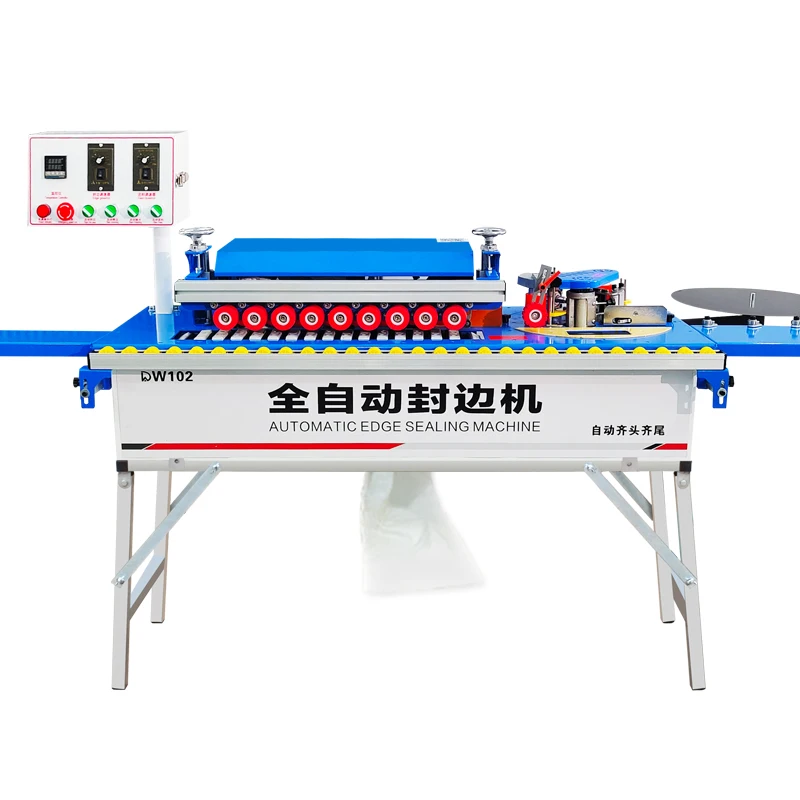
<p><strong>DW102 Automatic Curve / Linear Edge Banding Machine, 220V/380V, 0.3–3mm Edge Thickness, 1200W Vacuum</strong> — dual-mode curved and straight banding with integrated trimming, polishing, and automatic head-and-tail cutting for plywood, MDF, and particleboard panels.</p> <ul> <li>Suits regional distributors assembling a tiered model mix, with compact 128×47×69cm footprint for space-constrained workshops</li> <li>Edge banding height 0–50mm, minimum sheet 25×5cm, glue pot 1000ml capacity</li> <li>Supports custom voltage, plug type (EU/USA/AU/UK), and multilingual control panels confirmed before shipment</li> </ul> <p>Engineer-led configuration with formal quotation within 24 hours, four-stage QC including pre-shipment photographic verification, and full documentation in the agreed language.</p>
Features
Quality
Certified
Shipping
Worldwide
Support
24/7 Service
Delivery
Fast Lead Time
Verified Tolerance Claims — Every DW102 edge banding unit ships with a factory test record documenting actual measured deviation on your specified panel material, not just a brochure number.
Technical Specifications
| Parameter | Value |
|---|---|
| Model | DW102 |
| Product Type | Automatic Curve / Linear Edge Banding Machine |
| Total Power | 3800W |
| Voltage Options | 220V / 380V / customization available |
| Minimum Sheet Length | 25 CM |
| Minimum Sheet Width | 5 CM |
| Edge Banding Height Range | 0–50 MM |
| Edge Banding Thickness Range | 0.3–3 MM |
| Edge Power | 20W |
| Transmission Power | 60W |
| Trimming Power | 650W × 2 |
| Polishing Power | 180W × 2 |
| Vacuum Power | 1200W |
| Glue Pot Capacity | 1000 ml |
| Air Source Pressure | 0.5–0.8 MPa |
| Product Dimensions | 128 × 47 × 69 CM |
| Product Weight | 75 KG |
| Key Features | Curved and straight edge banding, integrated edge trimming, polishing, automatic head and tail cutting, vacuum hold-down |
Application Suitability
| Application | Material or Output |
|---|---|
| Custom furniture panel edge finishing | MDF, particleboard, plywood with PVC or veneer banding |
| Cabinet door curved edge processing | Blockboard and polymer door panels requiring contoured edge profiles |
| Small-batch joinery production | Solid wood panels with straight or curved edge banding in workshop environments |
| Regional distributor tiered inventory | Entry to mid-range edge banding units for varied customer budgets and workshop sizes |
Why Voltage Confirmation Must Happen Before the Purchase Order
Matching electrical specifications to the destination grid prevents weeks of idle equipment on the workshop floor.
I worked through a situation where a South American distributor received a fully automatic curve and linear machine that could not power on because the local three-phase supply did not match the factory default. The installer stood in front of a silent control panel while the end customer's production schedule slipped day after day. It took nearly three weeks to source and install a step-down transformer on site [NEED_CITE: voltage and frequency standards by export market]. That delay cost more than the transformer itself in missed delivery penalties and damaged trust. For any edge banding machine manufacturer shipping across borders, locking in voltage, frequency, and plug type at the quotation stage is non-negotiable.
Territory Coverage Without Catalogue Gaps
A distributor stocking the DW102 gains access to a compact, versatile unit that handles both curved and straight edge profiles in a single pass. This positions the model as a strong entry point for joinery workshops transitioning from manual edge trimming to mechanized finishing. The broader Ruiqi range extends upward through full-function pre-milling configurations, so a distributor can serve customers at every growth stage without splitting orders across multiple suppliers. Maintaining one edge banding machine manufacturer relationship simplifies spare parts logistics, technical training, and warranty administration across the entire product mix.
Spare Parts Backup and Field Service Readiness
Distributor service teams need more than a parts list — they need confidence that wearing components like trimming cutters, polishing wheels, and glue pot heating elements are documented and available [NEED_CITE: typical spare parts consumption rates for edge banding stations]. The DW102 uses standardized trimming and polishing motor assemblies, which means regional warehouses can stock a manageable inventory without carrying dozens of unique SKUs. When a distributor's technician arrives on site, having the correct electrical schematic and a multilingual operation manual reduces diagnostic time and gets the machine back into production faster.
How Core Parameters Shape Daily Output
The 0.3–3 MM edge banding thickness range means the DW102 handles thin PVC foil for budget cabinet work as well as thicker veneer strips for visible furniture edges, all without a hardware changeover. Dual 650W trimming motors provide sufficient cutting force to cleanly remove excess banding material on both straight runs and curved contours, reducing the need for secondary hand finishing. The 1200W vacuum system holds the workpiece firmly against the fence during feed, which matters most when processing narrow stock at the 5 CM minimum width where lateral drift can produce uneven edge contact. A glue pot capacity of 1000 ml supports sustained production runs on standard panel sizes without frequent refill interruptions, though operators should monitor adhesive temperature when switching between PVC and wood veneer materials that demand different melt profiles.
The Cost of Skipping Configuration Checks
When a distributor orders machines without confirming whether the end user processes predominantly curved components or straight panels, the result is often a unit that technically works but frustrates operators daily. A workshop cutting mostly curved cabinet doors needs reliable automatic head-and-tail cutting that tracks tight radii, while a shop running long straight shelving panels prioritizes feed consistency and polishing quality. Mismatched expectations lead to support calls that strain the distributor relationship and slow down repeat orders [NEED_CITE: common causes of edge banding rework in small workshops]. Verifying the customer's typical panel dimensions, banding material, and production volume before confirming the order protects both parties.
Why Distributors Source This Range From Ruiqi
The DW102 sits within a complete edge banding family that spans from compact workshop units to full-function pre-milling lines, allowing one purchase order to cover multiple customer segments. Voltage customization from 220V to 380V with confirmed plug type eliminates the transformer delays that erode distributor margins and credibility. A four-stage quality control process — covering incoming material, in-process assembly, finished product, and pre-shipment verification — means each unit arrives with documented test results rather than unverified claims. OEM branding and private label options let established importers present the equipment under their own market identity. Formal quotations with engineer-led configuration recommendations arrive within 24 hours, keeping distributor pipeline momentum intact.
Documentation & Verification
- CE declaration of conformity specific to the DW102 model and its rated voltage configuration
- ISO 9001 certificate covering the manufacturing process for this edge banding unit
- Factory test record showing actual edge trimming tolerance on your specified panel thickness
- Electrical schematic with confirmed voltage, frequency, and plug type for destination market
- Operation and maintenance manual in the language your technicians and end users require
- Spare parts list identifying wearing components with part numbers for reorder
Installation, Commissioning & Support
- Allocate floor space exceeding 128 × 47 × 69 CM dimensions with clearance for panel infeed and operator access
- Provide a dedicated electrical circuit matching the confirmed 220V or 380V supply and 3800W total draw
- Connect compressed air at 0.5–0.8 MPa to feed the vacuum hold-down and pneumatic actuators
- Run initial edge banding test on actual PVC or veneer stock to calibrate trimming and polishing stations
- Schedule operator training covering glue pot temperature adjustment for different banding material thicknesses
- Stock replacement trimming cutters and polishing wheels based on the included spare parts list
What We Need to Configure Your Order
To prepare an accurate quotation, share the primary panel materials your customers process — MDF, plywood, particleboard, or a mix — along with the typical edge banding thickness and whether curved profiles are common. Confirm the destination market's voltage and frequency so the electrical system is built correctly before assembly begins. Let us know if control panel language or plug type needs to match a specific local standard, and whether the DW102 will operate standalone or alongside existing panel saws and boring machines in a line.
Frequently Asked Questions
Q: What model tiers are available across the edge banding machine range, and how do they differ? A: The range spans from compact single-function units like the DW102 for workshops handling both curved and straight edges, up through full-function models with pre-milling, multi-stage trimming, and corner rounding. Each tier adds processing stations and automation levels. A distributor can build a tiered inventory covering startup joinery shops through high-volume cabinet factories, all from one edge banding machine manufacturer source with unified spare parts support.
Q: Can voltage, control panel language, and plug type be confirmed before shipment? A: Yes. Voltage is configurable from 220V to 380V or other values on request, and the correct setting is locked in at the quotation stage after confirming the destination grid. Control panel language defaults to Chinese and English but other languages are available. Plug options include EU, USA, AU, and UK standards. All three parameters are documented on the electrical schematic included with every shipment.
Q: How does the DW102 integrate with upstream panel saws and downstream boring machines? A: The DW102 processes panels cut to size by sliding table saws or panel saws, receiving stock at its minimum 25 CM length and 5 CM width. After edge banding, panels move to hinge boring or multi-boring stations for hardware preparation. Distributors planning a line layout should match throughput expectations across stations so no single machine becomes the bottleneck for the workshop's daily output.
Q: What spare parts backup and technical training are available for distributor service teams? A: Each DW102 ships with a spare parts list identifying wearing items like trimming cutters, polishing wheels, and glue pot elements. Distributor technicians can access electrical schematics and maintenance documentation for field diagnostics. Technical training on assembly, adjustment, and common fault resolution is available for service teams, reducing dependence on remote support and improving response times for end customers.
Q: Is a factory visit or sample processing test supported before a bulk order? A: Factory visits are welcomed at the Shandong facility where the DW102 and the broader range are manufactured. Distributors can also submit representative panel samples with their preferred banding material for a processing test, and the finished pieces are returned for quality evaluation. Pre-shipment test records with photographic evidence are standard for every confirmed order before dispatch.
Request a Quote
Fill in the form below and our team will get back to you within 24 hours.