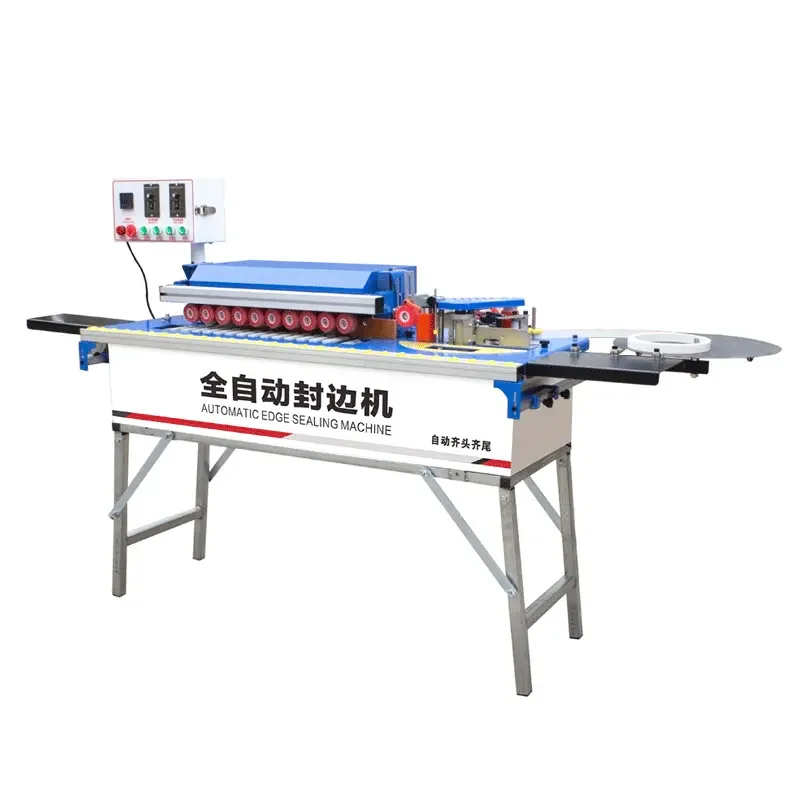
DW102 Portable Edge Banding Machine for MDF Board – Distributor Supply
<p>Four-stage QC with pre-shipment verification ensures every DW102 ships with confirmed electrical specs and documented tolerance records your service team can validate on arrival.</p>
Features
Quality
Certified
Shipping
Worldwide
Support
24/7 Service
Delivery
Fast Lead Time
Verified Electrical Configuration — every DW102 unit ships with voltage, frequency, and plug type documented and matched to the destination grid before crating.
Technical Specifications
| Parameter | Value |
|---|---|
| Model | DW102 |
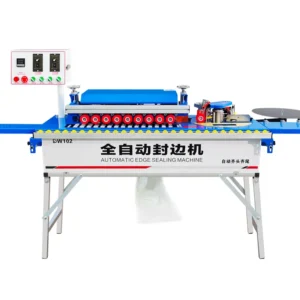
| Product Type | Portable Edge Banding Machine |
| Rated Power | 3800W |
| Voltage & Frequency | 220V / 380V / customization available |
| Control System | Manual operation panel, language customizable |
| Overall Dimensions (L×W×H) | 128 × 47 × 69 cm |
| Net Weight | 75 kg |
| Minimum Panel Length | 25 cm |
| Minimum Panel Width | 5 cm |
| Edge Banding Height Range | 0–50 mm |
| Edge Banding Thickness Range | 0.3–3 mm |
| Edge Trimming Power | 650W × 2 |
| Polishing Power | 180W × 2 |
| Transmission Power | 60W |
| Vacuum Power | 1200W |
| Glue Pot Capacity | 1000 ml |
| Air Source Pressure | 0.5–0.8 MPa |
| Key Features | Curved and straight edge banding, automatic head and tail cutting, vacuum hold-down |
| Feed Speed | basis to be confirmed |
| Panel Thickness Range | basis to be confirmed |
| Tolerance | basis to be confirmed |
| Standards | CE referenced, ISO 9001 company-level |
Application Suitability
| Application | Material or Output |
|---|---|
| Custom cabinet door edge finishing | MDF and particleboard with PVC or veneer banding |
| Small-batch furniture panel edging | Plywood and blockboard up to 50 mm banding height |
| Curved panel contour banding | Shaped MDF components for polymer doors and retail fixtures |
| Workshop transition from manual to machine | Mixed board stock in joinery startups scaling production |
Why the Voltage Question Should Come Before the Price
A woodworking machinery distributor cannot afford machines that sit idle on the showroom floor because the plug does not match the local grid.
I spent years on the assembly floor watching edge banders get crated and shipped with nothing more than a quick glance at the nameplate. The real problems showed up weeks later — a distributor in Southeast Asia once received a batch of compact banders wired for 380V, while their end users ran on 440V networks. Those machines sat in containers for three weeks while transformers were sourced locally. That kind of delay erodes trust faster than any specification sheet can rebuild it. When you represent a brand in a regional market, every unit that arrives unusable reflects directly on your credibility [NEED_CITE: voltage and frequency standards by export market].
Territory-Ready Configuration for Resellers
A woodworking machinery distributor entering a new region needs equipment that arrives commissioning-ready, not commissioning-dependent. The DW102 ships with voltage confirmation documented before production begins — whether the destination market runs on 220V single-phase or 380V three-phase, the electrical schematic is matched and verified. Plug options cover EU, USA, AU, and UK standards, so the machine can be unboxed and powered on without field modifications. This eliminates the most common cause of distributor returns in the portable edge bander segment.
Multilingual Panels and OEM Branding
The operator panel language is set during assembly — Chinese, English, Spanish, or a custom language agreed before production. For a distributor selling into markets where the workshop floor does not read Chinese, this removes the commissioning bottleneck that stalls first-time buyers. Beyond language, the DW102 supports OEM branding with private-label logo placement, custom color schemes, and branded packaging. This allows a regional reseller to build a coherent product identity across their catalog rather than acting as a pass-through for a generic factory mark [NEED_CITE: CE machinery directive requirements for industrial equipment].
Reading the Spec Sheet Against Your Market
The DW102 runs a 1000 ml glue pot, which suits the batch sizes typical in small workshops processing MDF and plywood — large enough to sustain continuous runs through a morning shift without constant refilling, compact enough to heat up quickly when switching between PVC and veneer banding materials. The 650W dual edge-trimming motors provide adequate cutting force for 0.3–3 mm banding stock across the full 0–50 mm height range. Air source pressure of 0.5–0.8 MPa means most standard workshop compressors can supply the unit without requiring a dedicated pneumatic line. The vacuum hold-down system at 1200W secures panels as short as 25 cm, which is critical when banding small cabinet components and drawer fronts that would otherwise shift during trimming.
The Hidden Cost of Shipping Without Verification
When a distributor accepts a quotation without locking down electrical specifications, the consequences cascade through the entire downstream relationship. The end customer — typically a small cabinet maker or joinery workshop — has already scheduled installation and promised delivery to their own clients. A machine that cannot power on means missed deadlines, emergency transformer purchases, and service calls that the distributor's own team is not equipped to handle. Over time, these incidents push buyers toward competing suppliers who may charge more upfront but deliver machines that work on day one [NEED_CITE: common causes of commissioning delays in imported woodworking equipment].
Why Distributors Source This Line
In-house manufacturing with verified tolerance on cutting mechanisms means the DW102 is not a relabeled unit from a trading company — the factory controls the build from component sourcing through final test. Voltage, language, and specification customization operates as standard procedure rather than a special request, which shortens the quotation-to-shipment cycle for distributors managing multiple SKUs. The four-stage quality control process includes pre-shipment verification with factory test records, so each unit has documented performance data before it leaves the assembly line. Engineer-led configuration recommendation ensures that a distributor building a compact edge bander tier receives a formal quotation with confirmed specifications within 24 hours. Factory visits are welcomed for distributors who want to audit the production depth before committing to a territory agreement.
Documentation & Verification
- CE declaration of conformity matched to the DW102 portable edge bander configuration
- ISO 9001 certificate covering the manufacturing facility producing this unit
- Electrical schematic confirming voltage, frequency, and plug type for your market
- Factory test record on your specified banding thickness and panel dimensions before dispatch
- Spare parts list with part numbers for trimming blades, polishing wheels, and glue pot seals
- Packing photographs documenting crating condition prior to container loading
Installation, Commissioning & Support
- Requires a stable 220V or 380V dedicated circuit matching the confirmed electrical specification
- 128 × 47 × 69 cm footprint fits standard workshop benches with standard floor anchoring
- Ships fully assembled — no on-site mechanical assembly required beyond unpacking
- 1000 ml glue pot requires initial heat-up cycle and temperature calibration on first commissioning
- 0.5–0.8 MPa air supply connection verified against local compressor output before first run
- Trimming and polishing consumables listed in the spare parts sheet for reorder planning
Structuring Your Inquiry
To move from catalog review to confirmed quotation, share the target market's voltage and frequency standards, the workshop profiles you serve including typical panel materials and dimensions, and the language your end users require on the operation panel. If OEM branding is part of your market strategy, specify logo placement, packaging requirements, and any custom documentation needs at the inquiry stage so the formal quotation reflects the full scope.
Frequently Asked Questions
Q: What territory support and exclusivity options are available for regional distributors? A: Territory arrangements are discussed after an initial order history is established. We provide model mix recommendations suited to your regional workshop profiles, technical documentation in the local language, and dedicated pricing tiers. Exclusivity terms depend on market size and demonstrated distribution capability, formalized through a written agreement once both parties agree on annual volume expectations.
Q: How do you handle voltage, plug type, and control-panel language for different export markets? A: Before production begins, we confirm the destination country's voltage, frequency, and plug standard in writing. The electrical schematic is built to match, and the operation panel is configured in the agreed language — English, Spanish, or a custom option. Each unit ships with documentation confirming the electrical configuration so your technical team can verify on arrival.
Q: What is the OEM and private-label customization process? A: We accommodate custom logo placement on the machine body, branded color schemes, and tailored packaging from the first unit. The process starts with artwork approval, followed by a sample confirmation before the production run. Documentation including operation manuals and spare parts lists can also carry your branding. All customization details are captured in the formal quotation.
Q: What spare parts backup and technical training do you provide for our service team? A: Each shipment includes a detailed spare parts list with reorder numbers for high-wear components like trimming blades and polishing wheels. We provide technical documentation covering maintenance intervals and troubleshooting. For distributors building local service capability, we can arrange factory-based training sessions or remote technical guidance during initial commissioning of the first units in your territory.
Q: What model mix do you recommend for a distributor entering a new regional market? A: For a distributor entering a new territory with varied workshop sizes, we recommend starting with portable units like the DW102 for the small-workshop segment, then adding full-function automatic edge banders as your customer base scales. This layered approach lets you serve joinery startups immediately while positioning for larger furniture factory projects as market relationships develop.
Request a Quote
Fill in the form below and our team will get back to you within 24 hours.