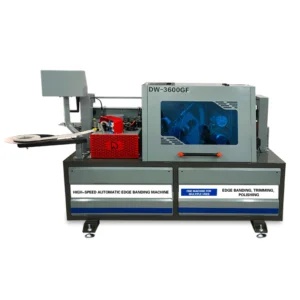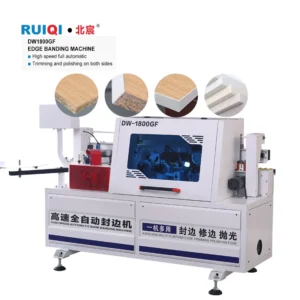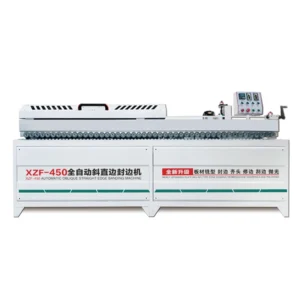
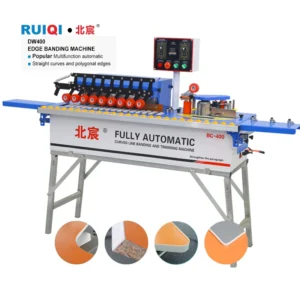
Edge banding machine
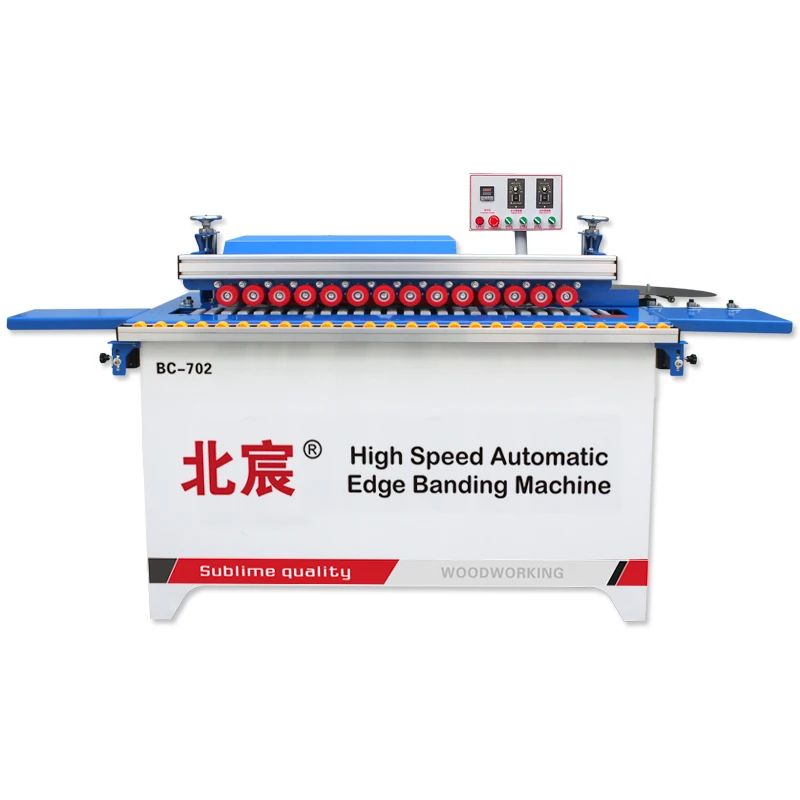
Automatic Edge Banding Machine for Wood Panel – Distributor Supply
<p><strong>DW702 Automatic Edge Banding Machine, 220V/380V Custom, 0.3-3mm Banding Thickness</strong> — handles MDF, particleboard, plywood and polymer doors with edge trimming, polishing and vacuum hold-down in a compact 120×55×110cm footprint.</p> <p>Built for importers evaluating model mix across regional markets, this unit supports multi-language control panels and voltage customization from 110V to 440V so operators can commission immediately. Banding height covers 0-50mm with 0.02mm tolerance verified at pre-shipment inspection.</p> <ul> <li>Territory support and spare parts backup for long-term distributor operations</li> <li>OEM logo and private label capability with confirmed design before production runs</li> <li>Technical training on installation and maintenance provided for your local service team</li> </ul>
Features
380V
CE Certified
Distributor Supply
DW702
Edge Banding Machine
Furniture Factory
Wood Panel
Quality
Certified
Shipping
Worldwide
Support
24/7 Service
Delivery
Fast Lead Time
Voltage-Confirmed Build Protocol — Every DW702 edge banding machine ships with documented voltage and frequency verification matched to your regional grid before assembly begins.
Technical Specifications
| Parameter | Value |
|---|---|
| Model | DW702 |
| Product Type | Automatic Edge Banding Machine |
| Total Power | 3800W |
| Voltage | 220V / 380V / customization available |
| Edge Banding Thickness Range | 0.3–3 mm (PVC and veneer compatible) |
| Edge Banding Height Range | 0–50 mm |
| Minimum Sheet Length | 25 cm |
| Minimum Sheet Width | 10 cm |
| Trimming Power | 800W × 2 |
| Polishing Power | 180W × 2 |
| Vacuum Power | 1200W |
| Air Source Pressure | 0.4–0.8 MPa |
| Glue Pot Capacity | 1000 ml |
| Product Dimensions | 120 × 55 × 110 cm |
| Product Weight | 105 kg |
| Control Panel Language | Chinese and English standard; other languages customizable |
| Plug Options | EU, USA, AU, UK |
| Key Features | Edge banding, trimming, polishing, automatic head and tail cutting, integrated vacuum |
| Certification | CE |
Application Suitability
| Application | Material or Output |
|---|---|
| Custom cabinet door edge finishing | MDF and particleboard with PVC edge banding |
| Furniture panel edge banding | Plywood and blockboard with veneer strips |
| Polymer door production line | Polymer composite panels requiring clean trim |
| Small to medium workshop batch runs | Mixed sheet stock from 25 cm minimum length |
| Distributor demo and showroom units | Representative samples across substrate types |
Why Voltage Confirmation Must Precede Every Distributor Order
An edge banding machine distributor that skips electrical verification before ordering absorbs the full cost of dead-on-arrival inventory.
I once watched a rotary line edge bander sit idle on a Lagos workshop floor for eleven days. The machine was wired for 380V/50Hz. The customer's generator output was 440V/60Hz. No one had asked. A transformer had to be air-freighted in while the installer's crew stood around charging day rates. That generator mismatch is not rare in the markets I work across — South Asia and sub-Saharan Africa run a patchwork of grid standards, backup gensets, and industrial phase configurations that rarely match a default factory setting. When you stock machines for resale, one unconfirmed voltage spec can tie up capital in a unit that cannot be demonstrated, let alone commissioned [NEED_CITE: voltage and frequency standards by export market].
Territory Inventory Planning Across Model Tiers
When you are stocking machines for a regional market, the DW702 occupies a specific position: a compact-format automatic edge bander with trimming and polishing at a total draw of 3800W. That power envelope means it runs on single-phase 220V in markets where small workshops do not have three-phase supply — or on 380V three-phase where industrial estates provide it. For an edge banding machine distributor, this voltage configurability determines whether the unit goes into a startup joinery shop or a mid-volume cabinet factory. The 0.3–3 mm edge thickness range covers the PVC and veneer stock that most furniture makers in developing markets actually purchase locally, reducing the chance that a buyer discovers their edge material is incompatible after delivery.
Building a Service-Ready Distributor Stock
Distributors who hold inventory without a service plan lose accounts to competitors who respond faster. The DW702 supports distributor-level service readiness through accessible component layout and a control panel configurable in the operator's language. When your service team opens the electrical cabinet, they find labeled terminal blocks and a wiring diagram that matches the machine as-built — not a generic schematic from a different configuration. This matters because the most common service calls in the first ninety days involve glue pot temperature calibration and trimming alignment, both addressable on-site without factory intervention if your technicians have been properly briefed [NEED_CITE: CE machinery directive requirements for industrial equipment].
How Trim Stations and Glue Pot Capacity Shape Output Quality
The dual 800W trimming motors on the DW702 handle both head/tail cutting and flush trimming in sequence, which matters when your customers process boards as short as 25 cm. A single trimming motor that tries to do both operations often leaves a visible witness mark at the board end — the kind of defect that gets a cabinet door rejected during final assembly. The 1000 ml glue pot capacity is sized for intermittent batch work rather than continuous production lines, meaning the operator must manage glue temperature cycles to avoid degradation during long idle periods between sheets. For PVC edge banding in the 0.3–3 mm range, maintaining the correct glue viscosity directly determines whether the bond survives the thermal expansion differences between PVC and MDF substrates in tropical climates. The 0.4–0.8 MPa air pressure requirement also dictates that workshops must pair this machine with a compressor capable of sustained delivery, not just peak pressure — undersized compressors cause intermittent pressure drops that show up as inconsistent edge seating.
The Hidden Cost of Underspecified Stock
I have walked into distributor warehouses where three different edge banders sat under dust covers, each one returned because the end customer's workshop could not power it. One unit required a dedicated 63A breaker that the building did not have. Another arrived with a Chinese-only control panel in a market where no operator could navigate the menus, so the machine sat until the distributor paid for a translator to create a laminated cheat sheet. These are not manufacturing defects — they are specification failures that happen when the ordering conversation focuses on unit price and skips the installation environment. Every unsold machine in your warehouse represents tied-up capital, lost showroom credibility, and a customer who went to your competitor instead [NEED_CITE: common causes of industrial equipment commissioning failure in emerging markets].
Why Distributors Source This Range Here
The four-stage quality control process covers incoming material inspection, in-process assembly checks, finished product testing, and pre-shipment verification — each unit is tested before crating, and the test record travels with the shipment so your receiving team can verify performance on arrival. Voltage and plug configuration are confirmed per order, not assumed from a default build sheet, which eliminates the dead-on-arrival scenario that destroys distributor margins. The product family spans entry-level to full-function models, meaning you can stock a graduated range without managing relationships with multiple manufacturers — your customers scale up within one ecosystem and your service team trains on one platform. OEM branding and private-label capability allow you to build your own market identity rather than reselling a factory badge. Factory visits are welcomed, so your procurement team can evaluate component sourcing and assembly depth before committing to a stocking agreement.
Documentation & Verification
- CE declaration of conformity referencing the DW702 model configuration as shipped
- Factory test record documenting trim quality on your specified panel thickness range
- Electrical schematic matching the confirmed voltage and plug type for your market
- Operation and maintenance manual in the language your service team requires
- Spare parts list with component codes for long-term distributor stock planning
Installation, Commissioning & Support
- The 120 × 55 × 110 cm footprint requires a level concrete floor with clearance for sheet infeed on both sides
- Dedicated circuit matching confirmed voltage (220V single-phase or 380V three-phase) with appropriately rated breaker
- Machine ships partially assembled; glue pot and feed rail require on-site alignment before first run
- Air supply at 0.4–0.8 MPa must come from a compressor with sufficient continuous delivery, not just peak rating
- First commissioning includes glue temperature calibration and trim motor alignment for the local edge banding material
- Control panel language set before dispatch so operators can navigate menus from day one without translation delays
What We Need to Build Your Stock Correctly
Before we quote a stocking order, provide the target market's standard voltage and frequency, the edge banding materials your customers most commonly use, and the languages your service team and end operators require. If you are evaluating a mixed-model order across the product family, share the production volume segments your market covers so we can recommend the right unit mix.
Frequently Asked Questions
Q: What territory exclusivity and market support do you offer distributors? A: Territory arrangements are negotiated per region based on stocking commitment and service capability. We provide product range documentation, competitive positioning guidance, and co-branded marketing materials. Exclusivity terms depend on minimum order volume and demonstrated after-sales coverage in your territory. We discuss specifics during the distributor evaluation visit.
Q: How do you provide technical training for our service team? A: We conduct training sessions covering installation procedures, common fault diagnosis, and routine maintenance for the DW702 and other models in your stocking order. Training can take place at our factory or at your facility. Your technicians work through real commissioning scenarios including glue pot calibration and trim alignment so they are confident handling first-day service calls independently.
Q: What is the spare parts supply chain and lead time for regional stock? A: Each distributor order ships with a detailed spare parts list identifying wear components and their codes. We recommend an initial spare parts package sized to your projected installed base. Replacement parts are dispatched on request with standard international shipping timelines. Maintaining a local buffer stock of high-wear items reduces downtime for your end customers.
Q: Can we customize machines with our brand and regional voltage standards? A: OEM logo placement and private-label branding are available with confirmed artwork before production begins. Voltage is built to your confirmed specification — 220V, 380V, or other regional requirements — and plug type is matched to your market standard. Control panel language is configured per order. All customization details are documented in the build sheet before assembly starts.
Request a Quote
Fill in the form below and our team will get back to you within 24 hours.