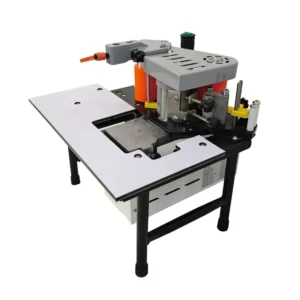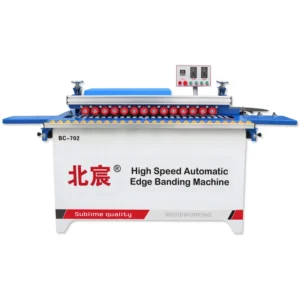
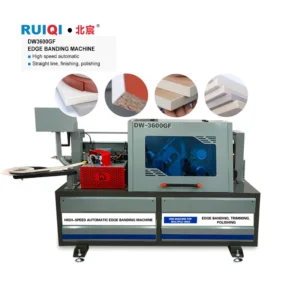
Edge banding machine
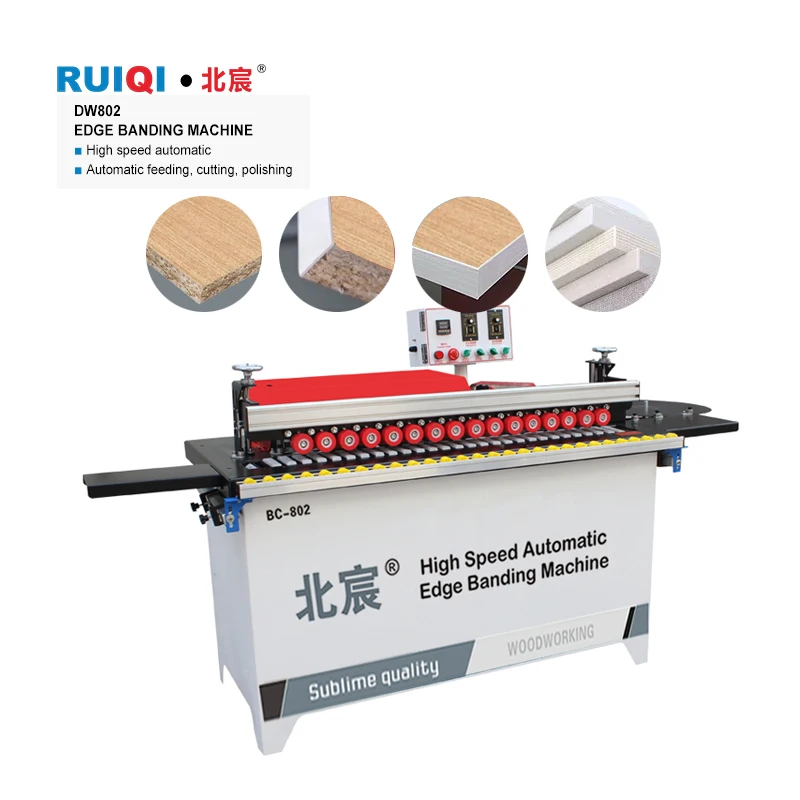
Wood Based Panels Edge Banding Machine – Distributor Supply
<p><strong>DW802 Automatic Edge Banding Machine, 220V/380V, 0.3–3mm Edge Thickness</strong> — configured for straight-edge MDF, particleboard, plywood and solid wood panel processing with integrated trimming, polishing and automatic head-and-tail cutting.</p> <ul> <li>Supports distributors comparing model tiers across a full edge banding range, from compact workshop units to full-function pre-milling systems</li> <li>Voltage and multilingual control panel customizable per regional market; 4000ml glue pot capacity suited for continuous batch runs</li> <li>Factory test records and pre-shipment verification with CE documentation provided for confident resale evaluation</li> </ul>
Features
== Gate == identifier: DW802 → PASS == 标签 == Edge Banding Machine
380V
Automatic Edge Banding
Custom Furniture
Distributor Supply
DW802
MDF Panel
Vacuum System
Quality
Certified
Shipping
Worldwide
Support
24/7 Service
Delivery
Fast Lead Time
Engineer-Led Configuration — Every DW802 is matched to your regional voltage, panel material, and target throughput before the quotation is issued, avoiding the costly mismatches that plague catalog-only orders.
Technical Specifications
| Parameter | Value |
|---|---|
| Model | DW802 |
| Product Type | Automatic Edge Banding Machine |
| Total Power | 4200W |
| Voltage & Frequency | 220V / 380V / Customization |
| Glue Pot Capacity | 4000 ml |
| Edge Banding Thickness Range | 0.3 – 3 mm |
| Edge Banding Height Range | 0 – 50 mm |
| Minimum Sheet Length | 250 mm |
| Minimum Sheet Width | 100 mm |
| Trimming Power | 800W × 2 |
| Polishing Power | 180W × 2 |
| Vacuum Power | 1200W |
| Air Source Pressure | 0.4 – 0.8 MPa |
| Product Dimensions | 1300 × 600 × 950 mm |
| Product Weight | 135 kg |
| Standard Control Language | Chinese / English (other languages customizable) |
| Certification | CE, ISO 9001 |
Application Suitability
| Application | Material or Output |
|---|---|
| Custom furniture panel edge sealing | MDF and particleboard with PVC or ABS edge bands |
| Cabinet door and carcass production | Melamine-faced chipboard with 0.4–2 mm veneer or plastic strips |
| Plywood case goods and shelving | Plywood panels with solid wood or laminate banding |
| Small-batch joinery and fit-out work | Solid wood boards requiring trimming and polishing in one pass |
| Home decoration millwork | Ecological board and blockboard for interior fixture manufacturing |
What "Incompatible Feed Heights" Leaves Out When Buying a Single Edge Banding Machine
Specifying one machine without mapping it to the rest of your line creates bottlenecks that no amount of on-site adjustment can fix.
I have watched distributors in Latin America import an edge banding machine manufacturer's unit only to discover the infeed conveyor sat forty millimetres above their existing panel saw outfeed. The operators spent the first week shimming rollers and building ramps just to move boards between stations. That kind of mismatch is invisible in a spec sheet but devastating on the shop floor [NEED_CITE: material flow alignment between woodworking stations]. When you survey the complete product family first — from entry-level compact models to full-function pre-milling configurations — you can match throughput, feed height, and board-width capacity across every station before committing capital. The DW802 sits at the mid-range tier of the Ruiqi edge bander lineup, bridging the gap between basic trimming-only machines and high-volume pre-milling units, giving importers and factory planners a reference point for building a balanced catalogue or phased production line.
Positioning the DW802 Across the Full Product Family
Distributors and importers need a range they can present to different customer segments without juggling multiple suppliers. The DW802 occupies a practical middle ground within the edge banding machine manufacturer's lineup. Entry-level models handle simple straight-edge banding for small workshops, while the DW802 adds automatic head-and-tail cutting, dual trimming motors, and vacuum hold-down — functions that a growing custom furniture factory demands. Above it, full-function pre-milling models handle heavier panel volumes and thicker substrates. Having this tier visible in your catalogue lets a buyer compare spec-for-spec and choose the right step for their market without leaving the same product family.
Why Distributors Survey the Range Before Placing a Stock Order
Regional markets vary enormously in what sells. A distributor serving small carpentry shops in one territory may move mostly entry-level machines, while the same distributor's industrial clients expect pre-milling capability for high-density particleboard. Stocking the DW802 alongside its smaller and larger siblings means you can answer both inquiries from the same warehouse [NEED_CITE: woodworking machinery distributor model mix strategies]. The shared component architecture across the family also simplifies spare-part inventory: glue pots, trimming cutters, and polishing wheels cross-reference between models, reducing the number of SKUs you need to hold locally.
Reading the DW802 Specs Through a Production Lens
The 4000 ml glue pot is sized for continuous runs without frequent refill stops — a practical advantage when a batch of cabinet panels must be edged in a single shift without the operator breaking the thermal cycle. The dual 800W trimming motors provide balanced top-and-bottom trimming force, reducing chatter marks on melamine surfaces that would otherwise show under angled lighting. Edge banding thickness coverage from 0.3 to 3 mm means the machine handles everything from thin PVC foil on drawer fronts to thicker ABS strips on worktop edges without a hardware changeover. The 0–50 mm height range covers standard 16 mm and 18 mm panel stock as well as thicker solid-wood components used in furniture legs and frame assemblies. Air pressure specified at 0.4–0.8 MPa aligns with standard workshop compressor output, so most existing pneumatic systems can supply the machine without an additional dedicated compressor.
The Hidden Cost of Ordering Without Confirming Voltage and Panel Climate
One distributor I worked with shipped a mid-range edge bander to a Chilean client who ran high-moisture particleboard. The glue line turned opaque white because the pot temperature was set for standard MDF, and the local 220V/60Hz supply caused the heating element to run cooler than its 50Hz calibration. Four days of on-site troubleshooting followed before we identified the root cause [NEED_CITE: voltage frequency impact on resistive heating elements in woodworking machinery]. Machines quoted without confirming local voltage and frequency can arrive functionally unusable, or worse, run just well enough to produce intermittent quality defects that erode the end customer's confidence. That experience now shapes how every DW802 order is processed: voltage and frequency are locked in writing, and the glue pot is calibrated to the buyer's panel material and ambient workshop climate before the machine leaves the factory.
Why Sourcing This Edge Bander from Ruiqi Works for Resellers
In-house manufacturing with patented cutting mechanisms means component traceability from spindle to glue roller — a point that matters when a distributor must justify equipment origin to their own clients. Voltage, language, and specification customization are treated as standard order parameters, not special requests, which shortens the communication loop between importer and factory. The four-stage quality control protocol — incoming material, in-process, finished product, and pre-shipment verification — is documented and shareable with your downstream buyers. An engineer-led configuration recommendation with a formal quotation within twenty-four hours keeps the sales cycle moving, especially when you are responding to a tender with a tight deadline. Factory visits and sample processing tests on the buyer's own panel stock are available, giving you tangible proof to present during distributor negotiations.
Documentation & Verification
- CE declaration of conformity matched to the DW802 configuration as shipped
- ISO 9001 certificate covering the manufacturing process for this unit
- Machine specification sheet with confirmed voltage and frequency for the destination market
- Electrical schematic documenting all circuit paths and motor ratings
- Factory test record run on the buyer's specified panel thickness and edge band material
- Operation and maintenance manual produced in the agreed control-panel language
Installation, Commissioning & Support
- Verify a dedicated 4200W circuit with correct voltage and grounding before uncrating
- Account for the 1300 × 600 mm footprint plus infeed and outfeed clearance in floor planning
- Confirm air supply at 0.4–0.8 MPa with a clean, dry line connected to the machine inlet
- Calibrate glue pot temperature to local panel moisture content and ambient workshop climate
- Run first-article test panels through banding, trimming, and polishing to set baseline parameters
- Stock consumable trimming cutters and polishing wheels matched to the banding thickness range
Planning Your Next Equipment Inquiry
To move from a catalogue review to a firm configuration, share the panel materials and edge band types your customers run most often, the local voltage and frequency at the installation site, and the languages required on the control panel. If the DW802 will join an existing line, provide the infeed and outfeed heights of neighbouring machines so material flow can be verified before the order is placed. Mention whether you need sample panels processed on the factory floor or if a site visit is preferred before final commitment.
Frequently Asked Questions
Q: How does the DW802 compare to other models in the full edge banding range? A: The DW802 sits in the mid-range tier, adding automatic head-and-tail cutting, dual trimming, and vacuum hold-down beyond entry-level models, while sitting below full-function pre-milling units designed for high-volume production. This positioning lets distributors offer a clear step-up path to customers who outgrow basic machines but do not yet need industrial throughput.
Q: What voltage and frequency options are available, and how is configuration confirmed? A: The DW802 supports 220V, 380V, and custom configurations. Voltage and frequency are confirmed in writing before production, and the glue pot and motors are calibrated to the destination supply. This prevents the common problem of machines arriving unusable because the local grid was never verified during the quotation stage.
Q: Can the control panel language be customized for different markets? A: Yes. Chinese and English are standard, and additional languages are available as a customization option. The agreed language is documented in the order confirmation and reflected in both the control interface and the operation manual supplied with the machine.
Q: Is OEM branding or private-label packaging available for distributors? A: OEM logo application and private-label packaging are available for qualified distributor orders. The branding scope, including logo placement and packaging artwork, is confirmed during the specification stage so that production tooling and print materials are ready before the manufacturing run begins.
Request a Quote
Fill in the form below and our team will get back to you within 24 hours.