Distributor Supply Edge Banding Machine for Panel Furniture
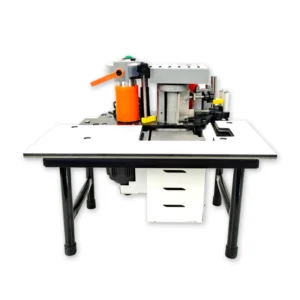
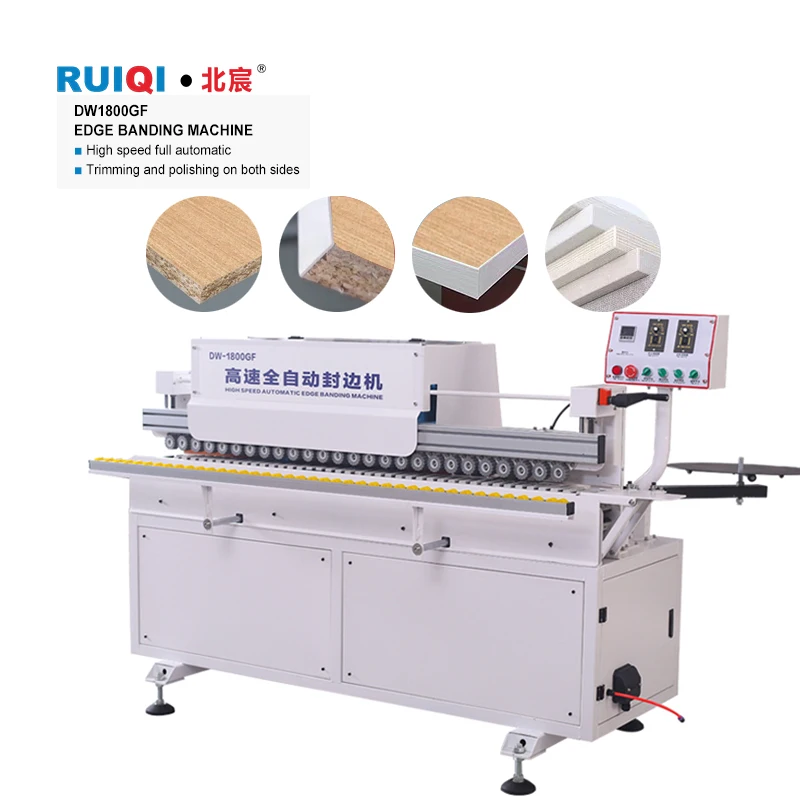
<p><strong>DW1800 Automatic Edge Banding Machine, 4.9 kW, 7-Station</strong> — delivers gluing, end cutting, rough and fine trimming, profile tracking, scraping, and polishing in a compact 220 × 65 × 125 cm footprint. Supports 0.3–3 mm banding thickness on MDF, plywood, particleboard, and solid wood panels with 0–14 m/min variable feed speed and 4,000 ml glue pot for continuous runs.</p> <ul> <li><strong>Multi-voltage ready</strong> — ships in 220V / 380V / 415V with EU, USA, AU, or UK plugs confirmed before production, plus multilingual control panels and OEM branding for your regional market</li> <li>Roll-ball differential conveying on extruded aluminum alloy keeps panels stable without deformation, protecting edge quality through every station</li> <li>CE and ISO 9001 backed, with pre-shipment factory test records, electrical schematics matching your grid, and operation manuals in your team's language</li> </ul>
Features
Quality
Certified
Shipping
Worldwide
Support
24/7 Service
Delivery
Fast Lead Time
Voltage-Verified Manufacturing — Every DW1800 edge banding machine ships only after the buyer's electrical panel photo confirms local supply, eliminating dead-on-arrival failures for regional partners.
Technical Specifications
| Parameter | Value |
|---|---|
| Model | DW1800 |
| Product Type | Automatic Edge Banding Machine |
| Total Power | 4.9 kW |
| Voltage & Frequency | 220V / 380V / 415V, 50/60Hz configurable |
| Overall Dimensions (L×W×H) | 220 × 65 × 125 cm |
| Net Weight | 320 kg |
| Minimum Panel Length | 20 cm |
| Minimum Panel Width | 10 cm |
| Panel Thickness Range | 10–50 mm |
| Edge Banding Thickness | 0.3–3 mm |
| Feed Speed | 0–14 m/min |
| Air Source Pressure | 0.4–0.6 MPa |
| Glue Pot Capacity | 4,000 ml |
| Trimming Motors | 800W × 2 at 24,000 r/min |
| Polishing Motors | 380W × 2 |
| Vacuum Motor | 550W |
| Standard Functions | Gluing, end cutting, rough trimming, fine trimming, profile tracking, scraping, polishing |
| Conveying Mechanism | Roll-ball differential structure on extruded aluminum alloy workstation |
| Language Options | Chinese and English standard; Spanish and others on request |
| Plug Options | EU, USA, AU, UK |
| Certifications | CE, ISO 9001 |
Application Suitability
| Application | Material or Output |
|---|---|
| Custom furniture panel edge finishing | MDF, particleboard, plywood |
| Cabinet door and drawer front banding | PVC and melamine-faced boards |
| Joinery workshop production runs | Solid wood panels and veneer |
| Decorative panel processing | Acrylic and organic glass plates |
| Regional distributor demo stock | Mixed panel types for showroom demonstration |
Why Voltage Confirmation Matters Before the Order Ships
A machine that cannot power on is a machine that cannot earn.
I watched a Middle East distributor sit on a container of edge banders for three weeks because the local supply was 415V/60Hz and the order was placed at 380V/50Hz without discussion. His end users were calling daily, installers were booked, and the warehouse floor was full of unopened crates. That delay cost him credibility he had spent years building. For any edge banding machine distributor, the electrical specification is not a line item buried in a quotation appendix — it is the first conversation that should happen. [NEED_CITE: voltage and frequency standards by export market]
Territory Readiness Across Multiple Grid Standards
The DW1800 is built with configurable electrical architecture covering 220V, 380V, and 415V inputs at either 50Hz or 60Hz, paired with region-specific plug standards selected at order stage. For an edge banding machine distributor managing inventory across territories with different grid codes, this means a single model family can serve multiple markets without maintaining separate electrical variants in stock.
Panel Language and Operator Accessibility
Control panels ship in Chinese and English as standard, with Spanish and other language options available on request. Distributors serving markets where operators lack technical English can specify local language interfaces before production, reducing commissioning friction and return support calls from confused workshop staff. [NEED_CITE: operator interface language requirements in industrial machinery]
Understanding the Seven-Station Workflow at This Power Class
At 4.9 kW total power, the DW1800 runs seven sequential stations — gluing, end cutting, rough trimming, fine trimming, profile tracking, scraping, and polishing — within a compact 220 cm footprint. The dual 800W trimming motors at 24,000 r/min provide the spindle speed needed for clean PVC and veneer cuts without tear-out, while the 380W polishing motors finish the edge to production standard. The 4,000 ml glue pot capacity supports continuous runs through a full batch without mid-cycle refill stops. Feed speed ranges from 0 to 14 m/min, which suits workshops processing mixed panel thicknesses where a slower feed on thicker stock preserves edge integrity. Panel thickness from 10 mm to 50 mm covers the majority of furniture and cabinet board specifications encountered in regional markets.
What Happens When Configuration Details Slip Through
When an importer takes delivery of a machine with the wrong plug standard or a control panel in an unreadable language, the problem does not stay between the distributor and the factory. It reaches the end user, who has already committed floor space, electrical circuits, and operator training schedules around a commissioning date. Rescheduling those commitments erodes trust faster than any technical shortcoming. Distributors who skip the voltage photo and language confirmation step absorb that reputational cost themselves. [NEED_CITE: equipment commissioning failure causes in export markets]
Why Distributors Source This Model Here
In-house manufacturing with patented cutting mechanisms means the DW1800 is not a rebadged unit from a trading desk — configuration changes are handled on the production floor, not negotiated through intermediaries. Voltage and language customization is treated as standard procedure rather than a special request, so regional partners do not need to escalate basic market adaptations. The four-stage QC process with pre-shipment verification gives distributors documented evidence they can share with their own buyers. Engineer-led configuration recommendations arrive within 24 hours of an inquiry, keeping deal momentum alive during competitive tender situations. Factory visits are welcomed, allowing distributors to audit the production line before committing to container quantities.
Documentation & Verification
- CE declaration of conformity prepared for target market customs clearance
- ISO 9001 certificate copy for distributor regulatory filings
- Electrical schematic confirming ordered voltage and frequency before dispatch
- Factory test record run on buyer-specified panel thickness range
- Spare parts list formatted for local warehouse stock planning
Installation, Commissioning & Support
- 220 cm length requires minimum 300 cm clear floor space including infeed and outfeed zones
- Dedicated 4.9 kW circuit with voltage matching confirmed order specification
- Machine ships assembled; place on level floor and connect air supply at 0.4–0.6 MPa
- First-run parameter setup includes feed speed calibration and glue temperature confirmation
- Operation manual delivered in agreed language with illustrated maintenance schedule
- Wear parts list covers trimming cutters, polishing wheels, and glue pot seals
What We Need to Build Your Quote
Share the voltage and frequency at your destination warehouse so the electrical system is configured before assembly begins. Tell us which panel materials your market processes most frequently so we can confirm feed speed and glue settings. Specify the control panel language your service technicians will need for training and commissioning support.
Frequently Asked Questions
Q: Can we apply our own branding and packaging to the DW1800? A: Yes. OEM private-label scope includes logo placement on the machine body, custom color schemes where applicable, control panel language selection, and branded packaging. Artwork files and layout approvals are confirmed before production begins to ensure brand consistency across your market.
Q: How do you handle territory exclusivity for regional distributors? A: Territory arrangements are discussed during the initial partnership conversation and depend on order volume commitments, model mix coverage, and service capability in the target region. We work with distributors to define realistic territory boundaries that protect both parties.
Q: What spare parts should we stock locally for our service team? A: The spare parts list we provide with every order identifies high-wear items including trimming cutters, polishing wheels, conveyor bearings, and glue pot seals. We recommend stocking quantities based on your projected installed base and typical service intervals in your market.
Q: Can our technicians visit the factory before placing a container order? A: Factory visits are welcomed at any stage. Distributors can observe the assembly line, review the four-stage QC process, run sample panels through the DW1800, and discuss configuration options directly with production engineers on the shop floor.
Q: How is voltage confirmed before the machine ships? A: We request a photograph of the buyer's electrical distribution panel or a written confirmation of local supply voltage and frequency. The electrical schematic is then prepared to match, and verification is completed during pre-shipment testing before the crate is sealed.
Request a Quote
Fill in the form below and our team will get back to you within 24 hours.