DW1800 Edge Banding Machine for MDF PVC Panel – Distributor Supply
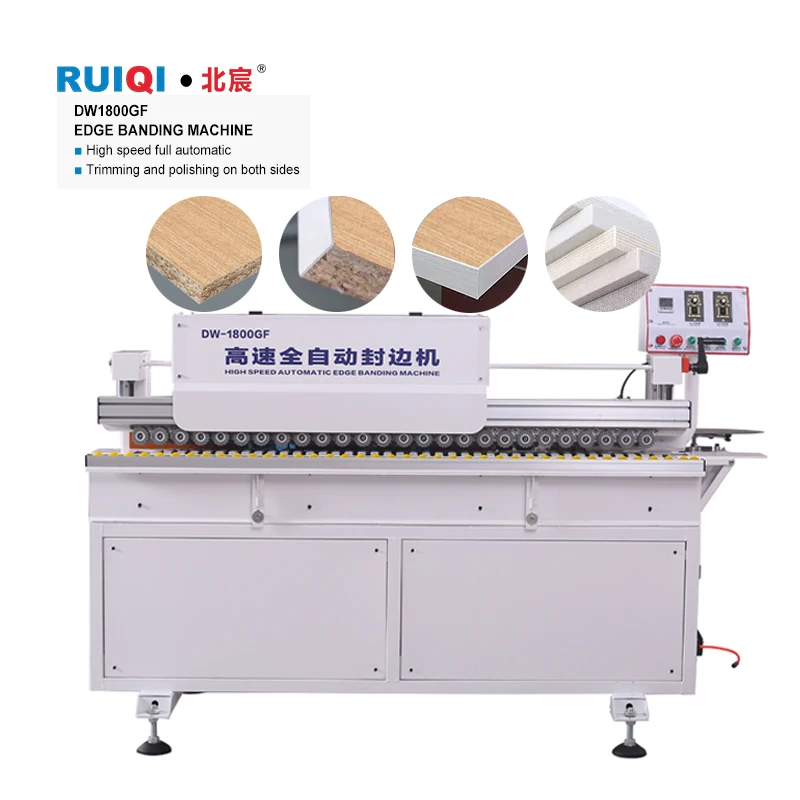
<p><strong>DW1800 Automatic Edge Banding Machine, 4.9 kW, 0.3–3 mm edge thickness, 0–14 m/min feed speed</strong> — engineered for regional distributors standardizing equipment across varied customer segments. Voltage flexibility from 220V to 415V allows one model family to serve multiple markets without re-engineering, while multilingual operation panels in Spanish, French, or English reduce commissioning friction and after-sales call volume. Double-sided gluing, profile tracking, and flexible edge scraping come standard, minimizing the need for multiple SKUs.</p> <ul> <li>Four-stage QC with pre-shipment verification and factory test records available for independent audit</li> <li>Full OEM and private-label capability with customizable logo, control language, and packaging</li> <li>Engineer-led configuration recommendation with formal quotation within 24 hours</li> </ul>
Features
Quality
Certified
Shipping
Worldwide
Support
24/7 Service
Delivery
Fast Lead Time
Voltage Flexibility — DW1800 ships configurable between 380V, 220V, and 415V, verified against your local frequency and phase before the crate closes.
Technical Specifications
| Parameter | Value |
|---|---|
| Model | DW1800 |
| Product Type | Automatic Edge Banding Machine |
| Total Power | 4.9 kW |
| Voltage Options | 380V / 220V / 415V (frequency and phase to be confirmed per market) |
| Feed Speed | 0–14 m/min |
| Edge Banding Thickness | 0.3–3 mm |
| Edge Banding Height | 0–50 mm |
| Minimum Sheet Length | 20 cm |
| Minimum Sheet Width | 10 cm |
| Glue Pot Capacity | 4000 ml |
| Edge Trimming Power | 800W × 2 at 24,000 r/min |
| Polishing Power | 380W × 2 |
| Vacuum Power | 550W |
| Transmission Power | 180W |
| Air Source Pressure | 0.4–0.6 MPa |
| Overall Dimensions | 220 × 65 × 125 cm |
| Net Weight | 320 kg |
| Control Panel Language | Chinese / English standard; Spanish, French, and others on request |
| Key Features | Double-sided gluing, top and bottom trimming, top and bottom polishing, front and rear alignment, flexible edge scraping, dust extraction, profile tracking (corner rounding) |
| Mobile Table Construction | High-strength extruded aluminum alloy with oxidation treatment |
| Assembly State | Pre-assembled (verify with manufacturer before shipment) |
Application Suitability
| Application | Material or Output |
|---|---|
| Custom cabinet door edge finishing | MDF and particleboard with PVC or melamine banding |
| Plywood furniture panel edging | Plywood sheets with veneer or ABS edge band |
| Small-batch joinery production | Solid wood panels and similar-hardness substrates |
| Organic glass and PVC panel trimming | Acrylic, PVC, and organic glass plates up to 50 mm height |
| Workshop transition from manual to machine banding | Mixed sheet materials across varying thicknesses |
Why the Voltage Question Must Come Before the Distributor Agreement
Every electrical schematic must match the destination country's grid before a single unit leaves the factory floor.
I have watched an entire shipment of edge banding machines sit idle on a distributor's warehouse floor because nobody confirmed whether the local supply was three-phase or single-phase. The dealer in Bogotá lost weeks arranging transformers, and his installation team had to explain the delay to three separate furniture shops. That kind of friction erodes trust faster than any product defect. When sourcing as an edge banding machine distributor, the electrical conversation cannot wait until the container is already on the water. [NEED_CITE: voltage and frequency standards by export market]
Territory Coverage and Model Mix Planning
A regional importer needs more than one machine. Your market may include small carpentry shops upgrading from hand tools alongside established furniture factories running double shifts. The DW1800 sits in the compact, accessible tier of a broader product family, giving you an entry point for cost-sensitive buyers while leaving room to upsell higher-throughput models from the same manufacturing source. This continuity means your service team trains on one control philosophy, and your spare parts inventory covers multiple SKUs from a single supply chain.
Multilingual Panels Reduce Your After-Sales Burden
Every commissioning call where the operator cannot read the control panel becomes your problem as the local representative. The DW1800 ships with Chinese and English interfaces as standard, with Spanish, French, and additional languages available on request. When your customer base spans multiple language zones, specifying the correct panel language at the quotation stage eliminates a predictable source of friction. An edge banding machine distributor who gets this right before dispatch spends noticeably less time troubleshooting over phone calls. [NEED_CITE: multilingual HMI requirements in industrial machinery exports]
Reading the Specs That Actually Matter Downstream
The feed speed range of 0–14 m/min determines how quickly panels move through each station, but the practical throughput depends on how the trimming and polishing stages keep pace. At the upper end of that feed range, the dual 800W trimming motors running at 24,000 r/min must remove excess banding cleanly on both top and bottom edges without chipping — particularly on brittle melamine or thin PVC. The 0.3–3 mm banding thickness range covers most standard furniture applications, but if your market frequently uses thicker solid-wood lipping, verify compatibility at the upper boundary. The 4000 ml glue pot holds enough adhesive for sustained runs, though the dwell time between re-heating cycles will depend on ambient workshop temperature and the specific hot-melt formulation your customers prefer. The extruded aluminum alloy mobile table resists warping under continuous load, maintaining the flat reference surface that consistent edge quality depends on.
What Happens When Feed Height Mismatches the Line
A dealer I worked with in Lima sold a sliding table saw and an edge bander to the same cabinet shop without checking that the outfeed height of the saw matched the infeed table of the bander. The customer had to build a custom ramp between the two machines, and panels kept shifting during transfer. These integration problems never show up on a spec sheet, but they become the distributor's reputation problem once the end user starts calling. [NEED_CITE: material handling compatibility in panel processing lines]
Why Distributors Choose This Supply Chain
The factory runs a four-stage quality control sequence — incoming material inspection, in-process checks, finished product verification, and pre-shipment testing — documented with photographs and test records shared before dispatch. Voltage and frequency are confirmed against your target market's grid standards and written into the electrical schematic before production begins. OEM and private-label options cover logo placement, panel language, and packaging, so you can build a recognizable brand in your territory without managing separate suppliers for different market tiers. Every unit ships with multilingual operation and maintenance documentation matched to the language specified at order. The patented cutting mechanisms and precision-ground components are manufactured in-house, which means spare parts trace back to a single source rather than fragmenting across third-party vendors.
Documentation & Verification
- CE declaration of conformity matched to the DW1800 model configuration
- ISO 9001 certificate with traceable issuing body reference
- Electrical schematic confirming voltage, frequency, and phase for your market
- Factory test record on your specified panel thickness and banding material
- Multilingual operation and maintenance manual in the agreed language
- Pre-shipment packing photographs for independent verification
Installation, Commissioning & Support
- Requires a dedicated circuit matching the confirmed voltage option (380V / 220V / 415V) and air supply at 0.4–0.6 MPa
- Pre-assembled construction reduces on-site setup to leveling, utility connection, and test run
- Compact footprint of 220 × 65 × 125 cm fits workshops with limited floor space
- Multilingual control panel configured before dispatch eliminates operator confusion at first startup
- Glue pot and trimming stations require periodic calibration; spare wear parts included in initial shipment
- Extruded aluminum mobile table inspected for flatness before packing to prevent feed-related quality issues
Before You Request a Quotation
Share your target market's standard voltage and frequency, the primary panel materials your customers process, and the languages your installation team and end users operate in. If you are building a model mix across multiple price tiers, describe the production volume range you expect to serve so the configuration can be matched accordingly.
Frequently Asked Questions
Q: Can I get territory exclusivity as a regional distributor? A: Territory arrangements depend on your market scope and projected order volume. The factory works with distributors to define geographic boundaries and model mix recommendations based on local demand patterns. Exclusivity terms, minimum annual commitments, and performance review cycles are discussed during the initial partnership conversation before any order is placed.
Q: What spare parts should I stock locally as a distributor? A: The factory provides a recommended consignment list based on your projected service territory size and the number of units in the field. High-wear items such as trimming cutters, polishing wheels, and glue pot heating elements are prioritized. A baseline stock allows your service team to respond to common maintenance requests without waiting for international shipments.
Q: Is technical training available for my installation and service team? A: Yes. The factory offers training covering machine setup, electrical fault diagnosis, mechanical adjustment, and routine maintenance procedures. Training materials are provided in the language specified at order. This program is designed so your own technicians can handle commissioning and first-line support independently within your territory.
Q: What does the OEM and private-label option include? A: Customization covers logo placement on the machine body, control panel language, voltage configuration, and packaging design. Minimum order considerations apply depending on the scope of branding changes. The factory confirms all private-label specifications in writing before production begins to ensure consistency across your entire order.
Q: How do I choose between entry-level and full-function models for my market? A: The recommendation depends on the production scale of your customer base. Small joinery shops transitioning from manual work benefit from compact models like the DW1800, while higher-volume furniture factories may require additional processing stations. The factory provides a model comparison based on your market's typical panel sizes, materials, and daily throughput expectations.
Request a Quote
Fill in the form below and our team will get back to you within 24 hours.