Edge banding machine
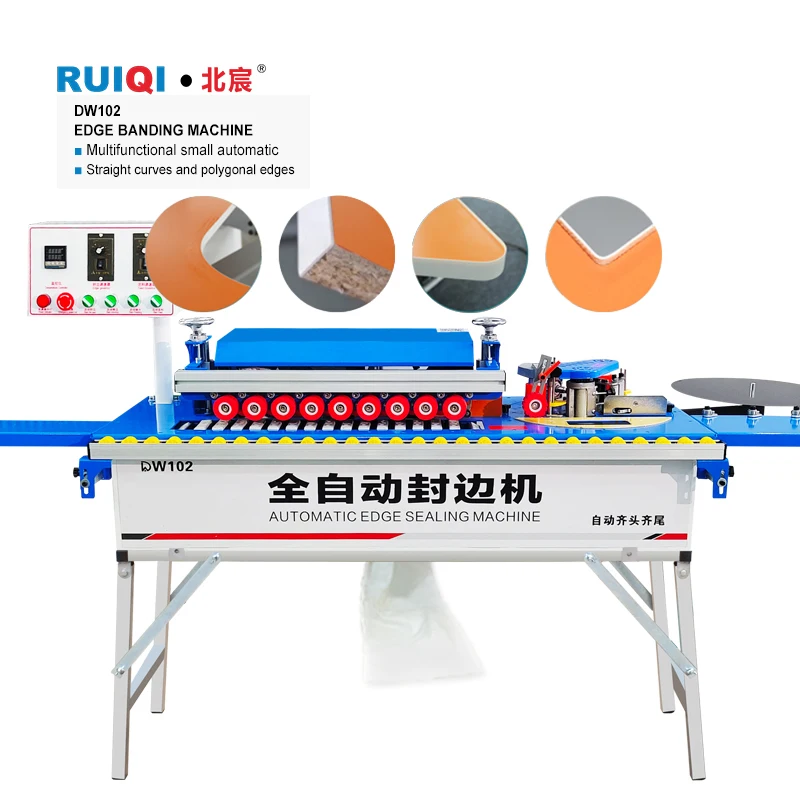
DW102 Edge Banding Machine for Wood Panels – Wholesale
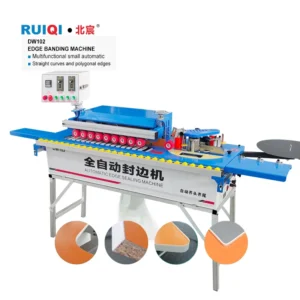
<p><strong>DW102 Manual Edge Banding Machine, 220V/380V, Curved & Straight Edge, 0.3-3MM Thickness</strong> — ideal for distributors building entry-level inventory for small to medium furniture workshops. Handles both curved and straight profiles with automatic head and tail trimming, supporting MDF, plywood, and particleboard substrates. Voltage and multilingual control panel customization available to match regional market requirements.</p> <ul> <li>Edge banding height 0-50MM, minimum sheet size 25×5CM</li> <li>Compact 128×47×69CM footprint for workshops with limited floor space</li> <li>OEM private label and custom packaging supported for resellers</li> </ul> <p>Backed by four-stage QC with pre-shipment verification, engineer-led configuration within 24 hours, and full customs documentation support for smooth import clearance.</p>
Features
380V
Curved Edge Banding
DW102
Edge Banding Machine
Manual Edge Banding
MDF Panel
OEM Available
Quality
Certified
Shipping
Worldwide
Support
24/7 Service
Delivery
Fast Lead Time
Voltage-Customizable Manual Edge Bander — the DW102 supports 220V/380V configurations out of the box, so regional distributors avoid stocking machines that arrive unusable in markets with non-standard electrical grids.
Technical Specifications
| Parameter | Value |
|---|---|
| Model | DW102 |
| Product Type | Manual Edge Banding Machine |
| Total Power | 3800W |
| Voltage Options | 220V / 380V / customization available |
| Edge Banding Thickness Range | 0.3–3 mm |
| Edge Banding Height | 0–50 mm |
| Minimum Sheet Length | 25 cm |
| Minimum Sheet Width | 5 cm |
| Edge Motor | 20W |
| Transmission Motor | 60W |
| Trimming Motors | 650W × 2 |
| Polishing Motors | 180W × 2 |
| Vacuum Motor | 1200W |
| Air Source Pressure | 0.5–0.8 MPa |
| Glue Pot Capacity | 1000 ml |
| Product Dimensions | 128 × 47 × 69 cm |
| Product Weight | 75 kg |
| Standard Features | Curved and straight edge banding, automatic head and tail trimming, polishing, vacuum hold-down |
| Control Panel Languages | Chinese and English standard; Spanish and other languages customizable |
Application Suitability
| Application | Material or Output |
|---|---|
| Custom cabinet door edge finishing | MDF and plywood panels with PVC edge banding |
| Curved panel profiling for furniture | Blockboard and particleboard with veneer strips |
| Small-batch workshop production | Solid wood panels and polymer door components |
| Regional distributor demo stock | Mixed substrate samples for buyer demonstrations |
Why Voltage Confirmation Must Happen Before the Order Ships
Every edge banding machine distributor who has received a container of equipment wired for the wrong grid knows the cost of skipping this step.
I once saw a shipment of compact edge banders land in a South American market where the workshop ran on 220V/60Hz, but the machines left the factory configured for 380V/50Hz. The motors hummed, the glue pot never reached temperature, and the trimming stations stalled under load. The distributor had to source step-up transformers locally just to commission the line — and those transformers introduced their own heat and vibration problems. That entire batch sat idle for weeks while the electrical mismatch was sorted out [NEED_CITE: voltage and frequency standards by export market].
For an edge banding machine distributor building inventory for a regional market, the voltage question is not a footnote. It determines whether the machine you stock can actually run in the workshops you serve.
Matching Stock to the Workshops You Actually Serve
The DW102 occupies a specific position in a distributor's catalog: it is the entry point for workshops moving from hand-applied edge banding to mechanized finishing. When an edge banding machine distributor evaluates which models to stock, the decision hinges on what the local furniture makers actually process. In markets where small cabinet shops dominate, a compact manual unit with both curved and straight capability covers the majority of daily work without requiring the workshop to invest in a fully automatic line.
The 0.3–3 mm edge banding thickness range means this single machine handles thin veneer strips for visible furniture faces and thicker PVC banding for shelving and carcass panels. Distributors can position this model as the first machine a growing workshop buys, knowing it will remain useful even after the customer adds higher-throughput automatic equipment later.
Territory Strategy and Model Mix Planning
A regional distributor rarely succeeds by stocking only one model. The DW102 pairs logically with larger automatic edge banders in the same product family, letting you offer customers a clear upgrade path without changing supplier. When a workshop outgrows manual feed speeds, you already have the next machine in the lineup ready to quote — and the operator is already familiar with the control logic and maintenance routines from the smaller unit.
Private label and OEM branding options allow distributors to build their own market identity around the equipment. Custom logo placement, branded packaging, and market-specific documentation mean the machine arrives looking like your product line, not a generic import [NEED_CITE: OEM branding and private label standards for industrial machinery].
Reading the Spec Sheet Like a Production Manager Would
The dual 650W trimming motors deserve attention because trimming power directly affects edge quality on harder substrates. When processing particleboard with PVC banding at the upper end of the 3 mm thickness range, underpowered trimming motors leave ragged edges that require secondary hand finishing — defeating the purpose of mechanization. The 1300W combined trimming capacity on the DW102 is adequate for the materials listed in its application range, but distributors should verify performance on the specific substrates their market demands.
The 1200W vacuum system is what holds the workpiece stable during curved edge operations. Without sufficient vacuum, the operator must manually brace curved panels against the feed direction, introducing inconsistency. The specified 0.5–0.8 MPa air source pressure requirement means the workshop must have a compressor capable of sustaining that range — a detail that often surfaces only during commissioning if not confirmed beforehand.
Glue pot capacity at 1000 ml is sized for intermittent production rather than continuous runs. For a distributor selling into workshops that edge-band fifty or sixty panels per session, this capacity is practical; for higher-volume operations, the customer should be steered toward a machine with a larger glue reservoir and automatic feed.
The Cost of Shipping Inventory That Does Not Fit the Market
Distributors who order machines without confirming the control panel language discover the problem the moment the end customer tries to commission the equipment. An operator who cannot read the interface makes setup errors that look like machine faults — unnecessary warranty claims that damage your reputation in the territory [NEED_CITE: multilingual control panel requirements for exported machinery].
Similarly, stocking a machine rated only for straight edge banding in a market where curved cabinet doors are common means you will lose sales to competitors who offer dual-capability units. The inventory sits in your warehouse while customers source curved-capable machines elsewhere, and eventually you discount it just to clear the floor space.
Why Distributors Source This Equipment Here
In-house manufacturing with patented cutting mechanisms means the factory controls the tolerance chain from component machining through final assembly — not an assembly plant bolting together sourced subassemblies. For a distributor, this translates to consistent unit-to-unit performance across batches, which is essential when you are putting your own brand on the equipment.
Voltage and language customization as standard means you do not need to negotiate these as special requests or pay surcharges for market-specific configurations. The factory builds the DW102 for your electrical grid and operator language from the start.
Four-stage quality control with pre-shipment verification means you receive test records showing the machine ran on actual panel materials before crating — not just a power-on check. This reduces the chance of discovering a fault after the container has already sailed.
Engineer-led configuration recommendations within 24 hours mean your sales team gets a formal quotation with correct specifications fast enough to respond to customer inquiries before they move on to a competitor.
Documentation & Verification
- CE declaration of conformity covering the DW102 mechanical and electrical safety requirements
- Electrical schematic confirming voltage, frequency, and plug type for your target market
- Factory test record on MDF, plywood, and particleboard samples before dispatch
- Operation manual translated into the agreed language for local operator training
- Spare parts list with numbered components for straightforward reordering
Installation, Commissioning & Support
- Requires a dedicated circuit matching the confirmed voltage configuration (220V or 380V) with appropriate breaker rating for the 3800W total load
- Compressed air supply must sustain 0.5–0.8 MPa at the machine inlet for reliable vacuum hold-down during curved operations
- Compact 128 × 47 × 69 cm footprint allows placement in workshops with limited floor space alongside other equipment
- Initial glue pot temperature calibration should be performed on the actual edge banding material the end customer will use
- Trimming and polishing motor brushes should be inspected after the first fifty hours of operation as part of break-in maintenance
- Language-specific error codes on the control panel simplify troubleshooting for local service technicians
Preparing Your Inquiry
When requesting a quotation for distributor stock, include the voltage and frequency standard for your market, the control panel language your customers require, and the primary panel materials and edge banding types the workshops in your territory process. If you are evaluating this model against others in the range, describe the typical daily production volume your customers run so the engineering team can confirm whether the DW102 is the right tier or whether a higher-throughput unit is more appropriate.
Frequently Asked Questions
Q: What voltage and frequency configurations are available for different regional markets? A: The DW102 ships in 220V or 380V configurations, with further customization available for markets requiring specific frequency ratings. The factory confirms the exact voltage, frequency, and plug type against your market standard before production begins, and provides an electrical schematic document for your records so there is no ambiguity when the machine arrives at the customer site.
Q: Can the control panel language be customized to match local operator requirements? A: Chinese and English are standard on the control panel. Spanish and additional languages are available as customization options. The agreed language is applied to the interface labels, operational prompts, and the accompanying maintenance manual so that operators and service technicians in your territory can work with the machine without translation barriers.
Q: What is the OEM and private label process for this machine? A: Distributors can apply their own logo and branding to the machine body and packaging. The factory handles custom color schemes, branded nameplates, and market-specific documentation under your label. The process is confirmed during the quotation stage, and sample branding layouts are approved before production begins.
Q: How are spare parts and technical training handled for distributor service teams? A: A numbered spare parts list accompanies every shipment, enabling straightforward reordering by part number. The factory provides technical documentation covering maintenance intervals and common fault diagnostics. Distributors can arrange for their service team to receive training on commissioning procedures and troubleshooting specific to the DW102 platform.
Request a Quote
Fill in the form below and our team will get back to you within 24 hours.