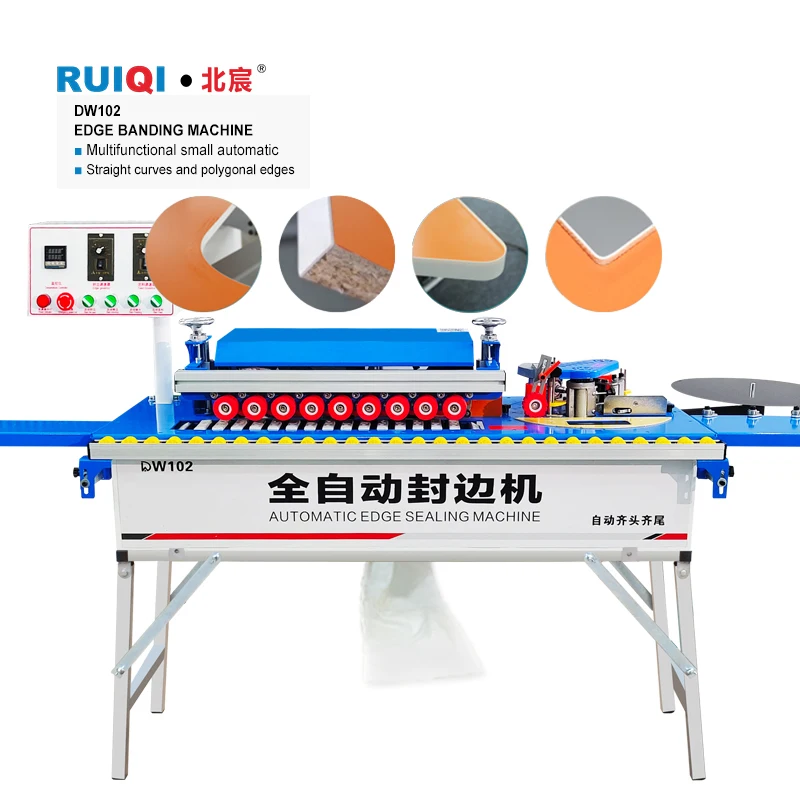
DW102 Automatic Edge Banding Machine for Curved and Straight Panels – Distributor Supply
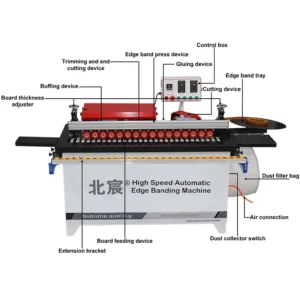
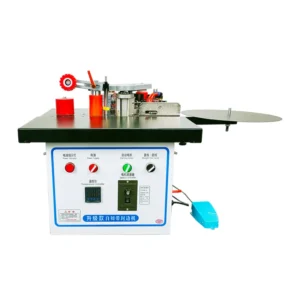
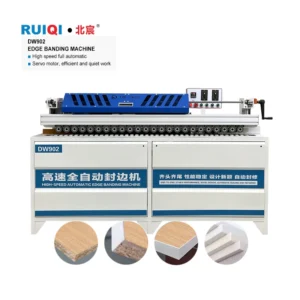
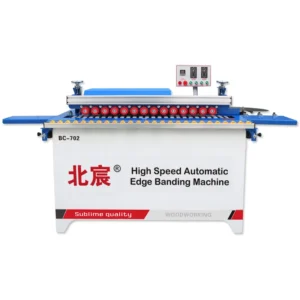
<p><strong>DW102 Automatic Edge Banding Machine, 220V/380V, 0.3-3mm Edge Thickness</strong> — delivers curved and straight edge banding with automatic head and tail cutting, dual trimming stations, and vacuum-assisted polishing for clean finishes on MDF, particleboard, and plywood panels.</p> <ul> <li>Ideal for distributors building a tiered equipment portfolio across workshop scales</li> <li>Factory test records with tolerance verification on actual substrates provided pre-shipment</li> <li>Voltage, language, and plug type customized to your market requirements</li> </ul>
Features
Quality
Certified
Shipping
Worldwide
Support
24/7 Service
Delivery
Fast Lead Time
Voltage-Configurable Assembly — DW102 ships with documented 220V/380V schematics matched to the destination market before production begins, eliminating the arrival-dead risk distributors face with fixed-voltage imports.
Technical Specifications
| Parameter | Value |
|---|---|
| Model | DW102 |
| Product Type | Automatic Edge Banding Machine |
| Rated Power | 3800W |
| Voltage & Frequency | 220V/380V/customization |
| Edge Banding Height | 0-50mm |
| Edge Banding Thickness | 0.3-3mm |
| Minimum Sheet Length | 25cm |
| Minimum Sheet Width | 5cm |
| Glue Pot Capacity | 1000ml |
| Trimming Power | 650W×2 |
| Polishing Power | 180W×2 |
| Vacuum Power | 1200W |
| Edge Power | 20W |
| Transmission Power | 60W |
| Air Source Pressure | 0.5-0.8MPa |
| Overall Dimensions | 128×47×69cm |
| Net Weight | 75kg |
| Standard Features | Curved and straight edge banding, edge trimming, polishing, automatic head and tail cutting, vacuum |
| Language Options | Chinese, English, Spanish or other languages customizable |
| Plug Options | EU, USA, AU, UK |
| Standards | ISO, CE |
Application Suitability
| Application | Material or Output |
|---|---|
| Cabinet door and drawer front banding | MDF and particleboard with PVC or melamine edge strips |
| Curved panel furniture components | Plywood and blockboard with 0.3-3mm veneer or PVC |
| Small-batch custom furniture runs | Medium density fiberboard and wood panels in mixed thicknesses |
| Polymer door profile finishing | Polymer composite substrates with compatible hot-melt adhesives |
| Distributor demo and showroom units | Representative cross-section of panel types for buyer evaluation |
Why the Voltage Question Comes Before the Price on Every Edge Banding Machine Manufacturer Order
Confirming local voltage and frequency at inquiry stage prevents machines from arriving electrically incompatible with the buyer's workshop.
I once watched a distributor in North Africa take delivery of an edge bander wired for 380V/50Hz when the local industrial grid ran 220V/60Hz. The motor overheated within the first hour of commissioning. Rewinding the stator locally took three weeks and cost nearly as much as the shipping [NEED_CITE: voltage and frequency standards by export market]. For an edge banding machine manufacturer, the responsible step is locking down the electrical specification before cutting metal, not after the bill of lading is issued. The DW102 addresses this by offering configurable voltage from the order stage, with a matching electrical schematic included in the shipment documentation.
Curved and Straight Capability in One Compact Footprint
Workshops serving the custom furniture segment routinely switch between straight carcase panels and curved contoured components. Stocking two separate machines for this is capital most small-to-mid operations cannot justify. The DW102 handles both geometries within a single pass, with the vacuum system holding the workpiece against the feed track during curved runs where centrifugal drift would otherwise open the glue line. For a distributor building a tiered catalogue, this dual capability means one SKU covers a broader buyer profile — from the cabinet maker running straight MDF shelves to the joinery shop producing radius-fronted island units.
Language, Plugs, and the Small Details That Decide Commissioning Success
A control panel printed in a language the operator cannot read delays first production by days, sometimes weeks, while someone on the shop floor attempts ad-hoc translation [NEED_CITE: CE machinery directive requirements for industrial equipment]. The DW102 ships with the HMI configured to the operator's working language — English, Spanish, or a custom option agreed at order. Plug format is matched to the destination country so the machine connects to a verified socket on arrival rather than waiting for a locally sourced industrial plug. These details are minor in engineering terms but disproportionate in their effect on customer satisfaction after the container is opened.
How 0.3-3mm Banding Thickness and 50mm Height Range Map to Real Orders
The banding thickness window from 0.3mm to 3mm covers thin PVC foil for budget carcase work up to solid wood lipping for exposed furniture edges. A distributor serving both contract furniture and bespoke joinery markets needs that full span available without swapping feed rollers or trimming blades between jobs. The 50mm height range accommodates standard 18mm board as well as thicker worktop and door-stock panels. The 1000ml glue pot sustains continuous operation across a typical batch without mid-run replenishment, which matters when adhesive temperature fluctuation during a refill can cause visible seam variation on light-coloured PVC. Trimming at 650W per station provides adequate torque to cleanly shear 3mm solid wood lipping without stalling on dense end-grain.
The Hidden Cost of Ignoring Substrate and Banding Variables
When a distributor takes a sample board processed on standard PVC and uses that result to sell the machine into a market running recycled-content edge strips, the adhesive temperature and feed speed both require recalibration. I spent an entire week on-site in the Middle East walking an operator through those adjustments because the recycled material softened at a lower temperature than the trial stock [NEED_CITE: hot-melt adhesive behaviour across PVC formulations]. The edge banding machine manufacturer who skips the substrate conversation at inquiry stage passes that cost downstream. Confirming the exact banding material, adhesive type, and panel substrate before finalising the configuration turns a potential commissioning crisis into a routine startup.
What Distributors Verify Before Placing a Repeat Order
In-house manufacturing with patented cutting mechanisms means dimensional tolerance on the DW102 is traceable to the machining process, not simply declared on a label. The four-stage quality control sequence — incoming material, in-process, finished product, and pre-shipment verification — is documented with photographs and test records specific to each serial number. Voltage confirmation and electrical schematics travel with the machine so local electricians can service the unit without reverse-engineering the wiring. OEM branding and private-label options allow the distributor to present the equipment under their own market identity without compromising the underlying build specification.
Documentation & Verification
- CE declaration of conformity referencing the DW102 serial number
- Electrical schematic matched to the confirmed 220V or 380V configuration
- Factory test record run on buyer-specified panel thickness and banding material
- Operation and maintenance manual in the agreed operator language
- Spare parts list with part numbers for trimming blades and glue pot components
Installation, Commissioning & Support
- 128×47×69cm footprint fits a standard single-phase workshop bay without floor modification
- Dedicated circuit rated for 3800W continuous draw, separate from welding or compressor loads
- Machine arrives fully assembled; connect air supply at 0.5-0.8MPa and power on
- First-run parameter setting covers glue pot temperature, feed speed, and trimming depth for the target material
- Replacement trimming blades and polishing wheels stocked as standard consumables
- Lubrication schedule for the feed track and vacuum channel at intervals defined in the manual
What We Need to Configure Your DW102 Correctly
Send the panel materials you will be banding, the edge strip type and thickness range, and the daily volume your customers expect. Confirm the local industrial voltage and frequency at the installation site so the motor and heater elements are wound and rated accordingly. If you need the HMI in a language beyond English or Spanish, specify this at inquiry so the firmware is loaded before dispatch.
Frequently Asked Questions
Q: How can I verify the edge banding tolerance before committing to a bulk distributor order? A: Request a pre-shipment test record run on your own sample panels and banding material. The record documents trimming accuracy and edge adhesion under the exact substrate conditions your customers will encounter, not a generic laboratory result. Factory visits are also available so you can witness the four-stage QC process and inspect finished edges in person.
Q: What is the voltage confirmation process for different export markets? A: At the inquiry stage we request the destination country, local voltage, and frequency. The electrical schematic is then produced to match those values and included in the documentation package. The plug type is fitted accordingly — EU, USA, AU, or UK — so the machine connects directly on arrival without field modification.
Q: How should a distributor decide which model tier to stock for a regional market? A: Start by surveying the workshop scales and panel varieties in your territory. The DW102 sits at the entry-to-mid range, suited to small and medium furniture makers processing MDF, plywood, and particleboard. For buyers running higher daily volumes or requiring pre-milling, a full-function model further up the range is recommended. We provide a configuration matrix mapping each model to production volume brackets.
Q: Can I send my own panel and edge banding samples for a processing test? A: Yes. Ship representative samples of the substrates and edge strips your market uses, including any recycled-content or specialty materials. We run the DW102 under production-representative conditions and return the finished samples with a test report detailing the adhesive temperature, feed speed, and trimming parameters used, giving you a verified baseline for local commissioning.
Request a Quote
Fill in the form below and our team will get back to you within 24 hours.