Distributor Supply Edge Banding Machine for Wood Based Panels
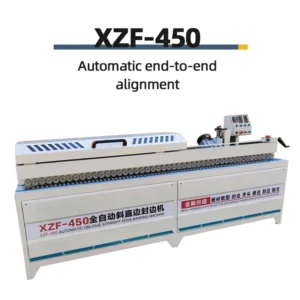
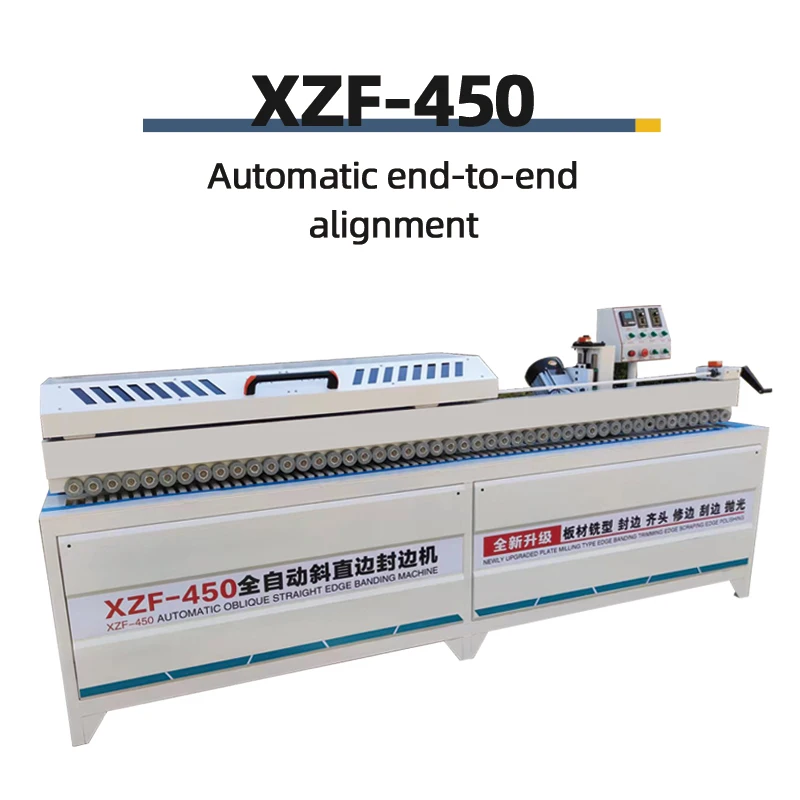
<p><strong>XZF-450 Automatic Edge Banding Machine, 9.5KW, 380V/415V</strong> — handles 0.3–3mm edge banding thickness and 0–50mm height across MDF, plywood, particleboard, and melamine board. Regional distributors benefit from a complete model family, matching edge banding with cutting and drilling stations for consistent line throughput without adding suppliers. Multilingual control panels and region-specific plug options (EU, USA, AU, UK) are confirmed before shipment. Backed by four-stage QC verification, full OEM branding capability, and dedicated service team training for your territory.</p>
Features
Quality
Certified
Shipping
Worldwide
Support
24/7 Service
Delivery
Fast Lead Time
Distributor-ready range with verified tolerances — every XZF-450 unit ships with factory test records and pre-shipment verification, supporting regional resellers with consistent inventory quality.
Technical Specifications
| Parameter | Value |
|---|---|
| Model | XZF-450 |
| Product Type | Automatic Edge Banding Machine |
| Total Power | 9.5 kW |
| Voltage | 380V / 415V |
| Pre-milled Motor | 4 kW |
| Trimming Power | 2.2 kW × 2 |
| Polishing Power | 0.4 kW × 2 |
| Vacuum Power | 550 W |
| Edge Feed Speed | 0–12 m/min |
| Transmission Speed | 0–12 m/min |
| Air Source Pressure | 0.5–0.7 MPa |
| Glue Pot Capacity | 4000 ml |
| Minimum Sheet Length | 30 cm |
| Minimum Sheet Width | 15 cm |
| Edge Banding Height | 0–50 mm |
| Edge Banding Thickness | 0.3–3 mm |
| Standard Features | Plate milling, 30°/45°/60° edge banding, trimming, scraping, polishing, high-power vacuuming |
| Control Panel Language | Chinese and English (customizable to Spanish or other languages) |
| Plug Options | EU, USA, AU, UK |
| Assembly State | Fully assembled |
| Product Size | 300 × 65 × 135 cm |
| Product Weight | 430 kg |
Application Suitability
| Application | Material or Output |
|---|---|
| Cabinet and wardrobe panel finishing | MDF, melamine board, particleboard |
| Plywood and blockboard edge sealing | Plywood, blockboard, solid wood board |
| Polymer door profiling | Polymer doors, MDF substrates |
| Angled edge treatments | 45-degree and 90-degree banding on furniture panels |
| Medium to large furniture manufacturing | PVC, veneer, and melamine edge banding materials |
Why the Voltage Question Should Come Before the Price
An edge banding machine distributor that skips voltage confirmation during quoting is building a returns problem into every shipment.
When a reseller stocks machines across a region with mixed electrical infrastructure, a 380V unit landing in a 415V-only industrial park becomes dead weight on the warehouse floor. Operators cannot commission it, electricians refuse to wire it without a step-down transformer, and the distributor absorbs the cost of retrofitting or repatriating the unit. I have watched entire container loads sit in customs clearance limbo because the plug standard on the invoice did not match the socket type at the buyer's facility. Confirming local voltage, frequency, and plug type before production — not after — is the single most effective way to protect margin on cross-border machinery trade. [NEED_CITE: voltage and frequency standards by export market]
Territory Coverage Without Adding Suppliers
A regional edge banding machine distributor needs a catalog that serves both a two-person joinery shop and a mid-scale panel factory without sourcing from three different manufacturers. The XZF-450 sits within a broader model family that scales from compact entry-level units to full-function pre-milling lines, all sharing common control architecture and spare parts inventories. This means your service team learns one system, your warehouse stocks one set of wear components, and your sales reps can cross-sell across customer segments without switching suppliers.
OEM Branding and Market Positioning
Private-label capability matters when your customers expect your name on the machine they are financing. The XZF-450 supports custom logo application, branded packaging, and color-matched panels confirmed before mass production. Multilingual control panels — available in English, Spanish, or a language you specify — ensure that the operator at the end of your supply chain can read the interface without calling your service desk for a translation. This reduces commissioning friction and positions your brand as locally present rather than a distant exporter. [NEED_CITE: CE machinery directive requirements for industrial equipment]
Reading the Specs That Actually Matter
The 4 kW pre-milling motor on the XZF-450 is not just a power figure — it determines how cleanly the machine can square a panel edge before the glue station engages. Insufficient pre-mill power leaves tear-out on particleboard, which the glue pot then tries to fill, resulting in visible seams on finished cabinet doors. The 0.3–3 mm edge banding thickness range covers everything from thin PVC foil for budget furniture to solid wood veneer for premium joinery, meaning a single machine handles the spread of materials a typical distributor's customer base demands. Feed speed adjustable from 0 to 12 m/min lets operators slow down for delicate veneer work or accelerate for high-volume melamine runs without sacrificing adhesion. The 4000 ml glue pot capacity reduces refill frequency during continuous shifts, which matters when a furniture factory is pushing panels through in batch runs and cannot afford thermal cycling interruptions.
The Hidden Cost of Mismatched Feed Heights
Buying edge banders piecemeal from different manufacturers often means discovering that the infeed conveyor height on one machine does not align with the outfeed table on the panel saw upstream. The result is operators manually lifting sheets between stations, introducing scratches on finished surfaces and slowing throughput to a crawl. When a distributor sells incompatible machines into a workshop, the customer blames the distributor — not the factory that built each machine in isolation. Matching feed heights, throughput rates, and material flow direction across the line is a conversation that must happen at the quoting stage, not on the installation day. [NEED_CITE: material flow compatibility in panel processing lines]
What Separates a Supply Partner from a One-Time Export
The XZF-450 ships with four-stage quality control documentation — incoming material inspection, in-process checks, finished product verification, and pre-shipment testing — giving you a paper trail to show your customers when they ask how you vet your inventory. Voltage and plug configuration are confirmed in writing before production begins, so the machine that arrives matches the electrical infrastructure at the destination. OEM branding is not an afterthought but a structured process with logo proofs, packaging mockups, and color samples approved before the production run starts. Technical training is available for your own service engineers, covering installation procedures, fault diagnosis, and spare parts replacement so your team resolves field issues without routing every call back to the manufacturer.
Documentation & Verification
- CE declaration of conformity included with each XZF-450 shipment for customs clearance
- ISO 9001 certificate provided to support your local compliance filings
- Factory test record on your specified panel thickness and edge material before dispatch
- Electrical schematic confirming voltage, frequency, and plug type for your market
- Operation and maintenance manual in the language your customers actually read
- Spare parts list with part numbers matching your inventory system
Installation, Commissioning & Support
- Requires a level concrete floor capable of supporting the 430 kg machine weight plus dynamic load
- Dedicated 380V/415V circuit with appropriate breaker sizing for the 9.5 kW total draw
- Arrives fully assembled — position, connect power and compressed air at 0.5–0.7 MPa, and run calibration
- First-run parameter setting for glue temperature and feed speed matched to your customer's substrate
- Operator training covers multilingual control panel navigation and 30°/45°/60° angle switching
- Wear components for trimming and scraping stations identified in the spare parts list for forward stocking
How to Scope Your First Order
Tell us the panel substrates your customers run most often, the edge banding materials they stock, and the local voltage and plug standard at the destination market. If you are building a product mix for your region, share the production volume range your customers represent so we can recommend which models from the family to stock alongside the XZF-450. Specify the control panel language your end users need and whether you want OEM branding applied before shipment.
Frequently Asked Questions
Q: What model mix should a distributor stock for a regional market covering both small workshops and production-scale factories? A: A balanced starting inventory typically includes one entry-level unit for small joinery shops, a mid-range model like the XZF-450 for the volume of cabinet makers in your territory, and one full-function pre-milling line for larger factories. All three share common spare parts and control architecture, reducing your service inventory burden.
Q: How does the OEM and private-label process work from logo design to packaging? A: You provide your logo files, brand colors, and packaging artwork. We produce digital proofs and physical color samples for your approval before mass production begins. Once confirmed, every unit in the run carries your branding on the machine body, control panel splash screen, packaging, and documentation headers.
Q: What spare parts inventory and lead-time commitments are available for authorized distributors? A: Authorized distributors receive a recommended spare parts list based on the models they stock, covering trimming blades, scraping inserts, polishing wheels, and glue pot components. Forward orders for consumable parts ship on shorter lead times than complete machines, and we hold inventory of high-wear items for your territory.
Q: Is technical training provided for the distributor's service team? A: Yes. Training covers machine installation, electrical and pneumatic fault diagnosis, parameter tuning for different substrates, and spare parts replacement procedures. Sessions can be conducted at the factory or at your facility, and materials are provided in the language your service team operates in.
Q: How are voltage, plug type, and control panel language confirmed before production? A: During the quoting stage, we request your destination market's voltage, frequency, and plug standard. These are written into the formal quotation and confirmed again before production starts. Control panel language is selected from available options or customized to your specification, and verified on the unit during pre-shipment testing.
Request a Quote
Fill in the form below and our team will get back to you within 24 hours.