Edge banding machine
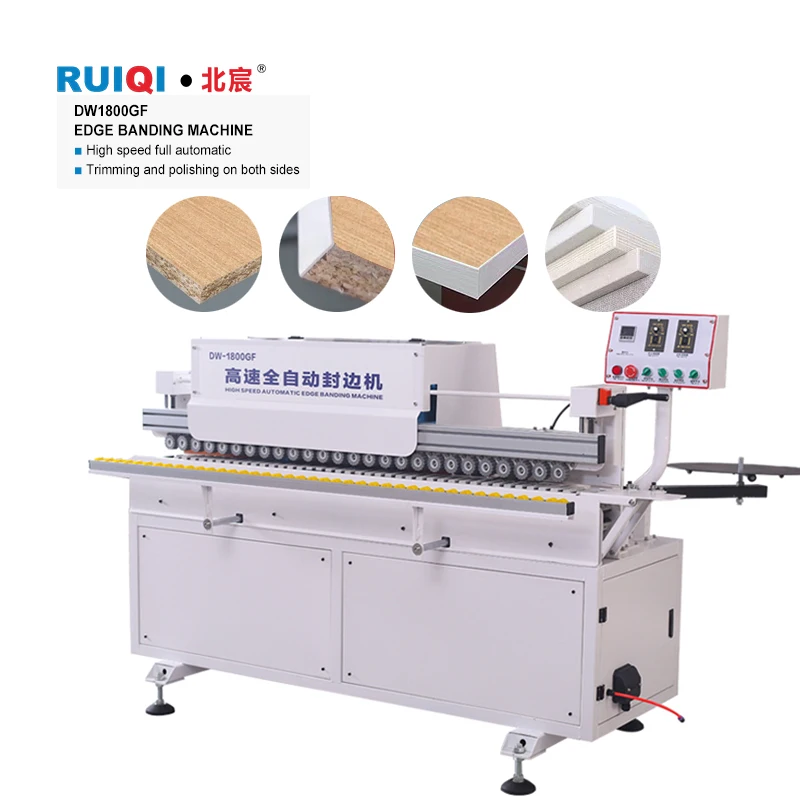
Distributor Supply Edge Banding Machine for Furniture Board – Wholesale
<p><strong>DW1800 Automatic Edge Banding Machine, 4.9 kW, 0–14 m/min Feed Speed</strong> — full-function station lineup covering gluing, trimming, scraping, and polishing in a single platform for regional distributors building a balanced model mix.</p> <ul> <li><strong>Multi-voltage support</strong> (380V/220V/415V) with EU, USA, AU, UK plug options reduces SKU complexity across territories</li> <li>Roll-ball differential table guide with extruded aluminum alloy workstation ensures reliable field performance and lowers warranty claims</li> <li>Customizable control panel language eliminates operator commissioning barriers in diverse markets</li> </ul> <p>Backed by four-stage QC with pre-shipment verification, patented cutting mechanisms achieving ±0.02mm tolerance, and full OEM/private-label capability for importers.</p>
Features
380V
CE Certified
DW1800
Edge Banding Machine
Furniture Board
MDF Panel
Wholesale Supply
Quality
Certified
Shipping
Worldwide
Support
24/7 Service
Delivery
Fast Lead Time
Territory-Ready Stock Support — the DW1800 ships with pre-confirmed 380V/220V/415V configurations and multi-region plug standards so a regional edge banding machine distributor can serve multiple markets from a single container order without rewiring on arrival.
Technical Specifications
| Parameter | Value |
|---|---|
| Model | DW1800 |
| Product Type | Automatic Edge Banding Machine |
| Total Power | 4.9 kW |
| Voltage Options | 380V / 220V / 415V |
| Feed Speed | 0–14 m/min |
| Edge Banding Thickness | 0.3–3 mm |
| Panel Thickness Range | 0–50 mm |
| Minimum Sheet Length | 200 mm |
| Minimum Sheet Width | 100 mm |
| Trimming Power / Speed | 800 W × 2 / 24,000 r/min |
| Polishing Power | 380 W × 2 |
| Vacuum Power | 550 W |
| Transmission Power | 180 W |
| Glue Pot Capacity | 4000 ml |
| Air Source Pressure | 0.4–0.6 MPa |
| Overall Dimensions (L×W×H) | 2200 × 650 × 1250 mm |
| Net Weight | 320 kg |
| Control Panel Languages | Chinese, English (customizable) |
| Plug Standards | EU, USA, AU, UK |
| Mobile Table Guide | Roll-ball differential structure |
| Workstation Material | High-strength extruded aluminum alloy |
Application Suitability
| Application | Material or Output |
|---|---|
| Custom cabinet door edge finishing | MDF and particleboard with PVC or melamine edge banding |
| Plywood panel processing for furniture | Plywood panels with veneer or ABS edge strips |
| Joinery workshop panel edging | Solid wood boards up to 50 mm thickness |
| Regional furniture factory production | ABB boards, organic glass plates, and similar hardness substrates |
Why the Voltage Question Should Come Before the Price for Every Edge Banding Machine Distributor
A machine that arrives with the wrong voltage-frequency combination is not inventory — it is dead weight sitting in a bonded warehouse while you scramble for a transformer.
I once watched a distributor in the Levant region take delivery of a container of woodworking equipment only to discover every motor was wound for 50 Hz while the local grid runs at 60 Hz. The edge banders ran, but trimming motors overheated within the first production shift. By the time replacement motors arrived, two furniture factory clients had walked away [NEED_CITE: voltage and frequency standards by export market]. The DW1800 addresses this at the quotation stage: voltage and frequency are locked into the specification sheet before production begins, with plug standards matched to the destination territory.
Building a Reseller Model Mix Around One Full-Function Platform
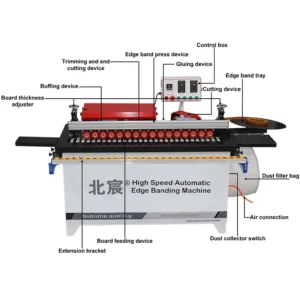
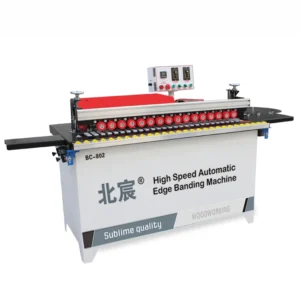
For an edge banding machine distributor covering a territory where clients range from small joinery shops to mid-size cabinet factories, the DW1800 sits in the middle of the demand curve. It carries the full station lineup — gluing, end cutting, rough and fine trimming, tracking, scraping, and polishing — in a single chassis. This means fewer SKUs to stock while still covering the majority of specifications your local furniture makers will request. The 4.9 kW total power draw keeps it compatible with standard workshop electrical supplies without requiring dedicated high-capacity circuits.
Territory Support and Private-Label Packaging for Importers
A woodworking machinery importer evaluating the DW1800 for a container order will find OEM configuration options that go beyond a logo sticker. Control panel language can be set to match the operator base in each destination market, and packaging can carry the distributor's own branding and color scheme. The extruded aluminum alloy workstation and roll-ball differential table guide are built to withstand the shipping and handling typical of multi-market distribution chains, reducing cosmetic damage claims before the machine even reaches the showroom floor [NEED_CITE: CE machinery directive requirements for industrial equipment].
Reading the Specification Sheet Like a Production Manager
The 0–14 m/min feed speed range matters because distributors need to explain to end-users where this machine fits. At the lower end, a joinery shop doing one-off solid wood panels can run slowly and watch edge quality closely. At 14 m/min, a small furniture factory processing standard MDF cabinet components will find adequate throughput for batch work. The 0.3–3 mm edge banding thickness range covers PVC, melamine, and thin veneer strips — the materials most commonly stocked by regional suppliers. Trimming motors running at 24,000 r/min produce clean cuts on both PVC and wood veneer without the chattering that slower spindles leave on harder edge materials. The 4000 ml glue pot holds enough adhesive for continuous production runs without frequent refills, which operators in hot climates will appreciate since the pot maintains stable temperature across longer shifts.
The Hidden Cost of Specifying Machines Without Confirming Field Conditions
When a distributor quotes a machine without verifying the customer's actual panel material and edge banding stock, the result is a commissioning visit that turns into a troubleshooting session. I have seen edge banders of this class sit idle for weeks because the local particleboard had higher moisture content than the standard test samples, causing the adhesive to cure unevenly and edge strips to lift at the ends. The DW1800's double-sided gluing system and flexible scraping station handle a wider range of substrate conditions, but no machine compensates for a distributor who never asked the end-user for a material sample before confirming the order [NEED_CITE: substrate moisture content and edge banding adhesion failures].
Why Regional Distributors Source This Machine From Ningjin Ruiqi
In-house manufacturing with patented cutting mechanisms means the factory controls the tolerance chain from grinding to final assembly — not an assembler buying components from three different vendors. Full product family coverage from entry-level to full-function within one brand lets a distributor scale customers without introducing a second supplier relationship. Voltage, language, and plug customization as standard eliminates the back-and-forth emails that delay container loading. Four-stage QC with pre-shipment verification means each unit ships with a factory test record on actual panel material, not just a generic pass sticker.
Documentation & Verification
- CE declaration of conformity matching the DW1800's declared voltage and power configuration
- ISO 9001 certificate covering the manufacturing process from component sourcing to dispatch
- Electrical schematic with confirmed voltage, frequency, and plug type for each destination market
- Factory test record run on panel thickness and edge banding material matching the end-user's specification
- Spare parts list itemizing trimming blades, glue rollers, and polishing wheels with territory-specific backup quantities
Installation, Commissioning & Support
- The 2200 × 650 mm footprint fits standard workshop bays; verify floor levelness within tolerance before placement
- 380V/220V/415V units require a dedicated circuit breaker rated for the 4.9 kW total draw plus startup surge
- Machine ships fully assembled; connect air supply at 0.4–0.6 MPa and verify all stations before first run
- Control panel language set to operator preference before dispatch to eliminate commissioning delays on site
- Trimming blades and polishing wheels included in spare parts kit; establish reorder schedule based on local production volume
What to Include in Your Next Inquiry
Send the destination market's standard voltage and frequency along with the plug type required by local electrical codes. Specify the primary panel materials and edge banding types your customers use most often, so the factory test record can reflect real conditions. Indicate whether OEM branding and custom manual language are needed for your territory, and confirm the container mix if you are ordering multiple models in one shipment.
Frequently Asked Questions
Q: What model mix should a regional distributor stock to cover entry-level through full-function demand? A: Start with the DW1800 as the full-function anchor model that covers most furniture factory requirements. Add one entry-level unit from the same product family for small joinery shops with lower budgets. This approach keeps spare parts common across models and simplifies technical training for your service team, reducing the inventory burden while still covering the breadth of local demand.
Q: How does OEM and private-label customization work for this edge bander? A: Logo placement, panel color scheme, and manual language are configured during production rather than applied after assembly. Packaging carries your company branding and product information in the destination market language. The factory confirms all custom elements in the specification sheet before production begins, so the container arrives ready for your showroom or direct dispatch to end-users.
Q: What spare parts backup and technical training does the factory provide? A: Each shipment includes a territory-specific spare parts list covering trimming blades, glue rollers, polishing wheels, and other wear components. The factory provides technical documentation and can arrange training sessions for the distributor's own service team, either at the manufacturing facility or remotely, so your technicians can handle first-line support without waiting for overseas engineering visits.
Q: How is voltage and frequency confirmed before production begins? A: The inquiry stage includes a mandatory voltage and frequency confirmation step matched to the destination market's electrical standards. The factory issues an electrical schematic and voltage confirmation document as part of the formal quotation, and this specification is locked before the machine enters production. This prevents the situation where equipment arrives on site and cannot be powered up without costly modifications.
Q: What is the lead time for a mixed-model container order? A: Lead time depends on the model mix and customization requirements confirmed in the specification sheet. The factory provides a formal quotation with production scheduling within 24 hours of receiving complete requirements. Pre-shipment testing covers each unit individually before container loading, and packing photographs are shared for confirmation before the container is sealed and dispatched.
Request a Quote
Fill in the form below and our team will get back to you within 24 hours.