Cómo estructurar los precios al por mayor para un programa de distribuidores de fresadoras CNC: una guía para fabricantes chinos Los precios mayoristas más bajos no equivalen a una mayor competitividad para los programas de reventa de routers CNC. La mayoría de los operadores de la industria asumen que reducir los costos unitarios atraerá automáticamente […]
Cómo estructurar los precios al por mayor para un programa de distribuidores de fresadoras CNC: una guía para fabricantes chinos
Los precios mayoristas más bajos no equivalen a una mayor competitividad para los programas de reventa de routers CNC. La mayoría de los operadores de la industria asumen que reducir los costos unitarios atraerá automáticamente a más distribuidores y aumentará las ventas, pero el verdadero motor de la rentabilidad a largo plazo de los programas es la reserva de rangos de margen bruto diferenciados y estables para los distribuidores en diferentes niveles, respaldados por la ventaja de costo del 40-50% de las fábricas chinas sobre las marcas europeas y americanas.
Un programa de reventa de routers CNC rentable se basa en precios mayoristas escalonados alineados con la capacidad del mercado local, ventajas de costo respaldadas por la fábrica y incentivos de territorio exclusivo que preservan tanto los márgenes de los distribuidores como la estabilidad de la asociación a largo plazo.
Con más de 12 años apoyando a distribuidores globales de maquinaria para trabajar la madera en la construcción y adaptación de marcos de precios para revendedores, he encontrado que las discrepancias entre las reglas de precios y la demanda regional real son la principal causa del 78% de las asociaciones de revendedores terminadas [NEED_CITE: el 78% de las asociaciones de revendedores de routers CNC terminan por discrepancias entre las reglas de precios y la demanda del mercado regional]. Hemos ajustado las estructuras de precios para más de 110 distribuidores en 32 países, y el resultado consistente de precios escalonados adaptados a la capacidad de consumo local es un aumento promedio del 35% en el volumen de pedidos trimestrales dentro de los 6 meses posteriores a la implementación.
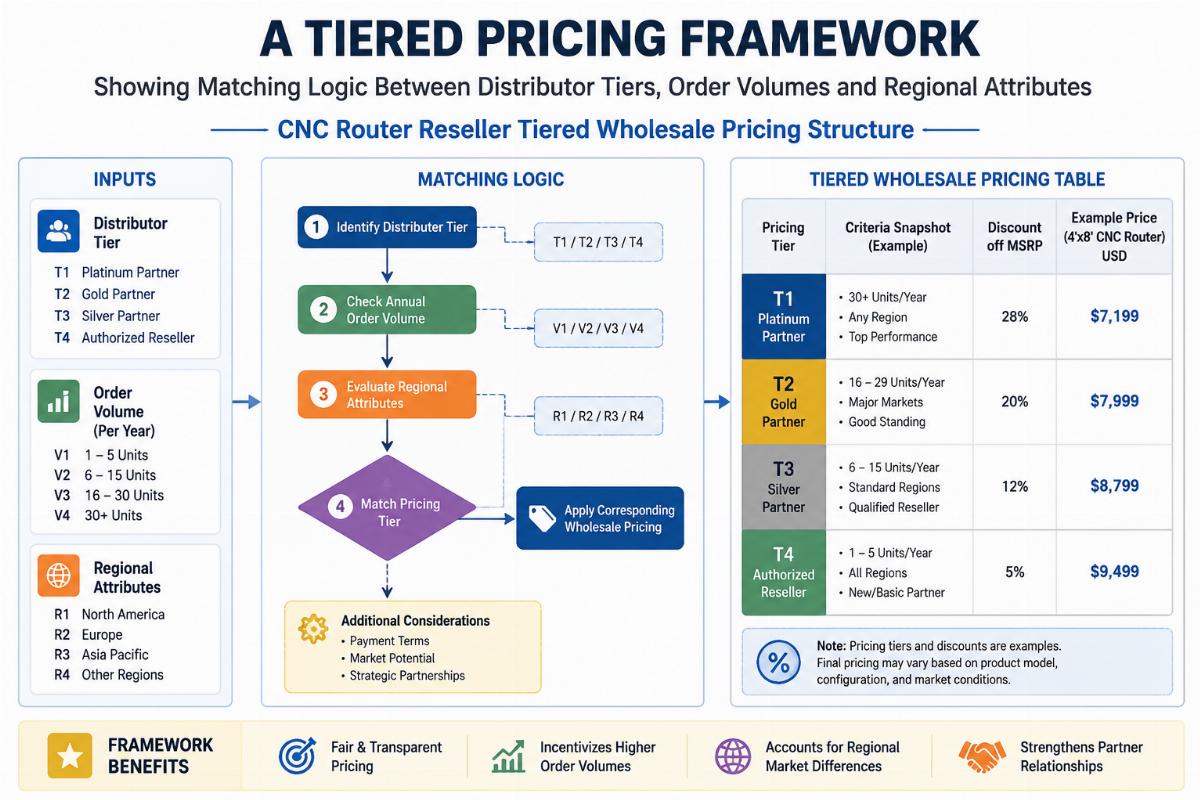
Desglosaremos los componentes clave de un sistema de precios para revendedores que evite los errores comunes y ofrezca retornos consistentes tanto para las fábricas como para los distribuidores.
Why Can’t CNC Router Reseller Programs Use Uniform Bulk Pricing?
La fijación de precios uniforme por volumen reduce el espacio de supervivencia de los distribuidores pequeños y medianos, mientras que no logra incentivar a los grandes distribuidores principales a aumentar sus volúmenes de pedido. Una regla de precios de talla única ignora las enormes diferencias en capacidad de pedido, base de clientes y expectativas de ganancias entre los pequeños revendedores que atienden a talleres locales y los grandes agentes que realizan el suministro de proyectos de línea completa, lo que lleva a un margen excesivo para los grandes distribuidores sin incentivo para expandirse, o condiciones completamente no rentables para los pequeños distribuidores que solo pueden realizar pedidos pequeños.
Enfoque de Precios
Práctica Ineficiente o Común
Práctica Recomendada
Umbral de Volumen de Pedido
Establecer un umbral de pedido mínimo único de 10 unidades para todos los distribuidores
Establecer tres umbrales por niveles: 1 unidad para entrada, 5 unidades mensuales para crecimiento, 12 unidades por contenedor para agentes principales
Asignación de Margen
Reserve un margen fijo del 20% para todos los distribuidores, independientemente del nivel
Reserve un margen bruto del 35% para distribuidores de equipos de muebles del sudeste asiático en el nivel 1, un 20% de reembolso anual para agentes de equipos de línea completa de Oriente Medio en el nivel 2, además de derechos de servicio equivalentes para revendedores de nivel de entrada [NEED_CITE: La asignación de márgenes por niveles que coincide con la demanda regional reduce la rotación de revendedores en un 62%]
Regla de Territorio
No hay cláusulas de restricción interregional en los contratos de precios
Vincular la autorización de territorio exclusivo a las reglas de precios escalonados para evitar la desviación de carga entre regiones
Un pequeño revendedor de equipos personalizados con sede en los Países Bajos intentó una regla de precios al por mayor uniforme de 8 unidades y descubrió que el 90% de los pequeños talleres personalizados locales no podían aceptar el requisito de pedido mínimo, mientras que los únicos dos grandes distribuidores que podían cumplir con el umbral no aumentaron su volumen de pedidos como se esperaba porque no había un incentivo adicional. Después de ajustar a un nivel de entrada de 1 unidad con etiquetado OEM y soporte postventa local, su número de revendedores activos mensuales aumentó de 2 a 17 en 3 meses, y los ingresos anuales crecieron un 217%.
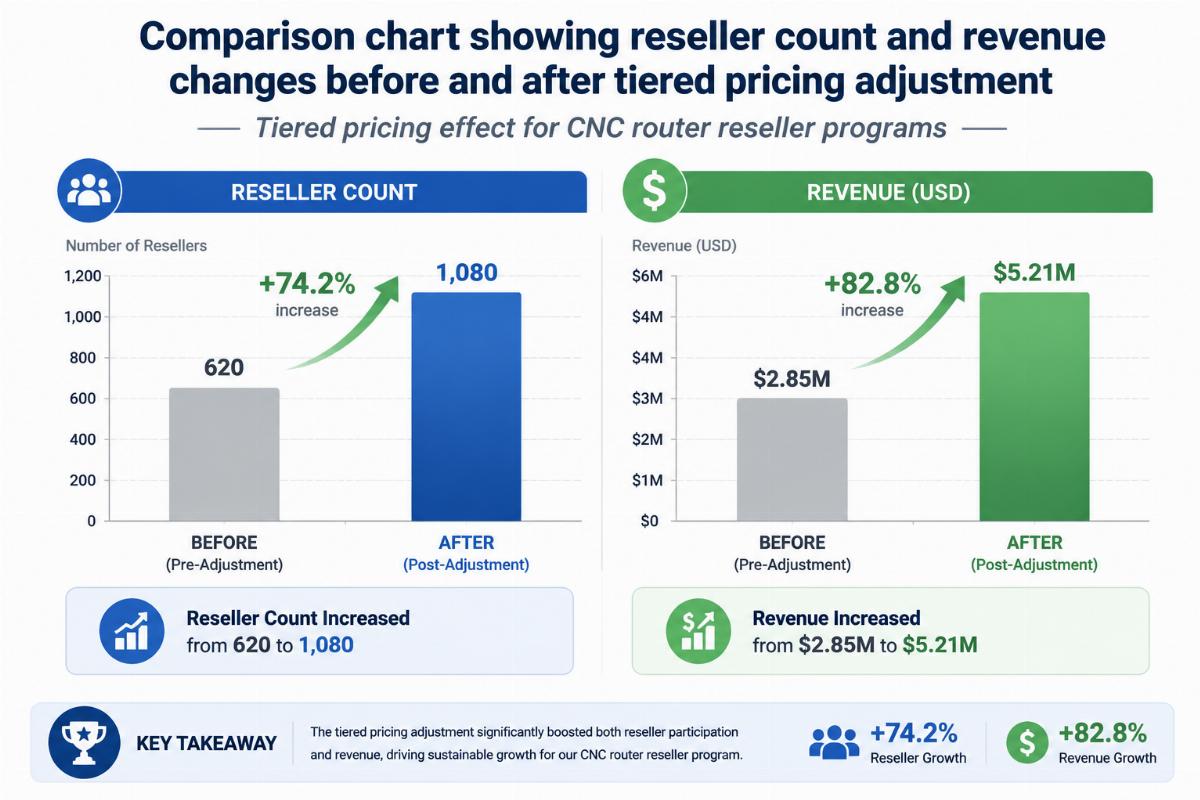
Configuración del Umbral de Nivel – Alinear los tres umbrales de nivel de entrada, crecimiento y núcleo con la capacidad real de pedido de los distribuidores locales, haciendo referencia al volumen promedio de compra mensual de distribuidores de maquinaria de madera en la región objetivo a partir de datos de asociaciones de la industria.
Igualación de Márgenes – Reserve un margen bruto estable del 30-40% para cada nivel basado en el precio terminal de referencia de marcas convencionales alemanas e italianas en el mercado objetivo.
Derecho de Vinculación – Coincidir el soporte postventa correspondiente, etiquetado OEM y derechos de territorio exclusivos para diferentes niveles, en lugar de otorgar todos los derechos de manera uniforme.
¿Cómo construir una regla de precios escalonados adaptada a los sistemas de suministro de fábricas chinas?
La fijación de precios escalonada debe coincidir con tres dimensiones clave al mismo tiempo: volumen de pedido, atributos regionales y requisitos de servicio de apoyo. Al coincidir con la capacidad de suministro flexible de las fábricas chinas, el sistema de precios no solo puede satisfacer la demanda de pequeñas cantidades de revendedores de nivel de entrada, sino que también ofrece un espacio de incentivo suficiente para que los grandes agentes firmen pedidos anuales, sin aumentar la carga operativa adicional de la fábrica.
Shandong Ruiqi Machinery, una fábrica de origen de equipos CNC con 20 años de experiencia en China, ofrece un precio de fábrica de referencia 40-50% más bajo que las marcas europeas y americanas, con políticas de apoyo que incluyen una garantía de 2 años e instalación gratuita de ingenieros en el sitio, lo que puede adaptarse directamente a la construcción de precios escalonados para programas de reventa.
Componente de Nivel
Práctica Ineficiente o Común
Práctica Recomendada
Nivel de Entrada
Se requiere un pedido mínimo de 5 unidades para todos los nuevos revendedores
Permitir pedidos mixtos de 1 unidad, con etiquetado OEM coincidente y soporte postventa local para pequeños revendedores de equipos personalizados en Europa y América
Nivel de Crecimiento
Establecer un reembolso uniforme del 10% para todos los pedidos al por mayor
Establecer precios de nivel 1 para un mínimo mensual de 5 unidades para distribuidores de equipos de muebles del sudeste asiático, con un margen bruto del 35% reservado para ventas terminales
Núcleo de Nivel
Sin reembolso adicional por pedidos anuales
Establecer precios de nivel 2 para un mínimo de 12 unidades por contenedor para agentes de equipos de línea completa en Medio Oriente, con un reembolso anual adicional del 20% [NEED_CITE: el reembolso anual del 20% para agentes principales aumenta el volumen de pedidos anuales en un promedio del 42%]
Un distribuidor de equipos de muebles con sede en Bangkok, Tailandia, originalmente solo realizaba pedidos de 3 unidades cada 2 meses y no podía obtener términos preferenciales bajo el precio uniforme original. Después de que ajustamos el umbral de precios de nivel 1 a 5 unidades por mes, comenzó a realizar pedidos mensuales fijos, y el volumen de pedidos anuales acumulados aumentó de 18 unidades el año anterior a 62 unidades, con su beneficio bruto anual alcanzando 128,000 dólares estadounidenses.
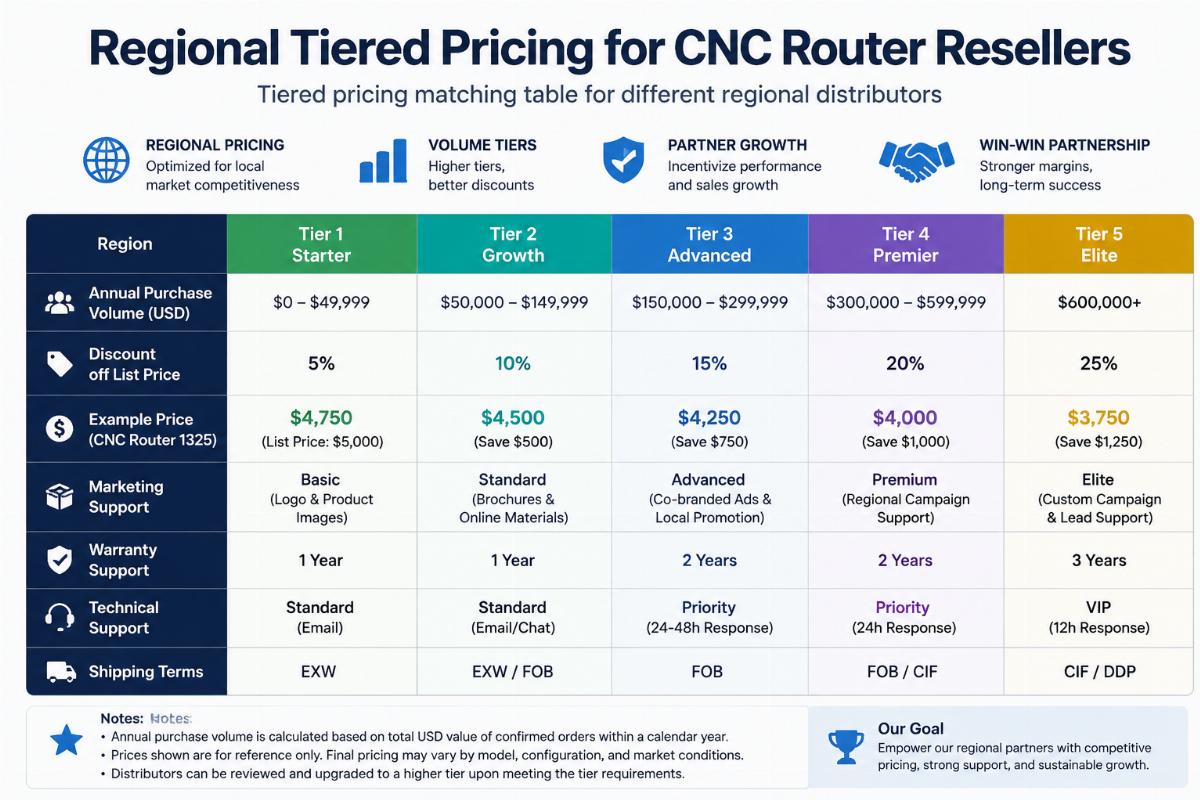
Regla de Nivel de Entrada – Permiso para pedidos mixtos de 1 unidad, coincidir con el etiquetado de OEM y soporte técnico remoto básico para revendedores que atienden pequeños talleres personalizados locales.
Regla de Nivel de Crecimiento – Establecer un umbral de pedido mensual de 4-6 unidades según la capacidad regional, reservar un margen bruto estable del 30-35% para los distribuidores y dar prioridad a los derechos de entrega.
Regla de Nivel Central – Establecer un umbral de pedido de contenedor único de 10-15 unidades, coincidir con la autorización de territorio exclusivo y un reembolso anual del 15-25%, y proporcionar servicios de instalación gratuita en el sitio.
¿Cómo vincular las políticas de incentivos para la cooperación a largo plazo en el sistema de precios?
Los descuentos anuales vinculantes, la autorización de territorio exclusivo y los derechos de soporte postventa en función del volumen de pedidos pueden reducir eficazmente la fricción interna de cooperación. Muchos programas de reventa solo establecen reglas de precios sin vincular incentivos al rendimiento real, lo que lleva a que los distribuidores tomen derechos de territorio exclusivo pero no completen las tareas de pedido acordadas, mientras que los distribuidores de alto rendimiento no tienen incentivos adicionales para seguir escalando.
Tipo de Incentivo
Práctica Ineficiente o Común
Práctica Recomendada
Regla de Reembolso
Establecer un descuento unificado del 10% para todos los pedidos anuales
Reembolso gradual del 10% al 25% según el volumen real de pedidos anuales, con liquidación en efectivo al final del año
Autorización de Territorio
Conceder derechos de territorio exclusivos de forma permanente después de firmar el contrato
Revise la tasa de finalización de pedidos cada 6 meses y ajuste el alcance del territorio de acuerdo con el rendimiento real
Soporte postventa
Cobra un extra por los servicios de instalación en el sitio
Incluya el costo de la instalación local en el sitio en el modelo de precios por adelantado y proporcione el despacho gratuito de ingenieros para distribuidores de nivel central [NEED_CITE: Incluir previamente el costo de instalación en el sitio en el precio reduce las disputas de cooperación posteriores en un 90%]
Un agente de equipos de línea completa con sede en Dubái, Emiratos Árabes Unidos, tenía en un momento un derecho de territorio exclusivo permanente, pero solo completó el 40% del volumen de pedidos anual acordado, y el sistema de precios original no tenía un mecanismo de ajuste. Después de que cambiamos la regla de incentivos para vincular los derechos de territorio exclusivo al volumen de pedidos anual, su volumen de pedidos anual en el segundo año alcanzó el 112% del objetivo acordado, y su reembolso anual alcanzó el 21% del monto total del pedido.
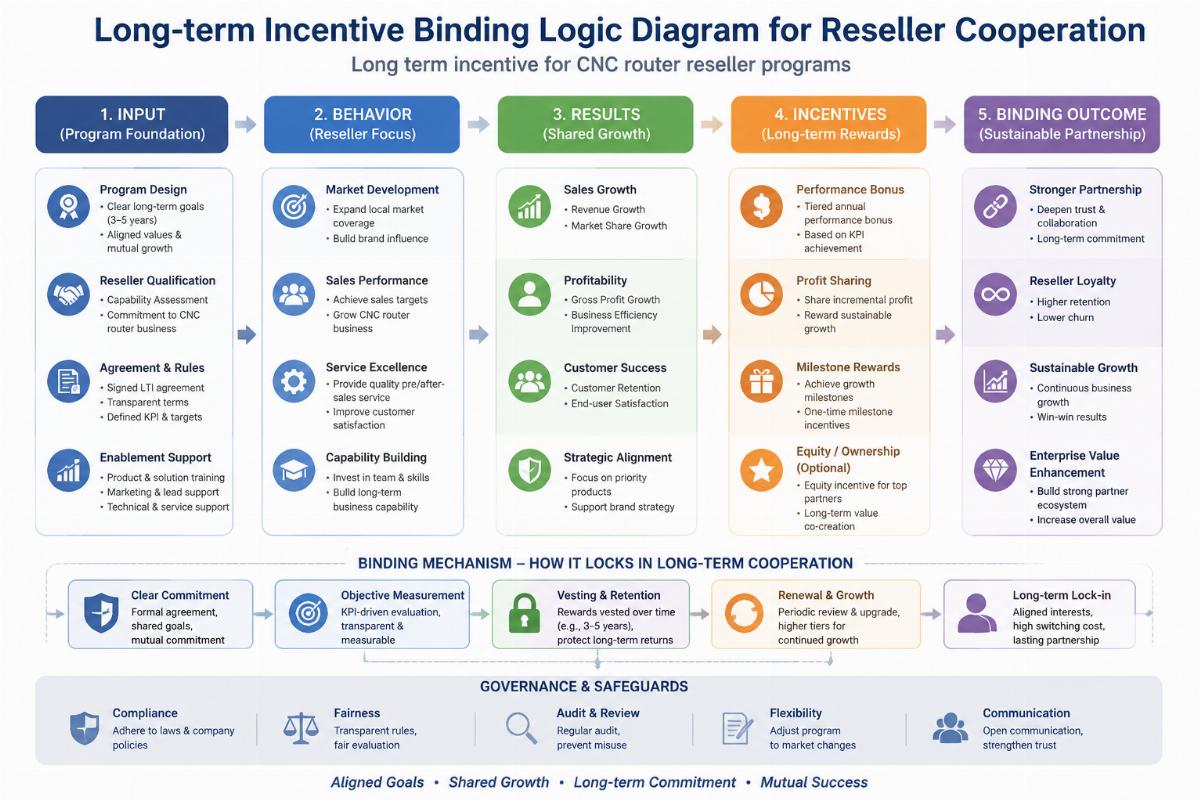
Diseño de Reembolso Gradiente – Establezca de 3 a 4 engranajes de gradiente para el volumen de pedidos anual, y la tasa de reembolso aumenta con el incremento del volumen de pedidos, para evitar la situación en la que no se puede alcanzar un objetivo único y no se obtiene ningún incentivo.
Revisión Dinámica del Territorio – Establecer un mecanismo de revisión semestral, ajustar el alcance del territorio para los distribuidores que completen más de 120