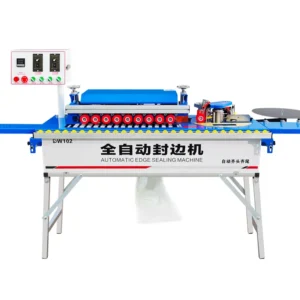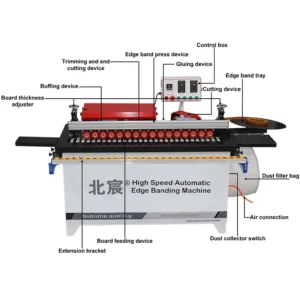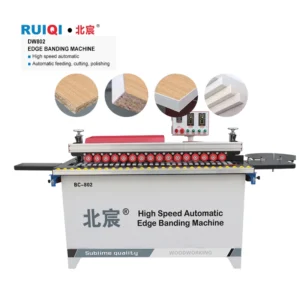
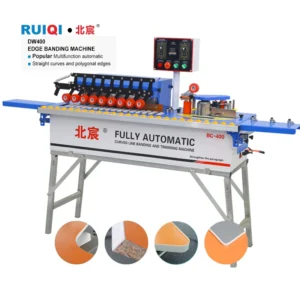
Edge banding machine
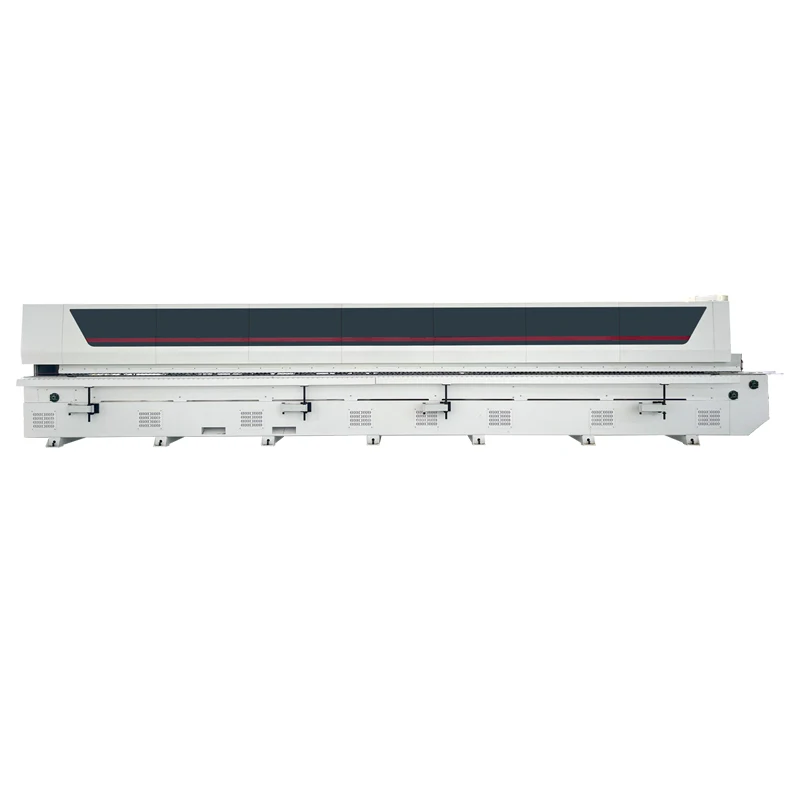
Wholesale DW985 Automatic Edge Banding Machine for Furniture Factory
<p><strong>DW985 Automatic Edge Banding Machine, 380V, 16-Function Stations, Touch Screen Control</strong> — configured for MDF, plywood and particleboard processing with PVC or veneer edge banding.</p> <ul> <li>16 integrated stations from linear pre-milling through soft forming to final polishing</li> <li>Wheeled profiling system supports handle-free and contoured edge profiles</li> <li>Voltage customizable from 110V to 440V with multilingual control panels</li> </ul> <p>Supported by four-stage QC with pre-shipment verification and factory test records issued before dispatch.</p>
Features
16 Functions
380V
DW985
Edge Banding Machine
Furniture Factory
MDF Panel
Wholesale Supply
Quality
Certified
Shipping
Worldwide
Support
24/7 Service
Delivery
Fast Lead Time
Engineer-led configuration — every DW985 quotation includes voltage confirmation and sample processing test matched to your actual edge banding material before production begins.
Technical Specifications
| Parameter | Value |
|---|---|
| Model | DW985 |
| Product Type | Automatic Edge Banding Machine |
| Function Stations | 16 stations (Pre-milling → Rough Mill → Inclined Straight Pre-milling → Finish Milling → Handle-free Chamfer → Plate Heating → Wash → Edge Banding and Slotting → Rubber Coating → Heating System → Soft Forming and Pressing → End to End → Rough Repair → Truing → Scraping → Copying Chamfer → Wash → Polish) |
| Semi-J Rough Milling Motor | 5 kW |
| Inclined Straight Edge Pre-milling Motor | 5 kW |
| Semi-J Finish Milling Motor | 6 kW × 2 |
| Milling Servo Drive | 0.75 kW × 3 |
| Edge Banding and Slotting Motor | 0.3 kW |
| End to End Motor | 0.37 kW × 2 |
| Coarse and Fine Finishing Motor | 0.75 kW × 2 |
| Plate Polishing Motor | 0.37 kW × 2 |
| Plate Conveying Motor | 5.5 kW |
| Pressure Beam Lifting Motor | 0.37 kW |
| Voltage | 380 V (configurable from 110 V to 440 V) |
| Frequency | Basis to be confirmed (50 Hz or 60 Hz) |
| Maximum Processing Speed | 8–12 m/min (basis not stated in source — confirm board type and edge banding material) |
| Control System | Touch screen with remote upgrade capability |
| Profiling System | Wheeled profiling design supporting remote shape upgrades |
| Operation Mode | Fully automatic / semi-automatic, handle-free |
| Language Options | Chinese, English; customizable to Spanish, French or other languages |
| Plug Options | EU, USA, AU, UK |
Application Suitability
| Application | Material or Output |
|---|---|
| Custom furniture cabinet door production | MDF and particleboard with PVC or veneer edge banding |
| Panel processing plant continuous runs | Plywood and melamine-faced board with ABS or PVC edging |
| Workshop scaling from manual to automated edge banding | Solid wood panels with thin veneer or thick PVC strips |
| Distributor model-mix for regional markets | Full range coverage from entry-level to 16-function configuration |
Why the Edge Banding Material Question Must Come Before the Quotation
A machine tuned for PVC will produce visible white lines on melamine paper edging if the glue temperature and pressure parameters are not adjusted to the actual material.
I spent years in the Pearl River Delta fitting edge banders on workshop floors before moving into technical sales. One shipment of DW985-class machines to a Southeast Asian distributor ran flawlessly during our pre-shipment test on PVC strip. When the buyer ran melamine paper edging on their own boards, the glue temperature was completely wrong for that substrate and white lines appeared on every panel. A commissioning team flew out and spent considerable time on-site re-tuning every station. Since then, I confirm the exact edge banding material, board substrate, and thickness range before any edge banding machine manufacturer issues a formal quotation. [NEED_CITE: glue temperature variance between PVC and melamine edging materials]
Regional Model-Mix Planning for Importers
Distributors entering a new territory need to understand where each model sits within a product family. The DW985 occupies the upper tier of this edge banding range, carrying 16 integrated stations that cover every operation from linear pre-milling through soft forming to final polishing. For a regional importer, this means one supplier can furnish entry-level machines for small joinery shops and full-function lines for established factories, keeping spare part inventories and technician training consolidated under a single equipment platform.
Territory Support and Private Label Readiness
An edge banding machine manufacturer serving importers must back the product family with documentation and branding flexibility. The DW985 supports OEM logo placement, multilingual control panels configurable to the distributor's target market, and voltage adaptation across a wide input range. This matters because a distributor presenting equipment to local furniture factories needs control interfaces in the operator's language and electrical systems matched to regional grid standards — not a generic export configuration that requires aftermarket modification. [NEED_CITE: voltage and frequency standards by export market]
How the 16-Station Sequence Affects Edge Quality
The pre-milling stations remove saw marks and sizing defects from the panel edge before it reaches the glue roller, which directly determines how cleanly the edging material bonds. The dual 6 kW finish milling motors follow the contour of the panel edge with servo-driven profiling, removing excess material without leaving facet marks. Soft forming and pressing stations then heat and wrap the edging around contoured profiles, while the end-to-end trimming motors cut flush at both panel ends. If any station in this sequence is missing or underpowered, the downstream stations cannot compensate — a rough mill cannot fix poor pre-milling adhesion, and a polishing wheel cannot hide a visible glue line left by incorrect temperature settings.
The Hidden Cost of Specifying a Machine for the Wrong Production Volume
Buying a 16-function edge bander for a workshop that only processes a few dozen panels per day means paying for servo drives and soft forming stations that never engage. Conversely, running an entry-level machine at volumes it was never designed for causes premature wear on feed chains and glue pots, leading to inconsistent edge quality that only shows up after the furniture reaches the customer. [NEED_CITE: premature component wear from mismatched machine class and throughput] The DW985 is built for factories running continuous batches where every station in the sequence is justified by daily output requirements.
What Backs This Equipment Beyond the Brochure
In-house manufacturing with patented cutting mechanisms means the pre-milling and milling assemblies are built and inspected under one roof, not sourced from third-party vendors and assembled into a frame. Four-stage quality control covers incoming material inspection, in-process checks during assembly, finished product testing, and pre-shipment verification with a formal factory test record. Voltage, language, and specification customization are configured during production rather than retrofitted after the fact. An engineer reviews your factory scale, processing requirements, and budget before issuing a configuration proposal, ensuring the DW985 arrives matched to your actual production conditions.
Documentation & Verification
- CE declaration of conformity issued for the DW985 with 16-station configuration
- Machine specification sheet detailing all motor ratings and station sequence
- Electrical schematic with voltage and frequency confirmation for your target grid
- Factory test record on your specified panel thickness and edge banding material
- Operation and maintenance manual in your agreed language with spare parts list
- Packing photographs and customs documentation support for import clearance
Installation, Commissioning & Support
- Foundation must support 4.2 t gross mass across the 950 × 98 × 184 cm footprint
- Dedicated circuit required matching confirmed voltage from 110 V to 440 V range
- Machine ships fully assembled with pressure beam and conveyor pre-aligned
- Touch screen parameters calibrated on-site for your edge banding material and board type
- Operator training covers wheeled profiling changeover and remote shape upgrade procedure
- Spare parts list covers wear items for all 16 stations including scraper and polishing wheels
Preparing Your Inquiry
To receive a configuration proposal that matches your production reality, provide the panel materials and thicknesses you process daily, the edge banding types you run including thickness range, and your local voltage and frequency standard. If you are planning a regional distribution lineup rather than a single machine purchase, share the customer segments you serve so the model mix can be structured from entry-level through the DW985 full-function tier.
Frequently Asked Questions
Q: How is the 8–12 m/min processing speed validated before shipment? A: The speed figure depends on board material, edge banding type, and panel thickness. Before production, we confirm your specific substrate and edging combination, then run a sample test at the quoted speed. The factory test record documents edge quality and trimming accuracy under those exact conditions so you can verify the claim against your own production requirements.
Q: How is voltage adapted for markets outside the 380 V standard? A: The DW985 base configuration is 380 V, but the electrical system is configurable from 110 V to 440 V. Before production begins, we issue a voltage confirmation document specifying your local frequency and phase requirements. The electrical schematic reflects the final configuration, and all motors and control components are matched to that specification before assembly.
Q: How does the DW985 fit within a distributor's regional model mix? A: The DW985 serves the upper tier of the edge banding family, targeting established furniture factories requiring 16 integrated functions. Distributors typically pair it with entry-level and mid-range models to cover joinery startups through high-volume panel processors, keeping spare parts and technician training consolidated across one product family and one edge banding machine manufacturer.
Q: What OEM and private label options are available for distributor brands? A: The DW985 supports custom logo placement on the machine body, control panel language tailored to your market, and specification adjustments to match regional requirements. All documentation including the operation manual and spare parts list can be branded to your company, supporting a private label offering without compromising the underlying manufacturing standards.
Q: What technical support structure is provided after import? A: Distributors receive spare parts lists covering all 16 stations, technical training materials for your service team, and remote upgrade capability through the touch screen system for new profiling shapes. The wheeled profiling design allows your technicians to service contour changeovers on-site without factory visits, reducing response time for your regional customers.
Request a Quote
Fill in the form below and our team will get back to you within 24 hours.