
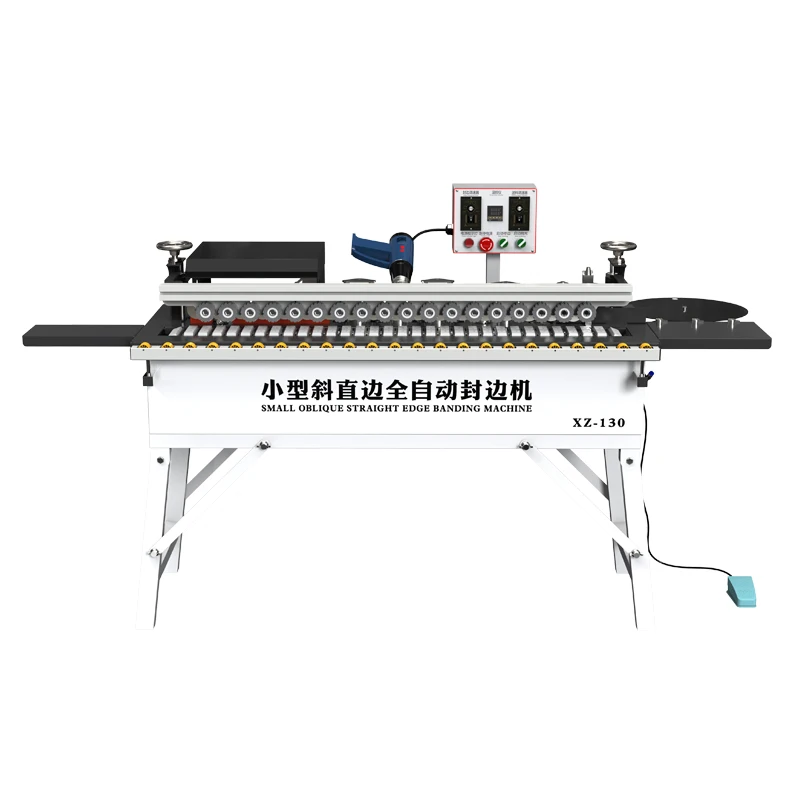
Small Edge Banding Machine DW130 for MDF | Distributor Supply
<p><strong>DW130 Oblique Straight Edge Banding Machine</strong>, 220V, 2000 ml Glue Pot, Straight & Curved Edge Capability — positioned as the compact entry point within Ruiqi's full catalogue, helping distributors build a balanced model mix from entry-level to full-function pre-milling tiers. Supports MDF, plywood and particleboard with multilingual control panel options and quick 5–10 minute glue heating for low-volume workshop environments.</p> <ul> <li>Four-stage QC with pre-shipment verification and factory test records provided before dispatch</li> <li>CE declaration and full specification sheet confirmed to target market voltage and frequency</li> <li>Single-supplier scaling path ensures feed height and throughput compatibility across future upgrades</li> </ul>
Features
Quality
Certified
Shipping
Worldwide
Support
24/7 Service
Delivery
Fast Lead Time
Compact Footprint, Verified Tolerance — Ruiqi's full edge banding machine range lets distributors build a balanced regional inventory from entry-level to full-function pre-milling models under one supply agreement.
Technical Specifications
| Parameter | Value |
|---|---|
| Model | DW130 |
| Product Type | Oblique Straight Edge Banding Machine |
| Overall Dimensions (L×W×H) | 139 × 52 × 61 cm |
| Glue Pot Capacity | 2000 ml |
| Voltage | 220V |
| Glue Heating Time | 5–10 min |
| Edge Type Capability | Straight and Curved (Oblique Straight) |
| Control Interface | Operation panel (Chinese and English standard; other languages customizable) |
| Plug Options | EU / USA / AU / UK |
| Assembly State | Single-unit compact machine |
| Feed Speed | basis to be confirmed |
| Panel Thickness Range | basis to be confirmed |
| Tolerance | basis to be confirmed |
| Certification | CE |
Application Suitability
| Application | Material or Output |
|---|---|
| Small workshop cabinet door edge sealing | MDF and plywood panels with PVC edge banding |
| Joinery startup transitioning from manual sealing | Particleboard substrates with melamine or veneer strips |
| Regional distributor demo and showroom unit | Mixed panel materials for customer evaluation |
| Low-volume custom furniture production | Curved and straight panel profiles in solid wood and composite boards |
Why the Voltage Question Should Come Before the Price on Any Edge Banding Machine for Sale
Confirm the local grid specification before requesting a quotation, not after the machine arrives at the port.
I spent three weeks waiting in a workshop outside Accra because a 380V control cabinet was shipped to a facility running 415V three-phase. The transformer took twenty-two days to clear customs, and the entire line sat idle while the customer's crew had nothing to do but watch the dust settle on brand-new conveyors. When you survey an edge banding machine manufacturer's catalogue for regional resale, every model in the mix must match the destination market's voltage and frequency before it leaves the factory floor [NEED_CITE: voltage and frequency standards by export market]. A compact 220V unit like the DW130 is no exception — the plug type, the frequency rating, and the heating element specification all need written confirmation tied to the destination country.
Catalogue Positioning for Distributors Building a Regional Product Mix
The DW130 occupies the entry point of Ruiqi's edge banding machine range, giving importers a clearly defined starting tier. When a local customer walks into a distributor's showroom, they need to see the progression: this compact straight-and-curved unit for startup workshops, a mid-range model with pre-milling for established cabinet makers, and a full-function line for high-volume panel processors. Having all three tiers from one edge banding machine manufacturer simplifies spare parts inventory, operator training, and warranty administration across the entire regional portfolio.
Territory Coverage Without Cannibalizing Your Own Line-Up
Distributors often lose margin by stocking overlapping models from different suppliers, then discovering that feed heights and control systems are incompatible when a customer wants to add a second station. Sourcing the DW130 alongside Ruiqi's mid-range and full-function models keeps the upgrade path internal [NEED_CITE: CE machinery directive requirements for industrial equipment]. Your service team trains once on a shared control platform, your spare parts warehouse carries common wear items like trimming cutters and glue rollers, and your sales conversations stay focused on production volume rather than brand switching.
Reading the Specification Sheet Against Your Market Reality
A 2000 ml glue pot on a compact chassis means the DW130 is designed for intermittent runs rather than continuous eight-hour shifts — exactly what a joinery startup needs before committing to a larger machine. The 5–10 minute heating window lets an operator start the first panel of the day without a long warm-up delay, which matters when a small shop bills by the job rather than by the shift. The oblique straight capability covers both flat panel edges and gentle curves, eliminating the need for a second dedicated curved-edge unit in workshops where floor space is measured in square meters. Panel thickness range and feed speed must be confirmed against the substrates your regional customers actually process, since MDF, plywood, and particleboard each demand different pressure and temperature settings at the glue roller.
The Hidden Cost of Specifying the Wrong Entry-Level Model
A distributor who sells an entry-level edge bander into a workshop running three shifts a day will face warranty claims that have nothing to do with manufacturing defects — the machine was simply asked to do a job it was never built for. Glue pot residue builds faster under continuous use, trimming cutters dull before the scheduled maintenance interval, and the feed chain wears unevenly when panel throughput exceeds the design intent. These failures get blamed on the brand, not on the mismatch between model tier and production volume [NEED_CITE: machinery duty cycle and maintenance interval alignment]. Mapping each customer's daily panel count to the correct tier in the Ruiqi range prevents these reputation-damaging callbacks before the invoice is even issued.
Why Sourcing This Range Through One Manufacturer Matters
Ruiqi's in-house manufacturing with patented cutting mechanisms means the DW130 shares core engineering principles with the higher-tier models, so your service team encounters familiar components across the range. The four-stage QC process with pre-shipment verification catches voltage mismatches and control panel language errors before the crate is sealed, which I have personally seen prevent costly port-side rework. Custom logo application and private label capability let distributors brand the full range consistently for their regional market. Voltage configuration from 110V to 440V is handled as a standard order parameter rather than a special engineering request, keeping lead times predictable. An engineer-led configuration recommendation with a formal quotation within the standard turnaround means your sales team can respond to end-user inquiries without waiting weeks for factory feedback.
Documentation & Verification
- CE declaration of conformity specific to the DW130 model configuration
- Machine specification sheet confirming voltage, frequency, and plug type for your destination market
- Factory test record on your specified panel thickness and edge material before dispatch
- Operation and maintenance manual in the language your service team and end-users require
- Spare parts list with part numbers matching the DW130 assembly for accurate reordering
- Packing photographs and customs documentation support for smooth port clearance
Installation, Commissioning & Support
- The 139 × 52 × 61 cm footprint fits through standard workshop doors without disassembly
- 220V single-phase supply requires a dedicated circuit with appropriate breaker rating confirmed before delivery
- Single-unit compact assembly arrives ready to level and connect, minimizing on-site setup time
- Glue pot heating element tested against destination frequency to prevent underperformance on 50Hz or 60Hz grids
- Multilingual control panel configured to operator language before commissioning begins
- Spare trimming cutters and glue roller included in first-shipment kit for immediate operation
What We Need to Match the Right Model to Your Market
Tell us the primary panel materials your customers process — MDF, plywood, particleboard, or a mix — along with typical panel dimensions and daily volume expectations. Confirm the destination country's voltage and frequency standard so the electrical specification is locked before production begins. If your service team needs operator manuals and control panel interfaces in a language beyond English, specify that at inquiry stage so the documentation package ships complete with the machine.
Frequently Asked Questions
Q: Where does the DW130 sit in Ruiqi's full edge banding machine range and what is the upgrade path? A: The DW130 is the compact entry tier designed for small workshops running straight and curved edge banding at low volumes. As a customer's production grows, the range steps up through mid-tier models with pre-milling and full-function machines with additional trimming stations. All tiers share common control architecture, so operator retraining is minimal and spare parts overlap reduces distributor inventory burden.
Q: How do I confirm voltage, frequency, and plug configuration match my target market before ordering? A: Provide the destination country and local grid specification at inquiry stage. Ruiqi's engineering team confirms voltage from 110V to 440V, frequency rating, and plug type in the formal quotation document. The electrical schematic is verified against the confirmed standard before production begins, and the pre-shipment test is conducted at the specified voltage to eliminate on-site surprises.
Q: What panel thickness and edge material types does this model support? A: The DW130 handles PVC, veneer, and melamine edge banding on MDF, plywood, and particleboard substrates. Exact panel thickness range must be confirmed against your customer base, as different substrates require specific glue temperature and feed pressure settings. Request the specification sheet with confirmed working range before committing to a stock order.
Q: How does the four-stage QC and pre-shipment verification work for distributor orders? A: Incoming material inspection, in-process assembly checks, finished product testing, and pre-shipment verification are applied to every unit. For distributor orders, the pre-shipment stage includes a factory test run using panel samples matching your market's typical substrates, with photographs and test records included in the shipping documentation package for your review before the crate is sealed.
Request a Quote
Fill in the form below and our team will get back to you within 24 hours.
Related Products
View All
Edge banding machine
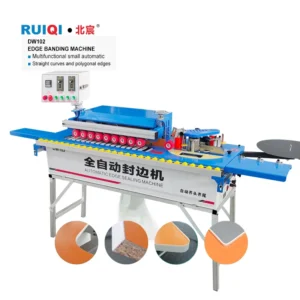
Distributor Supply Automatic Edge Banding Machine – DW102 for Wood PVC
View Details
Edge banding machine