
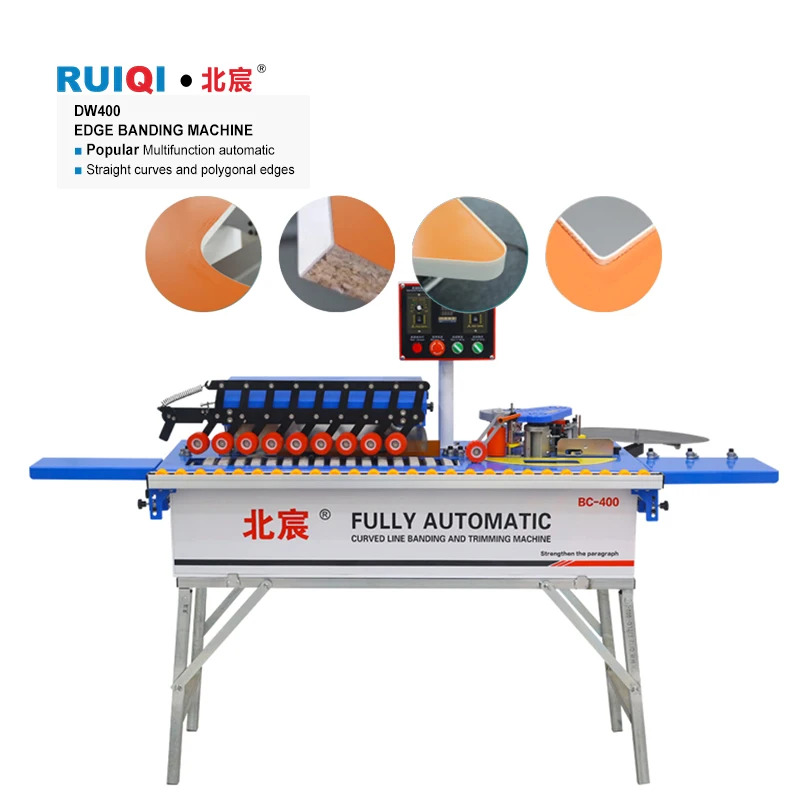
DW400 Edge Banding Machine for MDF Plywood – Distributor Supply
<p><strong>DW400 Manual Edge Banding Machine, 3800W, 0.3-3mm Edge Thickness, 220V/380V</strong> — compact benchtop unit with straight banding, trimming and polishing in one pass.</p> <ul> <li>Built for distributors supplying small workshops transitioning from manual to mechanized edge finishing on MDF, plywood and particleboard</li> <li>Voltage and control panel language confirmed per target market before production, eliminating dead-on-arrival risk for your regional customers</li> </ul> <p>Supported by four-stage QC with pre-shipment electrical verification, full OEM branding and packaging customization, and engineer-led configuration matching your territory's model mix requirements.</p>
Features
Quality
Certified
Shipping
Worldwide
Support
24/7 Service
Delivery
Fast Lead Time
Voltage-Locked Configuration — every DW400 unit ships with electrical schematics confirming the exact frequency and phase sequence of the destination market, eliminating dead-on-arrival machinery for regional distributors.
Technical Specifications
| Parameter | Value |
|---|---|
| Model | DW400 |
| Product Type | Manual Edge Banding Machine |
| Total Power | 3800W |
| Voltage | 220V / 380V / customizable from 110V to 440V |
| Edge Banding Thickness | 0.3–3 mm |
| Edge Banding Height | 0–50 mm |
| Minimum Sheet Length | 25 cm |
| Minimum Sheet Width | 10 cm |
| Trimming Power | 650W × 2 |
| Polishing Power | 180W × 2 |
| Glue Pot Capacity | 1000 ml |
| Vacuum Power | 1200W |
| Air Source Pressure | 0.5–0.8 MPa |
| Product Dimensions | 116 × 47 × 69 cm |
| Product Weight | 70 kg |
| Key Features | Straight edge banding, trimming, polishing in a single skid-mounted unit |
Application Suitability
| Application | Material or Output |
|---|---|
| Cabinet door edge finishing | MDF and particleboard panels with PVC or melamine edge banding |
| Custom furniture small-batch production | Plywood and blockboard with veneer or thin polymer strips |
| Joinery workshop upgrade from hand edging | Solid wood panels and polymer door blanks up to 50 mm edge height |
| Distributor demo and showroom units | Mixed substrate sample boards for buyer demonstrations |
Why the Voltage Question Must Come Before the Quotation
Specifying local voltage and frequency at inquiry stage prevents entire shipments from becoming stranded assets.
Distributors who have imported woodworking machinery before know the sinking feeling of opening a crate only to find a motor wound for a grid that does not match the customer's workshop. An edge banding machine manufacturer that locks in 220V, 380V, or any custom configuration between 110V and 440V before production begins removes this single largest source of post-delivery dispute [NEED_CITE: voltage and frequency standards by export market]. I have watched a Southeast Asian importer absorb a four-week delay and rewinding cost because the original purchase order never stated the destination was a 220V/60Hz island grid rather than the mainland 380V/50Hz standard.
Territory Coverage Without Electrical Guesswork
When a distributor serves multiple countries across Southeast Asia or Latin America, each territory runs a different voltage and frequency standard. The DW400 accommodates this reality by allowing the edge banding machine manufacturer to build each batch to the precise electrical specification of the end-user market. Stocking a single-model SKU in multiple voltage variants lets a regional warehouse fulfill orders from Thailand, Vietnam, and the Philippines without holding three different machine platforms.
Language and Control Panel Localization
Beyond electrical compatibility, operators in different markets read different languages. Control panel labels, glue temperature readouts, and feed-speed indicators on the DW400 can be produced in the agreed language before the unit leaves the factory. Distributors who have dealt with commissioning delays caused by a technician unable to read a Chinese-only interface recognize this as a recurring bottleneck [NEED_CITE: CE machinery directive requirements for industrial equipment]. Multilingual panels reduce the on-site training burden and accelerate the path from uncrating to first production run.
Reading the Specification Sheet Like a Production Manager
The 0.3–3 mm edge banding thickness range covers the PVC and veneer strips most commonly stocked by small cabinet shops, yet it also signals the glue roller pressure and trimming cutter geometry the machine was designed around. Running 3 mm solid-wood edging continuously demands more from the trimming motors than intermittent PVC work, and the dual 650W trimming units on the DW400 are sized for the lighter end of that spectrum with adequate headroom. The 1000 ml glue pot sustains short-run batch work typical of a custom furniture shop without requiring mid-shift refills, while the 0.5–0.8 MPa air pressure requirement aligns with the small reciprocating compressors already present in most workshops. A distributor matching this machine to a customer's material mix should verify that the customer's heaviest edging material falls within the rated thickness window rather than assuming all banding types perform identically.
The Hidden Cost of Skipping Material Trials
A distributor once shipped a batch of compact edge banders to a Vietnamese cabinet factory that had quoted standard PVC edging during the sampling phase. When the factory switched to an off-brand, calcium-loaded PVC strip for production, the glue temperature and feed rate required complete recalibration, and the line stood idle for four days. No amount of specification-sheet reading substitutes for a physical trial with the customer's actual edge banding stock. When the material composition changes, the thermal and mechanical behavior at the glue roller changes too [NEED_CITE: substrate and adhesive compatibility in edge banding operations]. Confirming sample runs with the intended production material before committing to a stocking order protects both the distributor's reputation and the end-user's schedule.
Procurement Advantages for the Regional Distributor
The DW400 sits within a broader product family that spans entry-level manual units through fully automatic pre-milling edge banders, meaning a distributor can source an entire workshop upgrade path from one edge banding machine manufacturer rather than juggling multiple suppliers. OEM branding, custom packaging, and private-label documentation are handled as standard configuration steps rather than special requests. Pre-shipment testing includes a factory run with panel thickness and edging material matching the distributor's stated market, and every unit ships with a photographic packing record so that crate condition can be verified against documentation at the port of entry. The four-stage quality control process — incoming material, in-process, finished assembly, and pre-shipment verification — applies equally to single demo units and full container loads.
Documentation & Verification
- CE declaration of conformity aligned to the destination market's machinery directive category
- Electrical schematic confirming voltage, frequency, and phase sequence for each batch
- Machine specification sheet listing trimming and polishing power ratings per unit serial number
- Factory test record produced with the distributor's specified panel thickness and edging material
- Spare parts list covering trimming cutters, glue rollers, and polishing wheels with part codes
- Operation and maintenance manual translated into the agreed end-market language
Installation, Commissioning & Support
- Benchtop or skid-mounted placement requiring only a level floor and 116 × 47 cm clearance
- Dedicated electrical circuit matching the confirmed voltage variant, isolated from welding or compressor loads
- Single air line connection at 0.5–0.8 MPa from the workshop's existing compressor network
- Glue pot first-fill and temperature calibration performed against the distributor's sample edging stock
- Operator walkthrough covering trimming depth adjustment and polishing wheel replacement intervals
- Spare trimming cutter and polishing wheel kit included for initial months of production
Structuring Your Stocking Inquiry
Distributors evaluating the DW400 for regional inventory should provide the target market's voltage and frequency standard, the predominant edge banding materials their customers use, and the language required for control panels and manuals. Sharing the typical panel dimensions and daily throughput expectations of the end-user workshops allows the manufacturer to confirm whether the DW400's 1000 ml glue pot and manual feed rate align with the customer's production volume, or whether a higher-tier model in the same product family would be a better stocking candidate. If private-label packaging or custom crate marking is needed for import clearance in specific territories, those requirements should be noted at inquiry stage to avoid re-labeling delays at the port of destination.
Frequently Asked Questions
Q: How does the OEM process work for distributors ordering mixed-voltage batches? A: Each purchase order specifies the voltage, frequency, and language variant per unit. The factory builds to those parameters, applies the distributor's logo and packaging artwork, and generates matching electrical schematics and manuals. Minimum quantities for private-label packaging apply and are confirmed during quotation, though single-unit demo orders can ship under the distributor's branding with standard documentation sets.
Q: What spare parts should a distributor stock locally for the DW400? A: Trimming cutters, polishing wheels, glue roller sleeves, and feed-chain tension springs represent the primary wear items. The factory provides a coded spare parts list with recommended stock quantities based on the distributor's expected service territory volume. Most consumables ship in small cartons alongside the main machine order, reducing separate freight costs and keeping local inventory replenishment straightforward.
Q: Can the DW400 handle solid-wood edge banding at 3 mm thickness continuously? A: The rated thickness range extends to 3 mm, but continuous solid-wood edging places higher demand on the trimming cutters and glue adhesion than PVC or melamine strips. A material trial with the specific wood species and adhesive is recommended before the distributor commits to positioning the DW400 for that application in their catalog.
Q: How are warranty and technical support handled for distributor-sold units? A: The factory provides installation guidance documentation and remote technical support for commissioning. Distributors are encouraged to train their own service technicians through factory-hosted sessions so that first-line support remains local. Warranty terms and spare-part supply commitments are documented in the distribution agreement before the first stocking order is placed.
Request a Quote
Fill in the form below and our team will get back to you within 24 hours.
Related Products
View All
Edge banding machine