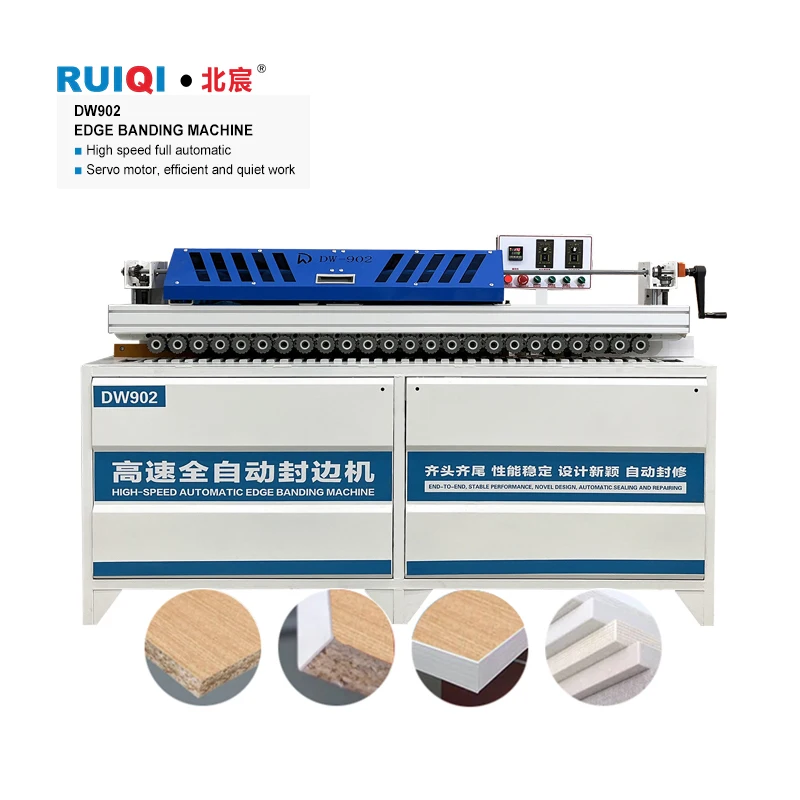
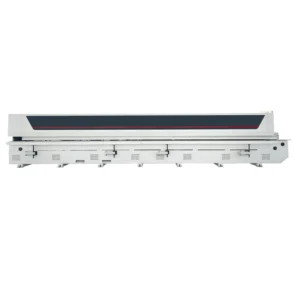
DW902 Automatic Edge Banding Machine for MDF Panel – Distributor Supply
<p><strong>DW902 Automatic Edge Banding Machine, 220V/380V, 0.3-3mm Edge Thickness, 24000r/min Trimming</strong> — designed for regional distributors supplying custom furniture and cabinet workshops with a reliable mid-range edge bander.</p> <ul> <li>Straight and oblique dual-purpose banding with 4-group pressure wheels for versatile panel processing</li> <li>4000ml glue pot with double hot air design ensures stable adhesion across workshop conditions</li> <li>Voltage and control panel language customizable to destination market before shipment</li> </ul> <p>Backed by four-stage QC with pre-shipment test records, in-house patented mechanisms, and full OEM branding support for distributor partners.</p>
Features
Quality
Certified
Shipping
Worldwide
Support
24/7 Service
Delivery
Fast Lead Time
In-house manufacturing depth — The DW902 is produced on our own floor with proprietary cutting mechanisms and verified tolerance, not rebranded from a trading desk, which means an edge banding machine distributor can trace every component back to its source.
Technical Specifications
| Parameter | Value |
|---|---|
| Model | DW902 |
| Product Type | Automatic Edge Banding Machine |
| Rated Power | 4000W |
| Voltage & Frequency | 220V/380V/customization (basis not stated in source — confirm frequency and phase) |
| Edge Banding Thickness | 0.3–3 mm |
| Edge Banding Height | 5 cm |
| Minimum Sheet Length | 25 cm |
| Minimum Sheet Width | 10 cm |
| Trimming Power / Speed | 800W × 2 / 24,000 r/min |
| Polishing Power | 380W × 2 |
| Edge Power | 140W |
| Transmission Power | 140W |
| Vacuum Power | 550W |
| Glue Pot Capacity | 4000 ml |
| Air Source Pressure | 0.5–0.8 MPa |
| Overall Dimensions | 175 × 87 × 112 cm |
| Net Weight | 240 kg |
| Key Features | Oblique and straight dual-purpose edge banding, double hot air design, feeding auxiliary slide plate, 4 groups of oblique pressure wheels, double row pressing wheels, chamfering |
Application Suitability
| Application | Material or Output |
|---|---|
| Custom cabinet door edging | MDF and particleboard with PVC or melamine banding |
| Home-decoration built-in furniture | Plywood and ecological board with veneer edge strips |
| Mid-volume furniture workshop production | Solid wood panels requiring 90-degree straight and oblique banding |
| Regional stock mix for distributors | Compact-format machines covering entry to mid-tier panel processing demand |
Why Voltage Confirmation Must Precede the Purchase Order
Every export-bound edge bander leaves the factory at a defined voltage and frequency — once crated, re-winding a motor is not a simple field swap.
Sourcing teams frequently finalize pricing and lead times before confirming the destination market's electrical standard. When an edge banding machine distributor receives a unit wired for 380V/50Hz but the local workshop runs on 220V/60Hz, the machine sits idle while a replacement motor ships overseas. That delay erodes customer confidence far faster than any price concession can rebuild. [NEED_CITE: voltage and frequency standards by export market]
Territory Stock Planning for Regional Markets
An edge banding machine distributor covering a broad territory needs a model range that spans the small joinery shop doing bespoke kitchens and the mid-size factory producing cabinet runs. The DW902 occupies the mid-tier position: it handles 0.3–3 mm banding thickness and boards as short as 25 cm, which covers the majority of custom-furniture applications without requiring the footprint or power draw of a full-function pre-milling line. Stocking this model alongside entry-level and high-throughput alternatives lets importing partners match customer demand without over-committing warehouse space.
Dual-Purpose Banding as a Competitive Differentiator
Most compact edge banders handle straight 90-degree edges only, forcing workshops that encounter bevelled or angled panels to outsource that operation. The oblique and straight dual-purpose design with four groups of oblique pressure wheels gives the DW902 a wider application envelope. For a woodworking machinery importer, that broader capability translates into fewer lost inquiries — a dealer can quote confidently on projects involving angled cabinet components and chamfered furniture parts without redirecting the buyer elsewhere. [NEED_CITE: oblique edge banding demand in custom cabinetry markets]
Reading the Spec Sheet Against Real Workshop Conditions
The trimming stations run at 800W × 2 with a spindle speed of 24,000 r/min, which is the range needed for clean cuts on PVC and thin melamine without chipping the substrate edge. Below this speed band, trimming tools tend to tear rather than shear the banding material, leaving visible lines that require manual cleanup. The 380W × 2 polishing wheels then smooth the transition between band and board surface. Glue pot capacity at 4000 ml with a double hot air design maintains adhesive temperature stability — important when a workshop in a cold climate starts the machine on a winter morning and needs consistent bond strength from the first panel onward. The 0.5–0.8 MPa air pressure requirement is standard for pneumatic feeding and pressure systems, but the compressor must be sized to sustain that pressure continuously, not just at peak.
The Cost of Skipping Pre-Shipment Electrical Verification
Importers who skip electrical schematic review before production sometimes discover mismatched plug types or missing frequency ratings only when the container arrives. Rewiring a 4000W system in-country requires an electrician familiar with industrial woodworking equipment and adds days to commissioning. Worse, running a 50Hz-rated motor on 60Hz supply accelerates wear on the trimming spindles and transmission motor, leading to premature failures that the end user blames on the machine rather than the power mismatch. [NEED_CITE: CE machinery directive requirements for industrial equipment]
What Manufacturer-Direct Supply Changes for Distributors
Every DW902 ships from the same facility that engineers and assembles it, which means specification questions reach the people who designed the pressure wheel arrangement and selected the glue pot heating elements. Voltage customization from 220V to 380V and multilingual control panels are configured before assembly rather than retrofitted after. The four-stage quality control process — incoming material, in-process, finished product, and pre-shipment — generates a test record tied to each serial number, so distributors can show end customers the exact verification data for their unit. Full OEM and private-label capability allows importing partners to brand the machine, packaging, and documentation for their market identity. Spare parts lists are structured so distributors can plan local consumable stocking against realistic wear intervals.
Documentation & Verification
- CE declaration of conformity mapped to the DW902 model and configuration
- Factory test record showing actual banding results on your specified panel thickness
- Electrical schematic confirming voltage, frequency, and plug type for your market
- Operation manual translated into the language your service team requires
- Spare parts list with part numbers matching your local inventory system
Installation, Commissioning & Support
- Confirm a dedicated circuit rated for the 4000W total draw at your specified voltage before delivery
- Allow floor space exceeding 175 × 87 cm on each axis for operator access and board infeed clearance
- The 240 kg net weight requires a level concrete pad; no special foundation anchoring is specified
- First-run commissioning should verify all trimming and polishing stations against your actual banding material
- Establish a stock of trimming cutters and polishing wheels based on your customer processing volume
- Air supply at 0.5–0.8 MPa must be continuous; verify compressor capacity with your installation team
Preparing a Useful Inquiry
To configure the DW902 correctly for your market, specify the destination voltage, frequency, and plug type so the electrical system matches local standards from the factory. Indicate whether your customer base primarily processes MDF, particleboard, or plywood, and the typical panel thickness range, so the pressure wheel setup and glue temperature profile are set before shipment. Note the control panel language your operators need and whether you require OEM branding on the machine body and documentation.
Frequently Asked Questions
Q: What model mix should a distributor stock to cover entry-level through mid-range edge banding demand? A: A practical mix starts with a compact single-function bander for small workshops, the DW902 for mid-volume custom furniture production, and a full-function pre-milling model for high-throughput factories. This three-tier approach lets a woodworking machinery importer match most customer inquiries without overstocking. Request a territory-specific model recommendation based on your regional demand patterns.
Q: How is territory exclusivity and pricing structured for importing partners? A: Territory terms are negotiated based on market volume commitment, service capability, and stocking plans. Pricing reflects configuration choices including voltage, control language, and OEM branding requirements. The manufacturer provides formal quotations within 24 hours of receiving a detailed inquiry, and volume tiers apply as order quantities increase across a product range.
Q: What spare parts and consumable backup should a distributor hold locally? A: At minimum, stock trimming cutters, polishing wheels, and pressure wheel assemblies sized to your installed base. The glue pot heating elements and pneumatic seals are less frequent replacements but should be available to avoid extended downtime. The factory provides a model-specific spare parts list to help edge banding machine distributors plan inventory against realistic consumption rates.
Q: Is technical training available for the distributor's own service team? A: Yes. The manufacturer supports distributor service teams with commissioning guidance, troubleshooting documentation, and technical training covering mechanical adjustment, electrical diagnostics, and pneumatic system maintenance. Training can be arranged at the factory or remotely, and it is structured so technicians can independently support customers within their territory after completion.
Q: Can machines be private-labeled with the distributor's branding before shipment? A: Full OEM and private-label capability covers machine body branding, control panel language, documentation translation, and packaging identity. The DW902 and the broader product family can carry the distributor's logo and color scheme, configured during production rather than applied as after-market modifications. Confirm branding specifications at the inquiry stage to ensure alignment with your market identity.
Request a Quote
Fill in the form below and our team will get back to you within 24 hours.
Related Products
View All
Edge banding machine