Edge banding machine
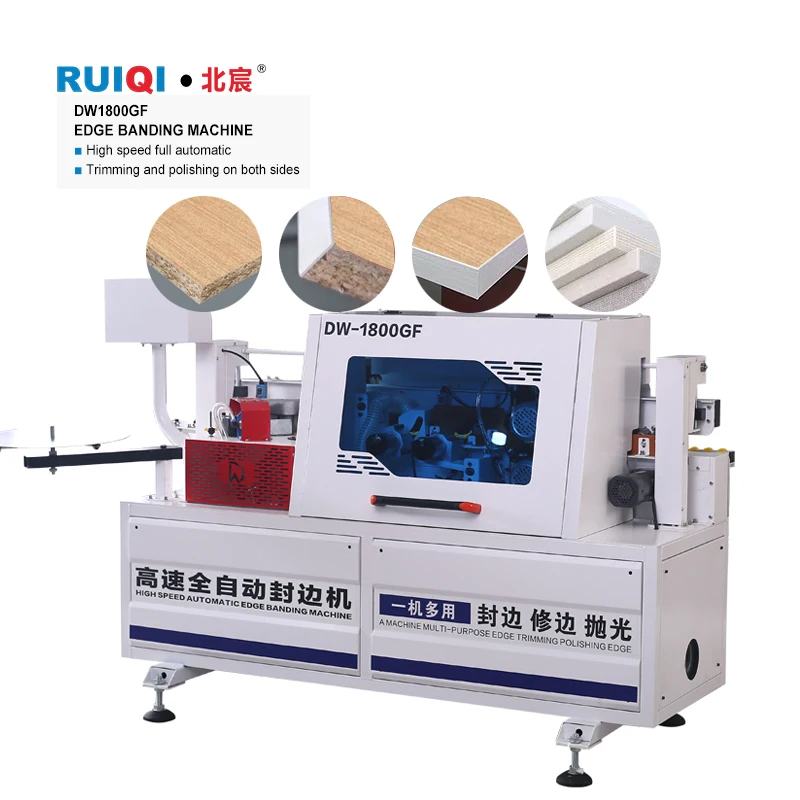
DW1800 Automatic Edge Banding Machine for MDF Plywood | Factory Supply
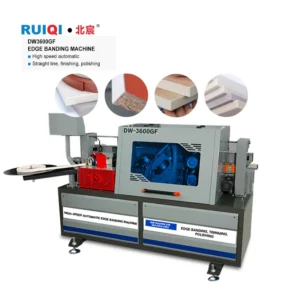
<p><strong>DW1800 Automatic Edge Banding Machine</strong> — 4.9KW total power, 0-14M/min feed speed, double-sided gluing with top/bottom trimming and polishing in a single pass.</p> <ul> <li>Edge banding thickness 0.3-3MM, panel height up to 50MM, covering MDF, plywood, particleboard and PVC substrates</li> <li>Voltage configurable across 380V/220V/415V with EU, USA, AU, UK plug options confirmed before production</li> <li>Mid-range positioning in the Ruiqi range — pair with sliding table saws and boring machines for a complete line without changing supplier</li> </ul> <p>Served distributors across 100+ countries with full OEM support, region-specific voltage confirmation, and operation manuals delivered in the agreed language for your local operators.</p>
Features
380V
DW1800
Edge Banding Machine
Furniture Factory
MDF Panel
Profile Tracking
Wholesale Supply
Quality
Certified
Shipping
Worldwide
Support
24/7 Service
Delivery
Fast Lead Time
Voltage-Confirmed Dispatch — Every DW1800 Automatic Edge Banding Machine leaves the factory with electrical schematics and plug configurations matched to the destination market's grid standards, verified before the crate is sealed.
Technical Specifications
| Parameter | Value |
|---|---|
| Model | DW1800 |
| Product Type | Automatic Edge Banding Machine |
| Total Power | 4.9 kW |
| Voltage Options | 380V / 220V / 415V (frequency to be confirmed per market) |
| Feed Speed | 0–14 m/min |
| Edge Banding Thickness | 0.3–3 mm |
| Edge Banding Height | 0–50 mm |
| Minimum Sheet Length | 200 mm |
| Minimum Sheet Width | 100 mm |
| Trimming Motor | 800 W × 2 at 24,000 r/min |
| Polishing Motor | 380 W × 2 |
| Glue Pot Capacity | 4,000 ml |
| Air Source Pressure | 0.4–0.6 MPa |
| Vacuum Power | 550 W |
| Machine Dimensions | 2200 × 650 × 1250 mm |
| Machine Weight | 320 kg |
| Key Features | Double-sided gluing, top and bottom trimming, front and rear alignment, flexible edge scraping, profile tracking, dust suction |
Application Suitability
| Application | Material or Output |
|---|---|
| Custom cabinet door production | MDF and particleboard with PVC or melamine edge banding |
| Plywood furniture panel finishing | Plywood substrates with veneer or PVC strip edging |
| Small-batch joinery components | Solid wood panels with thin veneer banding |
| Panel processing value-added service | ABB boards and PVC panels with matching edge strips |
| Workshop automation transition | Mixed substrate batches requiring quick changeover between 0.3 mm and 3 mm banding thickness |
Why the Voltage Question Should Come Before the Quotation
A machine that cannot plug into your workshop's supply is not a machine — it is a 320 kg paperweight sitting on your floor.
I have watched distributors receive edge banders that were quoted on feed speed and trimming stations alone, with nobody asking whether the local grid runs at 50 Hz or 60 Hz. The DW1800 is built with configurable voltage across 380V, 220V, and 415V, but the correct configuration only matters if it is confirmed before production starts. When an Edge Banding Machine manufacturer ships a unit wired for the wrong frequency, the trimming motors run at the wrong RPM, the glue pot thermostat behaves unpredictably, and the feed drive loses synchronization. [NEED_CITE: voltage and frequency standards by export market] The cost is not just a rewinding job — it is two weeks of lost production while the machine sits idle and an electrician sources a step-up transformer that was never supposed to be necessary.
How Regional Stocking Decisions Shape Your Catalogue Mix
Distributors evaluating an Edge Banding Machine manufacturer for regional inventory need to think about the model ladder. The DW1800 occupies the mid-range tier with a complete function set — gluing, end cutting, rough and fine trimming, profile tracking, scraping, and polishing — which means it serves as the default recommendation for workshops that have outgrown manual edge banding but are not yet running continuous production shifts. Stocking this model alongside an entry-level unit and a high-throughput pre-milling machine gives you three clear tiers to present during customer consultations.
Matching Throughput Expectations to the Feed Speed Range
The 0–14 m/min feed speed on the DW1800 covers a practical band for workshops processing mixed panel sizes in small to medium batches. This is not a machine for high-volume continuous line operations where 25 m/min or higher is standard. For a distributor, positioning this model correctly prevents the situation where a customer buys it for a production volume it was never designed to sustain, then blames the machine when throughput falls short. [NEED_CITE: typical feed speed ranges for mid-tier automatic edge banders] The variable speed transmission lets operators slow down for delicate veneer on solid wood and open up for standard PVC runs on particleboard cabinet components.
What the Trimming and Polishing Configuration Means for Edge Quality
The dual 800 W trimming motors running at 24,000 r/min give the DW1800 enough spindle speed to produce clean cuts on PVC and melamine edge banding without chipping, provided the feed rate is matched to the material. The separate 380 W polishing motors follow the scraping station to remove residual marks and leave a finished edge. For plywood and MDF substrates common in cabinet making, this sequence — trim, scrape, polish — addresses the visible glue line problem that buyers consistently report when edge banding quality is inconsistent across different panel materials. The 4,000 ml glue pot capacity supports sustained runs without frequent refill interruptions, and the double-sided gluing application helps maintain uniform adhesion across varying board thicknesses.
The Hidden Cost of Skipping Material-Specific Configuration
When a workshop switches from PVC edge banding to real wood veneer without adjusting glue pot temperature and trimming depth, the results are immediate and expensive. Veneer is thinner and more brittle — the trimming knives bite too deep, the edge chips, and the operator spends the rest of the day sorting rejected panels. I have seen this happen at customer sites where the machine arrived with default settings optimized for 2 mm PVC, and nobody thought to request a setup guide covering alternative materials. The DW1800 handles 0.3–3 mm banding thickness, but the operator needs to know which settings correspond to which material. [NEED_CITE: edge banding material setup parameters for automatic machines] This is why configuration confirmation — including the intended edge banding materials — belongs in the pre-shipment conversation, not in the troubleshooting call after commissioning fails.
Why Distributors Choose This Supply Partnership
The DW1800 comes from a production environment where four-stage quality control covers incoming material inspection, in-process checks, finished product verification, and pre-shipment testing — meaning the unit you receive has been run with actual panel stock before crating. Voltage, plug type, and control panel language are confirmed as part of the order process rather than treated as afterthoughts, so the machine arrives ready for your local market. The manufacturer holds proprietary cutting mechanism patents that directly affect trimming tolerance, and this engineering depth is verifiable through factory inspection or technical documentation review. OEM branding and private-label application are available for distributors who need their own identity on the machine and documentation. The full product family — from entry-level to high-function pre-milling models — lets you build a regional catalogue from a single manufacturing source, simplifying spare parts logistics and technical training for your service team.
Documentation & Verification
- CE declaration of conformity included for European market entry and customs clearance
- Electrical schematic with confirmed voltage, frequency, and plug type for your destination market
- Factory test record generated using panel material matching your typical substrate range
- Operation and maintenance manual supplied in the agreed language for your local operators
- Spare parts list with wear item identification and recommended reorder intervals
Installation, Commissioning & Support
- Requires a dedicated circuit matching the confirmed voltage configuration and the 4.9 kW total power draw
- Machine footprint of 2200 × 650 mm requires level flooring with clearance for panel infeed and outfeed
- Arrives as a single unit requiring positioning and utility connection rather than multi-component assembly
- Air supply must deliver 0.4–0.6 MPa clean, dry compressed air to the machine inlet
- First-run commissioning includes feed speed calibration and trimming depth adjustment for your primary edge banding material
- Dust suction port connects to your existing extraction system at the 550 W vacuum rating
Starting the Specification Conversation
To move from general inquiry to a firm quotation on the DW1800, share the substrate materials you process most frequently, the edge banding materials and thickness range you run, and the daily panel volume your workshop handles. Confirm your local voltage and frequency so the electrical configuration is locked before production begins. If your operators require a control panel language beyond Chinese and English, specify this at the quotation stage so it is built into the system from the start.
Frequently Asked Questions
Q: Where does the DW1800 sit within the Ruiqi edge banding machine range? A: The DW1800 is the mid-range model offering a complete function set — gluing, trimming, scraping, and polishing — in a single pass. It fits workshops stepping up from manual edge banding. For higher throughput or pre-milling capability, other models in the same product family are available, allowing you to scale without switching to a different Edge Banding Machine manufacturer.
Q: How is voltage and frequency confirmed before the machine enters production? A: During the quotation and order confirmation stage, your local voltage and frequency are documented on the electrical schematic. The factory configures the motor windings, control transformer, and plug type accordingly. A pre-shipment verification step confirms the electrical setup matches the agreed specification before the machine is crated.
Q: Can the control panel language be customized for my local operators? A: Chinese and English are standard on the DW1800 control interface. Spanish and other languages are available as customization options. This must be specified during the order confirmation so the correct language pack is loaded and tested before the machine ships.
Q: What OEM and private-label options are available for distributors? A: The manufacturer supports custom logo application, color scheme adjustment, and branded documentation for distributor partners. These OEM requirements are confirmed during the specification stage and applied during production, including on the machine body, control panel splash screen, and accompanying manuals.
Q: What documentation ships with the DW1800 for European market entry? A: The machine ships with a CE declaration of conformity, ISO 9001 certificate reference, complete electrical schematic, factory test record, operation manual in the agreed language, and a detailed spare parts list. This documentation package supports customs clearance and provides your technical team with the references needed for installation and ongoing maintenance.
Request a Quote
Fill in the form below and our team will get back to you within 24 hours.