DW102 Edge Banding Machine with Automatic Trimming – Wholesale
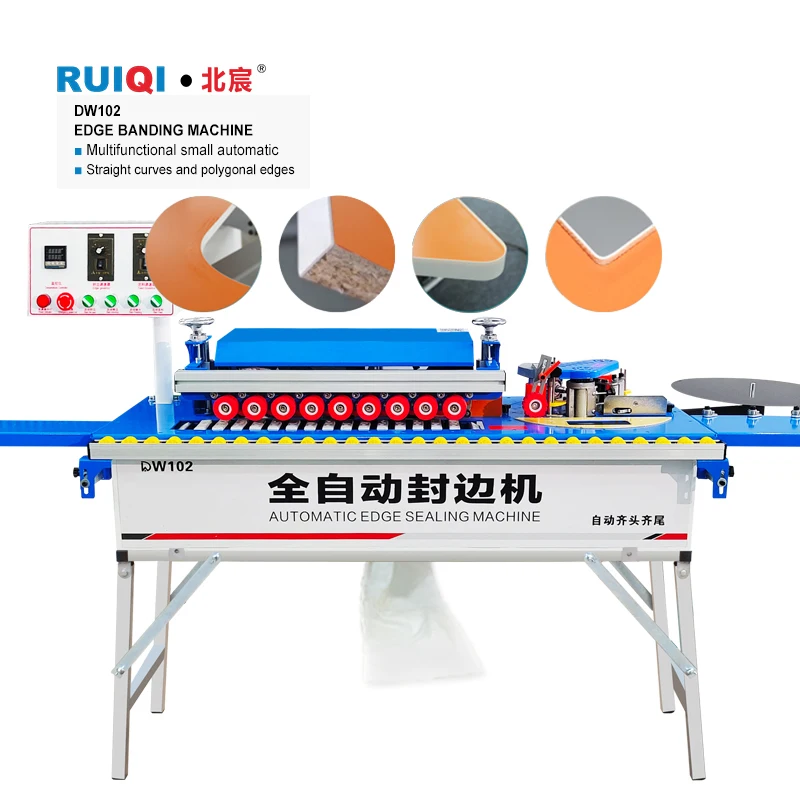
<p><strong>DW102 Automatic Edge Banding Machine, 3800W, 0.3–3mm Banding Thickness</strong> — handles both curved and straight edge banding with automatic head and tail cutting, trimming, and polishing in one compact unit. Supports MDF, plywood, particleboard, and polymer doors for furniture and cabinet production. - Voltage customizable between 220V and 380V to match local supply - Multi-language control panel available including English and Spanish - 1000ml glue pot capacity for continuous small-to-medium batch runs - Minimum workpiece 25cm length × 5cm width with 0–50mm edge height range Regional distributors can survey this model within the full edge banding range, where each tier maps to a specific workshop scale, enabling territory-wide model mix planning with OEM branding support and engineer-led configuration guidance.</p>
Features
Quality
Certified
Shipping
Worldwide
Support
24/7 Service
Delivery
Fast Lead Time
Verified Electrical Match — every DW102 unit ships only after its voltage, frequency, and plug type are confirmed line-by-line against your local supply standard.
Technical Specifications
| Parameter | Value |
|---|---|
| Model | DW102 |
| Product Type | Automatic Edge Banding Machine |
| Total Power | 3800 W |
| Voltage Options | 220 V / 380 V / customization available |
| Edge Trimming Power | 650 W × 2 |
| Polishing Power | 180 W × 2 |
| Vacuum Power | 1200 W |
| Edge Feed Power | 20 W |
| Transmission Power | 60 W |
| Glue Pot Capacity | 1000 ml |
| Edge Banding Thickness Range | 0.3 – 3 mm |
| Edge Banding Height Range | 0 – 50 mm |
| Minimum Sheet Length | 25 cm |
| Minimum Sheet Width | 5 cm |
| Air Source Pressure | 0.5 – 0.8 MPa |
| Overall Dimensions (L × W × H) | 128 × 47 × 69 cm |
| Net Weight | 75 kg |
| Control Panel Languages | Chinese, English; other languages available on request |
| Plug Options | EU, USA, AU, UK |
| Standard Functions | Curved and straight edge banding, automatic head and tail cutting, edge trimming, polishing, vacuum |
Application Suitability
| Application | Material or Output |
|---|---|
| Cabinet door edge finishing | MDF and particleboard with PVC or melamine edge banding |
| Custom furniture panel edging | Plywood and blockboard with veneer or ABS strips |
| Small-batch curved panel work | Radiused MDF components for reception desks and retail fixtures |
| Polymer door frame edging | Polymer composite profiles requiring straight and curved trimming |
| Workshop-scale production runs | Solid wood panels for joinery and interior fit-out projects |
Why Voltage Confirmation Must Come Before the Price Quote
A machine wired for the wrong supply sits idle on your floor until a transformer arrives.
I once configured an edge bander for a Middle East customer, quoted the 380 V variant, and only later learned the workshop ran on a 415 V grid. The unit could not power on. Three weeks passed while a step-down transformer was sourced locally, and the production line stood still the entire time. That delay cost the customer far more than any price difference between models. Every edge banding machine manufacturer worth working with will ask for your single-line diagram before confirming an order [NEED_CITE: voltage and frequency standards by export market]. The DW102 supports configuration from 220 V to 380 V, but the correct tap must be locked in during the quotation stage, not after packing.
Mapping the DW102 Within a Distributor Model Range
Regional importers evaluating an edge banding machine manufacturer need to understand where each model sits in the tier system. The DW102 occupies the compact segment: a 75 kg unit with a 128 cm footprint, targeting workshops that handle small-to-medium panels and need both curved and straight edging capability in one machine. Its 1000 ml glue pot and dual 650 W trimming motors position it between manual bench-top units and full-length automatic lines. For a distributor building a catalogue, this model answers the question of what to recommend when a customer outgrows hand-held trimmers but is not yet ready for a six-station production cell.
Territory Fit and Market Layering
Different export markets demand different voltage, plug, and language combinations. A distributor covering Southeast Asia may stock 220 V / 50 Hz units with UK plugs, while a partner in South America needs 220 V / 60 Hz with Spanish-language panels. The DW102 accommodates these variations without requiring a separate production run for each territory [NEED_CITE: IEC voltage and plug standards across export regions]. This flexibility lets a regional partner maintain a single model designation across multiple countries, simplifying spare part stocking and technician training. When your service team only needs to learn one machine platform, warranty response times shorten and customer confidence grows.
How Trimming Power and Glue Capacity Shape Daily Output
The dual 650 W trimming motors handle PVC, ABS, and thin veneer strips up to 3 mm thick without stalling on dense substrates like particleboard. A 1000 ml glue pot means the operator can run a small batch of cabinet doors before needing a refill, reducing mid-shift interruptions. The 0.5 – 0.8 MPa air pressure range aligns with standard workshop compressors, so no dedicated high-pressure line is required. Vacuum at 1200 W holds edge banding tape firmly during the trimming pass, which matters when working curved radii where gravity alone cannot keep the strip seated. Together these figures define a machine built for steady batch work rather than continuous high-speed feeding.
What Happens When a Compact Edge Bander Is Pushed Beyond Its Role
Buying a single machine without checking where it fits in the broader line often leads to throughput mismatches downstream. A panel saw feeding panels faster than the DW102 can edge them creates a bottleneck; a CNC router waiting for edged boards starves the next station. I have seen workshops add a second identical unit to compensate, only to find the glue pot refill interval and manual feed rhythm still cap the line [NEED_CITE: production line balancing principles in panel furniture manufacturing]. The cost is not the second machine — it is the floor space, the extra operator, and the work-in-progress inventory piling up between stations. Evaluating the full range before ordering prevents this piecemeal trap.
Sourcing Confidence for Distributor Partners
In-house manufacturing with patented cutting mechanisms means the DW102 is not a re-badged unit from a third-party assembler. Four-stage quality control — incoming material, in-process, finished product, and pre-shipment verification — catches tolerance drift before the crate is sealed. Voltage, language, and plug customization are treated as standard configuration steps, not special requests that delay the order. Engineer-led configuration recommendations arrive within 24 hours of an inquiry, so a distributor can respond to end-user questions while the buying window is still open. Factory visits are welcomed, allowing a regional partner to inspect the assembly floor and verify build depth before committing to a stocking order.
Documentation & Verification
- CE declaration of conformity specific to the DW102 model ordered
- ISO 9001 certificate covering the manufacturing facility
- Electrical schematic confirming voltage, frequency, and plug type
- Factory test record run on your specified panel thickness range
- Operation manual translated into the agreed language before dispatch
- Spare parts list matched to the DW102 configuration shipped
Installation, Commissioning & Support
- Requires a dedicated circuit rated for the confirmed voltage at 3800 W total draw
- Compact 128 × 47 cm footprint fits standard workshop aisles without foundation work
- Arrives fully assembled; operator connects air supply at 0.5 – 0.8 MPa and powers on
- First-run calibration covers glue temperature, trimming depth, and polishing wheel alignment
- Wear parts include trimming cutters and polishing pads stocked in the initial spare kit
- Daily maintenance focuses on glue pot cleaning and vacuum filter inspection
Preparing Your Inquiry
When requesting a quotation for the DW102, include your local voltage and frequency, the plug standard in use, and the primary panel materials and edge banding types you run. Note the control panel language your operators need and whether curved edging is part of your typical workload. If you are evaluating this model as part of a broader product range, mention your existing upstream and downstream equipment so the configuration recommendation accounts for feed height and throughput compatibility.
Frequently Asked Questions
Q: How does the DW102 compare to other edge banding models in the full product range? A: The DW102 is the compact tier, designed for workshops handling panels from 25 cm in length with both curved and straight edging needs. Larger models in the range add pre-milling stations, higher feed speeds, and bigger glue pots for continuous production. A distributor surveying the catalogue can position the DW102 for small-to-medium furniture makers and recommend larger units as the customer's volume grows, keeping the entire line within one supplier.
Q: Can voltage and plug type be customized for my target market? A: Yes. The DW102 supports voltage from 220 V to 380 V and ships with EU, USA, AU, or UK plugs. Frequency must be confirmed alongside voltage to ensure motor speed and glue pot heating elements match local supply. The electrical schematic is sent for your approval before production begins, preventing the kind of on-site mismatch that delays commissioning.
Q: Is the control panel available in languages other than Chinese and English? A: Spanish and other languages are available on request. The language is set at the factory so the operator interface matches the local workforce from day one. Confirming this during the quotation stage avoids the situation where a machine arrives with an unreadable panel and commissioning stalls until new firmware is loaded.
Q: What OEM and private label options are available for distributors? A: Custom logo placement, packaging artwork, and documentation branding are available for distributor partners. The underlying machine specification remains unchanged, ensuring spare parts interchangeability across all units in the field. Discuss private label requirements during the initial inquiry so lead time and minimum order quantities are clear before the purchase order is issued.
Q: Can I arrange a factory visit or sample processing test before placing a bulk order? A: Factory visits are welcomed at the Shandong facility. Distributors can observe the assembly line, inspect four-stage QC checkpoints, and run sample panels through the DW102 to verify edge quality on their own substrate. Sending panel samples in advance allows the engineering team to prepare the correct glue and trimming settings before arrival.
Request a Quote
Fill in the form below and our team will get back to you within 24 hours.
Related Products
View All
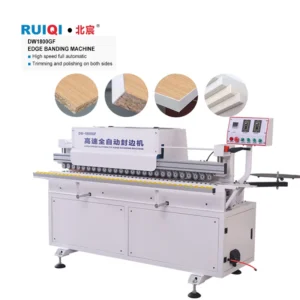
Edge banding machine